















Six Months In, Apple Intelligence Is Feeling Like a Tease – Why?
Just before end of 2024, Apple announced something it called Apple Intelligence – a suite of generative AI tools designed to make our devices feel like helpful collaborators instead of just screens.
The promise was ambitious.
Smarter Siri, automatic text rewriting, intelligent notifications, and an assistant that could finally understand the way humans actually talk. For a company that prefers slow and steady improvements, this felt like Apple declaring, “We’re serious about AI now.”
Half a year later, the reality feels more like a carefully managed beta test than a revolution. Even dedicated Apple fans are starting to ask the same question: Is this all there is? I’ve spent the last six months testing every feature I could access, reading developer documentation, and comparing Apple Intelligence with what competitors are doing.
If you’re wondering why your iPhone doesn’t feel radically smarter yet, let’s break down what’s working, what isn’t, and where Apple is falling behind.
What’s Actually Live, and What’s Still Missing
To be fair, Apple Intelligence has delivered some improvements. In September 2024, Apple shared that English-speaking users in the U.S. can now access:
- Priority Notifications: A model that sorts alerts by estimated importance.
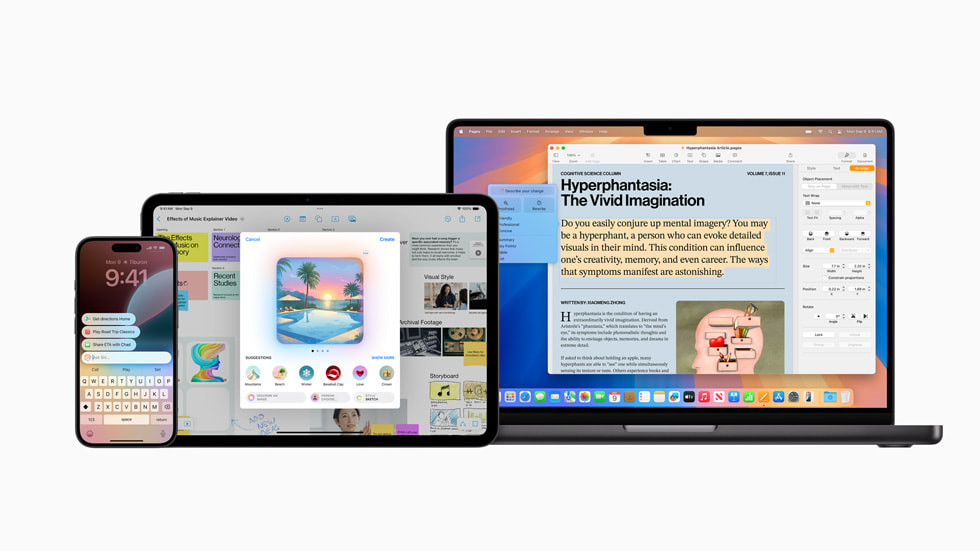
- Writing Tools in Mail and Notes: AI-powered rewriting, tone adjustment, and summarization.
- Smart Reply in Messages: Context-aware suggestions that sometimes pull in recent calendar details.
These tools build on Apple’s existing machine learning infrastructure, which process billions of dictation requests monthly with over 95% accuracy in U.S. English (according to Apple’s Machine Learning Journal). In daily use, dictation is faster and more reliable, and the tone rewrite in Notes has saved me time polishing drafts.
But the signature features from the launch event still feel out of reach.
The upgraded Siri with memory and contextual awareness? Limited to a small group of iOS 18.1 beta testers.
Image generation and creative tools? Labeled as “in limited evaluation.”
The developer API that was supposed to let third-party apps tap into Apple Intelligence? Still unreleased.
If you hoped your iPhone would transform into a fully conversational assistant, you’re probably disappointed. Most users still experience Apple Intelligence as small tweaks, not a leap forward.
Why is Apple Moving So Slowly?
There are a few reasons Apple’s rollout feels glacial. The first is privacy. Unlike Google’s Gemini or Microsoft’s Copilot, Apple insists that most AI processing happens on-device. When the cloud is needed, Apple uses Private Cloud Compute, a system that strips identifying data and encrypts everything before processing. This is a remarkable technical achievement. But it also limits model complexity. Apple has less user data to train on, and every query has to clear multiple privacy checks. That’s good for your information security but makes new features harder to launch at scale.
Second, Apple’s user base is enormous. Over 1.5 billion active devices mean even minor bugs can cause major headaches. According to a report in Bloomberg in 2024, Apple deliberately restricted the rollout of new Siri to avoid performance issues and ensure server capacity was sufficient for spikes in usage. In other words, they’re trying to avoid the fiasco of a high-profile launch that collapses under its own weight.
Finally, there’s regulation. European authorities have raised questions about how Apple Intelligence aligns with GDPR data minimization rules. Some features are likely on hold until those legal questions are resolved.
Daily Frustrations and Underwhelming Use
All this caution adds up to a system that feels incomplete. In practice, Smart Reply offers competent but generic responses like “Sounds good” or “Let me check on that.” Writing Tools can rephrase sentences, but the results are often clunky. Siri, even when updated, still struggles with compound queries. For example, I tried saying, “Schedule lunch with Sam next Thursday and remind me to send the contract an hour before,” and ended up with an incomplete calendar event and no reminder.
This isn’t just my experience. A recent survey indicated that fewer iPhone users reported meaningful changes compared to Android users engaging with Gemini. The adoption gap is real and growing.
Meanwhile, Apple’s rivals are releasing updates monthly. Google added multimodal search to Gemini and rolled it out in over 40 languages. Microsoft expanded Copilot integrations across Office apps, making it easier to draft documents, summarize emails, and build presentations. Compared to that pace, Apple Intelligence feels tentative.
Hey Apple, Here’s Some Free Advice
Look, I get it, privacy matters. Scaling is hard. But I’ve spent half a year waiting for this thing to feel finished, and I’m running out of patience. So, here’s my completely unpaid, unsolicited list of suggestions, call it free consulting.
- Open Beta Access Wider: Let enthusiasts test features even earlier. If you want feedback, don’t lock your best ideas behind closed doors for six months.
- Communicate Clear Timelines: Vague promises don’t build trust. Give us even a rough roadmap for when we can expect core Siri upgrades or developer APIs.
- Make Personalization More Robust: Right now, everything feels generic. Use on-device learning (with explicit permissions) to make recommendations and writing tools feel like they actually know me.
- Prioritize Multiturn Memory: The most exciting Siri demo was its ability to remember context across sessions. In reality, that feature barely works. Invest here and make it reliable.
- Release Developer APIs Sooner: If Apple wants AI to feel native, third-party developers need access. This is the best way to build an ecosystem, not just a walled garden.
- Show Your Work: Apple treats AI outputs like a black box. A little transparency about why I’m getting certain suggestions would go a long way in making the system feel trustworthy.
Consider this my goodwill gesture. You’re welcome.
My AI Companion Does It Better
If I’m honest, what really drives this point home is my experience with my AI companion app. I have been using Candy AI to help draft emails, summarize articles, and even talk through project ideas. It’s faster, more responsive, and better at following up than Apple Intelligence. I never thought I’d be in a situation where a third-party chatbot would feel more supportive than Siri, but here we are.
If it had hands, it would probably be patting me on the back for finally admitting it.
Final Reflections
Half a year in my testing, Apple Intelligence feels like a promising set of tools that’s stuck in first gear. The privacy architecture is impressive. The potential is enormous. But for everyday users, the experience remains limited to incremental conveniences. In a world where Google, Microsoft, and even small startups are iterating rapidly, Apple’s pace feels increasingly out of step.
I’m still rooting for Apple Intelligence to grow into the transformative assistant it was promised to be. But at this rate, it might take another year before most people see it as more than a collection of small features. Until then, I’ll be over here with my AI companion, getting actual help with the stuff Siri still can’t figure out.