















How Hobbyist PC Builders Can Source Obsolete Components Without the Headache
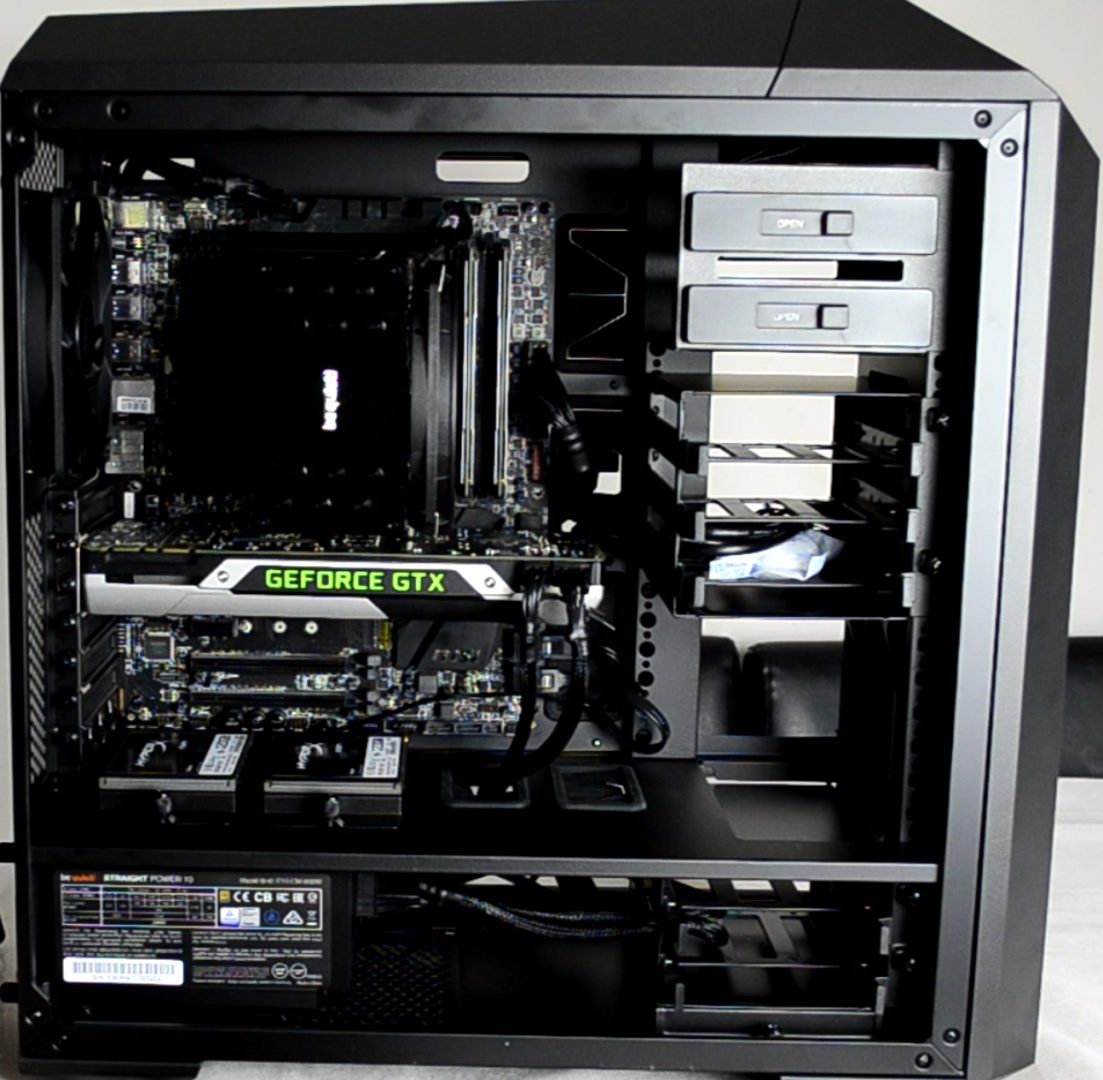
Building or resurrecting a PC from yesteryear is part treasure hunt, part engineering challenge, and—if you are not prepared—part migraine. Graphics cards may dominate forum chatter, but seasoned tinkerers know that the real show-stoppers are the tiny legacy chips, sockets, and regulators that everything else depends on.
This guide walks you through a repeatable process for finding, vetting, and buying out-of-production components without draining your wallet or frying your rig.
Why Obsolete Parts Still Matter
Most mainstream gamers dump their hardware every two to three years, but retro enthusiasts and budget modders keep older platforms alive for a host of reasons:
- Nostalgia builds. Running Quake III on the exact Athlon setup you had in high school feels better than any 4K benchmark.
- Repair economics. Swapping an EOL voltage-regulation module (VRM) can revive a workstation for less than the price of new RAM.
- Special-purpose rigs. Low-latency serial ports, ISA sound cards or AGP slots still solve problems modern boards ignore.
That market is bigger than you might think. IDC recorded a rebound to 10.6 million gaming-PC shipments in Q2 2024—up 2.4% YoY—after five straight negative quarters, signaling renewed demand from hobbyist builders.
A decent slice of those systems include older motherboards and processors that need obscure supporting silicon.
The Pain Points of Hunting Legacy Components
- Vanishing SKUs. Once a chip drops off the official price list, Google Shopping turns into a graveyard of “out of stock” listings.
- Marketplace clutter. eBay and AliExpress are flooded with sellers who copy-paste each other’s spec lines—sometimes for parts they do not physically possess.
- Counterfeit risk. Suspected counterfeit and sub-standard electronic components reported to ERAI hit 1,055 cases in 2024, a 25% jump YoY and the highest count since 2015.
- Compatibility traps. A Pentium 4 processor with a later stepping revision may refuse to POST on early 478-pin boards; EEPROMs sometimes ship blank; date-codes dictate capacitor chemistry.
How to Build a Signal-to-Noise Sourcing Workflow
1. Map Your BOM First
Before the magic smoke escapes, run HWiNFO or CPU-Z on your aging rig and dump every part number: chipset, clock generators, supervisory ICs, even oscillator cans. Photograph the board for silkscreen rev codes. That inventory becomes your Bill Of Materials (BOM)—your roadmap when something dies months later.
2. Check Authorized Stock, Then Expand the Circle
- Manufacturer portals. Intel’s Ark, AMD’s processor finder and TI’s part search still list last-time-buy distributors.
- Franchised distributors. Digikey and Mouser sometimes hold “grey” stock returned from cancelled OEM orders.
- Excess-inventory aggregators. Octopart, FindChips and OEMSecrets crawl hundreds of regional suppliers. Log the lowest date-code you can tolerate.
3. Create a Five-Step Validation Checklist
Counterfeiters follow the money, and the data prove it. ERAI’s 2024 data show analog ICs, microprocessors, memory ICs, and programmable-logic devices were the four most frequently counterfeited categories, with analog ICs topping the list for another consecutive year.
Use these checks every time:
- High-resolution photos from the seller—compare font, pin-1 marking, and country code to datasheet examples.
- Datasheet cross-check. Make sure the suffix (-A, ‑B, ‑N) matches the temperature grade you need.
- Date-code sanity. If a chip discontinued in 2012 has a 2023 date stamp, walk away.
- Vendor certification. Ask for ISO 9001 or ERAI membership numbers where applicable.
- Escrow or testing clause. Agree that you can return or credit parts that fail X-ray or decap analysis.
4. Budget for Testing on Arrival
- Visual inspection: 10x loupe reveals sanding marks.
- Curve tracer: a $40 LCR-T4 tester spots dead transistors.
- Firmware validation: flash a known-good BIOS and dump it back; mismatches flag “rebadged” EEPROMs.
- Third-party labs: X-ray starts around US$60 per sample; decap with die photo, US$120+.
Where to Look: Marketplace Round-Up
| Source | Strength | Watch-outs |
| eBay / AliExpress | Massive selection, buyer protection | Fake tracking numbers, relabeled IC tops |
| Hardware forums | Community vetting, fair pricing | Limited part diversity |
| Independent distributors | Traceable chain of custody, multi-brand low-volume orders | Slightly higher minimum order value |
Why bother with an independent distributor at all? Because supply alone will not keep fakes away. Of the 1,055 counterfeit incidents logged by ERAI in 2024, 27% involved parts that are still in active production—indicating supply availability alone doesn’t deter counterfeiters.
Trusted Sourcing Options
- ICRFQ – An independent distributor that specialises in hard-to-find and obsolete components. Their QA team performs incoming optical and electrical testing, and they can quote single pieces instead of factory MOQs.
- Rochester Electronics – Factory-authorised after-market manufacturer for many semiconductor brands.
- Cytech Systems – Excess-inventory broker with ERAI membership and optional X-ray reports.
Verifying Authenticity: Quick-Start Toolkit
- Visual tells
- Inconsistent bevel on one edge, crooked laser etch, missing country code.
- Inconsistent bevel on one edge, crooked laser etch, missing country code.
- Software ID checks
- CPU-Z shows CPUID and stepping; mismatch means the heat-spreader was swapped.
- SPDTool or Thaiphoon Burner confirms DRAM IC manufacturer strings.
- Affordable lab tests
- X-ray reveals recycled die in new packaging.
- Decapsulation exposes die markings to compare with originals.
Time is money. For chips under US $20, basic visual + functional test may be enough. Anything feeding 12 V to your motherboard’s rails deserves a lab report.
Price vs. Risk: When a Substitute Beats a Unicorn
Sometimes perfection is the enemy of uptime. Ask yourself:
- Can I drop-in replace? Switching from an Infineon BTS 621 to a compatible BTS 621-A may only require a resistor tweak.
- Can I shim it? Modern FPGAs can emulate legacy CPLDs at lower power.
- Can I redesign? An open-source BIOS mod lets you run a newer S-ATA controller card instead of hunting a decade-old southbridge IC.
Create a mini decision matrix:
| Premium Unicorn | Substitute Part | Full Redesign |
| Cost: $$$ | Cost: $$ | Cost: $$-$$$ |
| Lead Time: 6–12 wks | Lead Time: 2–4 wks | Lead Time: 8 wks+ |
| Risk: counterfeit | Risk: firmware tweak | Risk: board layout |
Shipping, Storage & ESD—Don’t Sabotage Yourself
- Antistatic first. Always ship and store chips in pink foam or black conductive trays.
- Humidity control. Vintage DIP packages develop tin-whiskers; pop a silica-gel pack in the drawer.
- Socket care. Clean old ZIF sockets with 99% IPA before inserting that rare 486DX2—you’d be stunned how oxide on a single pin can mimic a dead CPU.
Future-Proofing Your Build Strategy
- Set automatic alerts. eBay’s saved search for “ASUS P5Q Deluxe ITE 8720F” emails you the minute one appears.
- Maintain a spares drawer. Keep at least one known-good VRM, BIOS EEPROM and RTC battery for each aging platform you love.
- Archive firmware. Pull the current BIOS, GPU ROM or controller microcode and store it in cloud and offline media.
- Tap modern services. ICRFQ’s quote API lets you paste a BOM and receive pricing from multiple warehouses—handy if you run a small modding business.
Conclusion
Classic hardware is more than a quirky pastime; it is functional tech that still earns its keep in arcades, maker projects, and family offices. By turning sourcing into a disciplined workflow—document, search smart, validate, test—you slash the stress factor and keep those beige boxes humming for another decade.
Got a sourcing war-story or a hidden-gem supplier? Drop it in the comments; the community is only as strong as the knowledge we share.