














How to Find iPhone Games You’ll Keep Coming Back To
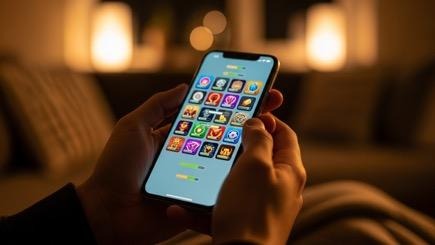
The App Store has never been the problem. Finding an iPhone game that looks worth downloading takes about thirty seconds. The harder question is different: why do some of those games still feel worth opening a month later, when most of the others have drifted to the second page of your home screen and then to the bin?
The answer isn’t luck or genre. It’s a handful of specific qualities that some games have and most don’t. Understanding them before you download is the fastest way to stop wasting time on games that don’t stick — and to recognise the ones that will.
This article translates the research on mobile game retention into plain language. Not developer metrics. Player experience: what it feels like to find a game that becomes part of your routine, and how to spot those qualities before you’re ten hours in.
What actually makes an iPhone game stick?
Retention research on mobile games consistently points to the same factors. The games that hold long-term players tend to nail onboarding, give meaningful early progress, create comfortable habits, reduce friction at every step, and offer enough variety that repeat sessions don’t feel identical. That sounds like a product brief. In player terms, it means something simpler.
A game sticks when it feels good to come back to. Not because of external pressure — push notifications, daily streaks, or FOMO mechanics — but because reopening it is genuinely satisfying. The session produces something you wanted to happen, and you knew before you opened it that it probably would.
| The retention signal | The player question to ask |
| Strong early progression | Did the first few sessions feel rewarding rather than slow? |
| Comfort and familiarity | Does the game feel easy to drop back into after time away? |
| Low friction | Can I open it and be playing something real within 30 seconds? |
| Habit-friendly loops | Does a daily session feel like a natural return, not an obligation? |
| Enough variety to avoid staleness | Do repeat sessions still produce something new or interesting? |
Good iPhone games give you a reason to come back quickly

The games that stick make progress feel real from the first session — not something you have to wait for
The first few sessions of any iPhone game are more important than most players realise. Mobile retention research consistently shows that games lose the largest share of players in the first days — not the first weeks. If a game hasn’t given you something meaningful to do and shown you something worth coming back for within the first two or three sessions, it usually doesn’t get the chance to prove itself later.
What “something meaningful” looks like depends on the game. In a match-based RPG, it might be unlocking your first champion and starting to understand how team composition works. In a strategy game, it’s queuing your first building upgrade and seeing the town change. In a puzzle game, it’s clearing a level that felt genuinely satisfying rather than just mechanically completed.
The games that fail this test often have the opposite quality: they make you work for a long time before giving you anything to feel good about. Long tutorials that explain but don’t reward. Slow openings that treat the first hour as a formality before the real game begins. These games rely on players deciding to invest before they’ve seen a reason to — and most don’t.
The practical test: after your third session, you should already have a sense of what you’re building towards and why you care about it. If you don’t, the game probably hasn’t given you one.
Progression is the biggest signal a game will hold your attention
Of all the qualities that predict whether an iPhone game becomes a long-term habit, progression is the most reliable. Players return to games where they can feel themselves getting somewhere — where the account they have today is measurably different from the one they had last week, and where that difference was the result of their decisions.
This is worth distinguishing from simple “levelling up.” A number increasing isn’t the same as meaningful progression. What keeps players engaged is progress that changes how the game feels: new tactical options that weren’t available before, a roster deep enough to try different approaches, a city that looks and behaves differently as it grows. The progression is rewarding when it produces new decisions, not just larger numbers.
What good progression looks like in practice
• Visible account or character growth that you can see and feel between sessions, not just read in a stats screen
• Multiple parallel tracks: something is always advancing even when the main progression path slows down
• Short-term goals alongside long-term ones: daily or weekly goals that feel completable, feeding a larger arc you care about
• Progress that respects your time: a ten-minute session still moves something meaningful forward
Games that handle progression well across multiple tracks tend to be the ones that stay installed the longest. RAID: Shadow Legends runs champion collection, gear progression, dungeon advancement, and clan content simultaneously — so hitting a wall on one track doesn’t stall the account, because three other things are still moving. That multi-track structure is one of the clearest signals of a game designed for long-term players rather than short-term installs.
Comfort matters more than most people admit

Comfort games aren’t just easy — they’re familiar. Returning to them feels like coming home rather than starting a new task
There’s a quality that long-term mobile games develop that doesn’t get talked about much in the usual “best games” conversations: comfort. Some games become part of your routine not just because they’re good, but because they’re familiar. The loop is predictable in a way that feels reassuring rather than boring. Opening them feels like settling into something you know, not launching into something you need to figure out.
Comfort isn’t the same as easiness. A game can be genuinely challenging and still feel like a comfort game if the challenge is the familiar kind — the kind you’ve already decided you enjoy. What makes a game comforting is the emotional re-entry: you know before you open it roughly how the session is going to feel, and that knowledge makes you want to open it.
This is why some players keep returning to the same game for years even though they’ve technically “finished” it in any conventional sense. Stardew Valley players go back to new farms not because there’s more to discover but because the rhythm of the game is comforting to inhabit. The same is true of merge games, certain RPGs with familiar daily loops, and even competitive titles where you know the meta well enough that the game feels like your territory.
Two types of comfort worth recognising
• Low-pressure comfort: the game doesn’t demand much, so returning is always easy. Merge games, idle games, and casual puzzlers often provide this.
• Familiar-depth comfort: the game is complex, but you’ve spent enough time with it that navigating that complexity feels natural rather than demanding. Many long-term RPG and strategy players describe their favourite games this way.
Both are valid. The question is which type suits you. Players who find the first type rewarding tend to stay with games that have gentle progression and low stakes. Players who find the second type more satisfying tend to prefer games with deeper systems they can learn over time. Knowing which you are helps you pick games that will actually stick.
Low-friction play is what separates keepers from one-week downloads

The best iPhone games launch in seconds, not minutes — friction is what kills the habit before it forms
Friction in mobile games is any quality that makes the game harder to re-enter than it needs to be. A long loading screen. A menu structure that takes multiple taps to reach the content you actually want. A session that requires you to reconstruct context from last time before you can do anything. A game that takes two minutes to reach a meaningful decision.
These don’t sound like dealbreakers, but they kill habits with remarkable efficiency. The reason is simple: iPhone games compete with everything else on your phone for the same moments of spare attention. If a game requires a two-minute warm-up before it gets interesting, it’s going to lose that competition more often than it wins. If it opens into something immediately playable and rewarding, the habit forms naturally.
Mobile retention research repeatedly flags confusing navigation, poor performance, and weak onboarding as primary reasons users stop returning. From a player perspective, this translates into a simple test: can you open the game, understand what to do, and be doing it within 30 seconds? If yes, the friction is low enough that the habit has a chance. If you’re regularly spending the first minute of a session figuring out where you were, the habit probably won’t form.
Low-friction qualities worth looking for
• Instant or near-instant loading: the game is playable within seconds of opening
• Clear immediate context: you know what you were doing and what to do next without reconstruction
• Session-length flexibility: five minutes works as well as thirty; stopping never feels like abandoning something
• Resumable progress: the game saves reliably and comes back exactly where you left it
• Readable at a glance: you don’t need to study the screen to understand the current state
Habit matters — but it has to feel good, not forced
Habit formation is well-documented in mobile game retention research. Games that become daily habits retain players at dramatically higher rates than those that don’t. But there’s a meaningful difference between a habit that feels genuinely welcome and one that feels manufactured.
The manufactured version relies on external pressure: daily streaks that punish you for missing a day, login rewards that create FOMO rather than genuine motivation, event timers that make you feel behind if you’re not playing. These mechanics can sustain short-term engagement, but they tend not to produce the kind of long-term loyalty that makes a game part of someone’s actual routine. Players often describe them as stress rather than fun.
The welcome version is different. It comes from a game that’s genuinely satisfying to open, that reliably produces a good session, and that fits naturally into the moments you have available. You return not because you’re afraid of losing something but because you actually want to be there.
What a healthy habit loop usually looks like
• A reliable daily task that feels completable and worthwhile, not like busywork
• Progress that accrues between sessions: you’re always slightly further along when you return
• Session flexibility: you can play for three minutes or thirty and both feel appropriate
• A reason that comes from inside the game, not from a notification you feel you have to answer
The practical test is whether you think about the game when you’re not playing it. Not with anxiety (“I need to log in or I’ll lose my streak”), but with mild anticipation (“I wonder how that upgrade has gone” or “I want to try a different team in the next dungeon”). That kind of quiet engagement is what long-term retention actually looks like from the player side.
Variety and replayability matter once the novelty wears off
Every iPhone game is interesting for the first few sessions. The question is what happens when the novelty has gone and the real quality of the game becomes visible. Games that hold attention at that point tend to do so through genuine variety: different things to do, different approaches to try, different goals to pursue on different days.
Variety doesn’t require a huge game. A merge game can provide it through the expanding complexity of what gets merged. A puzzle game can provide it through the range of puzzle types. A tactical RPG provides it through the growing roster of characters and the different team compositions they enable. What matters is that repeat sessions feel different from each other — that there’s still something to discover or try even after the core mechanics have become familiar.
Games that lack this quality have a specific failure mode: they feel solved. Once you’ve understood the system, there’s nothing left to discover, and sessions start feeling mechanical rather than engaging. The games people keep for years almost always have enough depth or variety that the system never quite feels fully solved.
Signs a game will stay interesting past the honeymoon period
• Multiple content types or modes: more than one way to play the same game
• Build or roster variety: different combinations produce meaningfully different experiences
• Evolving meta or content updates: the game keeps changing, so strategies that worked before need revisiting
• Skill ceiling: there’s something to improve at, so getting better keeps sessions interesting
• Long-term goals that stay relevant: things to work towards that don’t resolve in the first week
A simple test for whether an iPhone game has real staying power
Before committing more than a few sessions to a new game, run through these five questions. They translate the retention factors above into a quick practical check.
| Five questions to ask before you invest in an iPhone game• ✓ Did the first few sessions feel rewarding, or like a slow warm-up before something better?• ✓ Is the game easy to reopen after a break — do I know where I am and what to do immediately?• ✓ Can I feel visible progress after most sessions, even short ones?• ✓ Does playing it feel like something I actively want to do, or something I feel I should do?• ✓ After the novelty has worn off, are there still different things to try or improve at? |
Games that get clear yes answers to four or five of these are worth investing in. Games that get mostly uncertain answers at the point when the novelty is still fresh — when they should be at their most appealing — rarely turn into genuine keepers.
What kinds of iPhone games tend to pass this test?
Genre is a rough indicator, not a guarantee. But certain game types consistently deliver the qualities above in ways that suit iPhone play specifically.
Progression-heavy RPGs with roster building
Games where you’re collecting, developing, and optimising a roster of characters tend to have strong multi-track progression, clear daily goals, and enough build variety to stay interesting across many months. RAID: Shadow Legends is the most obvious example: champion collection, gear farming, dungeon progression, and PvP all run simultaneously, so there’s always something moving forward. The roster depth means there are always different team configurations to experiment with.
Games with short, rewarding PvP or tactical loops
Games built around short competitive matches — where a session can consist of two or three complete games with clear outcomes — suit iPhone play because the session length is flexible. Mech Arena fits this well: 5v5 PvP matches that run short, deliver a clear result, and don’t require you to reconstruct context when you come back. The competitive loop produces a clear reason to return without manufacturing artificial pressure.
Strategy games with steady account progression
Strategy games that operate on longer timers — where buildings take time to complete and troops take time to train — are surprisingly well-suited to iPhone habits precisely because they’re designed for regular short check-ins rather than long sessions. Vikings: War of Clans works this way: a five-minute session that queues upgrades and manages resources is exactly the right cadence for how the game advances. Each check-in feeds a longer-term account that compounds over weeks.
Casual games with low-friction entry
At the lower end of the commitment spectrum, merge games, idle games, and casual puzzlers provide the comfort and low-friction qualities that make them easy daily habits without requiring deep investment. These are the games that work well when the goal is a gentle, pleasant session rather than meaningful progression. If this range interests you, Plarium’s iPhone games bring together free iOS titles across RPG, PvP, and strategy that cover multiple points on this spectrum — from the deeper progression of RAID: Shadow Legends to the short competitive loops of Mech Arena and the steady strategic growth of Vikings: War of Clans.
iPhone games you keep coming back to share a small set of qualities that have nothing to do with production budget or App Store rating. They make progress feel meaningful from early on. They reduce friction until reopening the game feels effortless. They build habits that feel like genuine preferences rather than manufactured obligations. And they offer enough variety that the experience doesn’t go stale once you’ve understood the basics.
The test isn’t complicated. After a few sessions with any new game, you should be able to feel whether these qualities are there. If reopening it already feels natural and the progress already feels real, the game has a chance of becoming part of your routine. If it doesn’t, no amount of time invested will change that.
Find the qualities first. The routine follows on its own.