











500Hz OLED Is Overkill for Most Things, With a Few Exceptions
Where Micro-Motion Changes the Experience
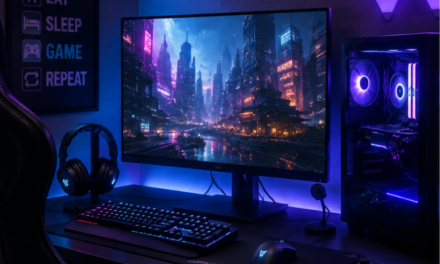
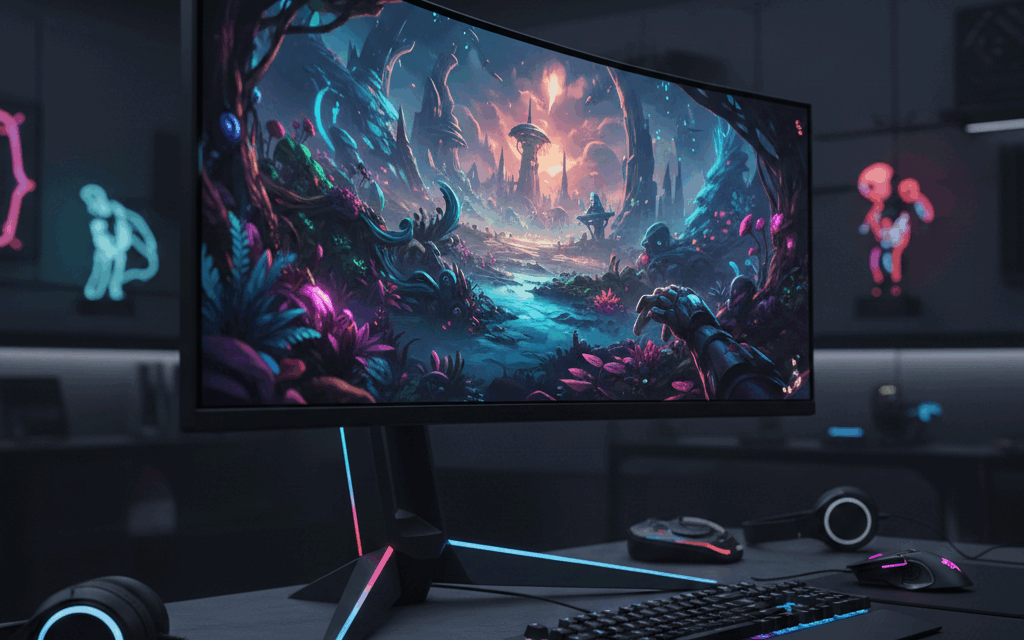
The image was created by us via AI, specifically, for this article.
A 500Hz OLED monitor sounds like a spec built for bragging rights. For years, “fast” meant jumping from 240Hz to 360Hz, then to 480Hz. Now a mainstream brand is shipping a 27-inch QHD QD-OLED panel that can actually run at 500Hz, paired with an OLED-style near-instant pixel response. That combo matters because refresh rate and pixel speed stack. One controls how often the screen can show a new moment, the other controls how cleanly each moment can appear.
In practice, the biggest shift is not limited to competitive shooters. It is about micro-motion: tiny movements that happen constantly across modern interfaces, such as:
- counters ticking up
- cards sliding into place
- chip stacks snapping to a bet
- highlight sweeps
- hover states
- quick reveals that last only a fraction of a second
At very high refresh rates, these motions stop looking “steppy” and start looking like a continuous flow. That can make fast interfaces feel calmer, clearer, and more responsive, even when the content is not a traditional game.
There is a real nuance, though. This kind of OLED speed does not automatically mean it is the best screen for every task. Some OLED subpixel layouts can slightly soften text edges or add faint color fringing, especially on fine UI elements. So the story is not “500Hz fixes everything.” It is “500Hz changes what feels smooth,” and in certain interface-heavy experiences, that difference lands immediately.
Why ultra-high refresh matters most when the UI is the main event
The place where 500Hz earns its keep is not giant camera swings. It is repeatable, rapid UI motion where your eyes track small elements and expect instant feedback. In an online casino gaming platform, which currently is a trending entertainment option among gamers, the interface is the experience. The “gameplay” is a steady stream of micro-animations that confirm state changes: a spin starts, a reel slows, a win line flashes, a balance updates, a bet locks in, a timer pulses, a card flips, a chip slides, a result lands. When those steps are shown with more motion samples per second, each step can look cleaner and easier to follow.
This matters because many casino games are built around quick, clear moments, like big reveals, almost-wins, fast screen changes, and glowing effects on dark backgrounds.
On a lower refresh rate screen, tiny details and small moving text can look blurry while they move, even if they look sharp when they stop. On a very high refresh rate screen, movement is easier to see and understand. You’re not just seeing “more frames”: you’re getting more clear checkpoints for your eyes while things are moving, so the action feels easier to follow.
How 500Hz changes digital casino UIs in practice
It is also worth noting how online casino platforms deliver these experiences. A lot of the action is UI-driven: 2D sprites, vector shapes, animated typography, and quick compositing of overlays. Even when the underlying math result is decided instantly, the presentation often plays out as a timed sequence of animations. With a faster display, that sequence can feel more “locked” to your input and less like it is being dragged forward in chunks. Hovering, tapping, dragging, and rapid selection changes can look more stable because the display is refreshing so often that small positional changes do not have time to blur together.
This is where the line between digital games and interface design gets thin. A modern casino UI borrows from game HUDs and mobile app motion systems, then layers on frequent, high-contrast reveals. If you spend time in that kind of fast, animated environment, higher refresh is not just a luxury. It can reduce visual effort because the motion stays legible while it is happening. In that narrow slice of use cases, 500Hz starts to feel less like overkill and more like a quality-of-life upgrade.
The math behind “micro-motion” and why 500Hz feels different
High refresh is easiest to understand as time. Each refresh is a new chance to show a slightly updated position for moving elements, and a new chance for your eyes to track them without the display “holding” a stale frame for too long. On most modern screens, motion blur is closely tied to how long each frame persists on the panel. Blur Busters summarizes this as a simple rule for sample-and-hold displays: the minimum motion picture response time lines up with frame duration.
| Refresh rate | Frame time (ms) | What changes first in real use |
| 60Hz | 16.67 | Scrolling text and thin UI lines smear quickly during motion |
| 120Hz | 8.33 | Pointer tracking and fast lists feel steadier |
| 240Hz | 4.17 | Small animations look less “steppy,” especially on dark UI |
| 360Hz | 2.78 | Micro-transitions and fast counters become easier to follow |
| 480Hz | 2.08 | Edge clarity in motion improves, even on tiny elements |
| 500Hz | 2.00 | Rapid UI feedback looks close to continuous for many people |
That is the general “why.” The “how” is the pairing of refresh and pixel response. Samsung positions the Odyssey OLED G6 G60SF as a 500Hz QHD OLED monitor and advertises a 0.03ms response time, plus a “Glare Free” anti-reflection approach on many regional listings. Those numbers are the point: frequent refresh reduces the time each frame is held, and fast pixel transitions help keep edges from trailing behind moving objects.
There is also a contrast angle. Many casino-style interfaces use bright highlights on dark layers, and HDR-style handling can make those layers pop without crushing detail. Samsung’s UK listing calls out VESA DisplayHDR TrueBlack 500 and “1000-nit peak brightness,” which is exactly the kind of spec that helps tiny highlights stay distinct against deep blacks.
The real-world catches: clarity, content limits, and where 500Hz actually shows up
The table below summarizes the explanation about OLED screens in simple terms.