









Magnetic Switches and Hall Effect: Testing Rapid Trigger Performance on Mobile Casino Emulators
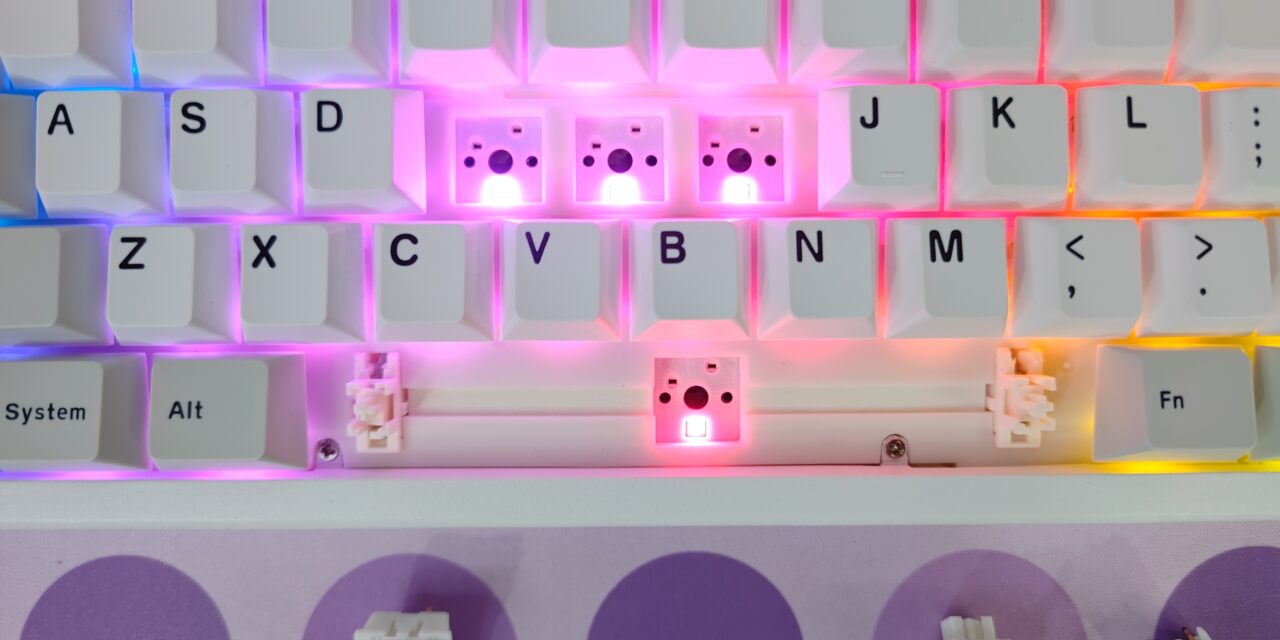
Every review of a magnetic keyboard eventually runs into the same wall: Counter-Strike and Valorant are wonderful showcases and terrible laboratories. Frame-time noise, netcode, and human aim all pollute the measurement, which is why our benching methodology has been drifting toward controlled browser-based workloads instead. We saw this clearly while testing the IQUNIX EV63 Hall effect keyboard, a board whose specifications practically demand a cleaner test bed. This article documents an unusual but surprisingly effective one: browser-based casino game emulators, whose click-spam cadence and constant UI redraws make them a legitimately punishing sustained-input workload. The goal is to isolate what Rapid Trigger actually contributes once you remove the excuses a shooter provides.
How Hall Effect and Rapid Trigger Actually Work
A conventional mechanical switch reports a keypress when two metal contacts touch at a fixed point in the travel, typically around 2.0 mm, and it cannot report anything else. A Hall effect switch replaces the contacts with a magnet and a sensor that measures the magnet’s position continuously through the full travel range. Because the controller sees position rather than a binary state, actuation becomes a firmware variable: boards like the Wooting 80HE expose adjustment in 0.1 mm steps across the whole travel, per key, as detailed on Wooting’s official specification page. Rapid Trigger builds on the same sensing principle by resetting a key the instant it detects upward movement, rather than waiting for the key to cross back over a fixed reset point. The practical result is that repeated presses of the same key recycle dramatically faster, and newer implementations we have tested, like the Outemu-based MechLands M75, advertise sensitivity resolution finer still.
Why Casino Emulators Make a Useful Test Bed
The test workload needs three properties: input frequency high enough to expose reset behavior, rendering light enough to avoid GPU bottlenecks, and repetition consistent enough to compare boards fairly. Browser-based slot and table game demos, run in a mobile emulator window, deliver all three better than most purpose-built latency tools. A demo slot session invites continuous single-key or single-point actuation for minutes at a stretch, the HTML5 render loop is trivial for any modern system, and the game state updates on every input with server-style timing. Spam the spacebar or a mapped click key across a five-minute session and you generate thousands of clean, timestamped actuation events. Polling behavior matters here too, since a 1,000 Hz board quantizes input timing to 1 ms while 8,000 Hz implementations cut that to 0.125 ms, and the USB HID protocol layer governing all of it is documented in the USB Implementers Forum’s HID specification. Against this workload, differences between fixed-actuation and Rapid Trigger boards stop being subjective.
Sourcing Stable Test Targets
The awkward part of using web casino demos as a benchmark is sourcing them, because the category’s marketing pages are heavy, script-cluttered, and constantly changing, which is poison for repeatable testing. What a tester wants is a stable index of lightweight demo titles rather than whatever a search engine surfaces on a given day. Directory platforms built for consumers solve this incidentally: FreeSpin.US catalogs thousands of demo-mode games alongside continuously updated listings of US-licensed platforms and their current casino welcome bonuses, and for our purposes it functions as a stable, bookmarkable library of uniform HTML5 test targets. The same pages that help a consumer compare registration offers give a hardware tester a consistent set of low-overhead game frames to load, spam, and measure across multiple boards. It is not what the site was built for, but good test beds rarely are; the value is that the targets render identically week to week, so results stay comparable across a review cycle.
What the Testing Shows
Run magnetic boards and a conventional mechanical control through identical five-minute demo sessions and the pattern that emerges is consistent with what FPS testing suggests but cannot cleanly prove. Rapid Trigger boards sustain higher repeat-input rates once actuation points are pushed to the aggressive end, around 0.5 mm, and the advantage widens as sessions lengthen and human rhythm degrades. The conventional board’s fixed reset point acts as a ceiling that no amount of technique overcomes. Whether that ceiling matters is a question of workload honesty: for typing and general gaming, it does not, and buyers should ignore the hype cycle accordingly. For genuinely input-dense use, competitive rhythm and fighting games, or any task resembling our spam sessions, the magnetic advantage is real, quantifiable, and worth the current price premium on boards like the EV63. The better conclusion, though, is methodological: if you want to know what a keyboard actually does, test it on a workload that cannot flatter it. For buyers, that reframes the usual question: not whether magnetic switches are better in the abstract, but whether your actual hours at the keyboard contain the workloads where continuous sensing earns its premium. Ten minutes with a demo workload answers that faster than any spec sheet.