














Trading Psychology Behind Patterns in Charts
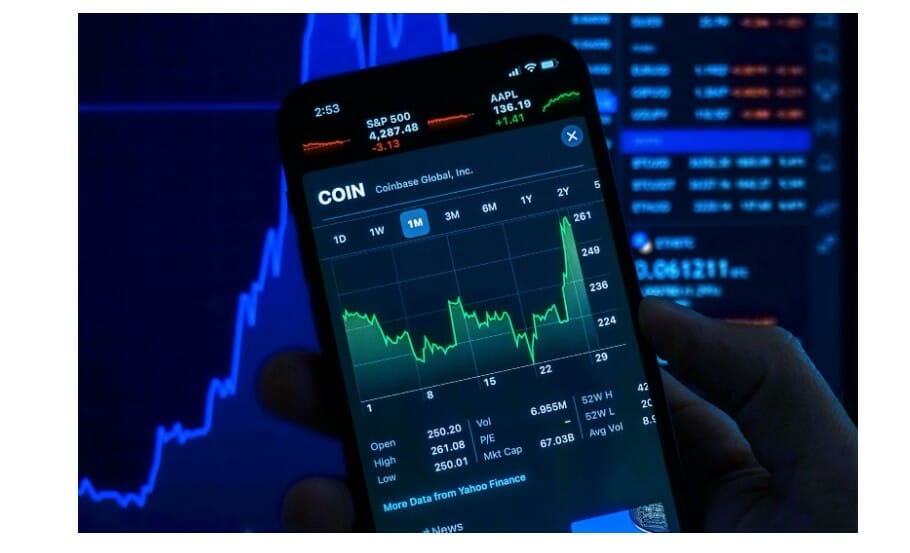
Financial markets may appear to be unpredictable, but some patterns in charts are common in decades and even in different classes of assets. These repetitive patterns are not accidental; candlesticks, breakouts and reversals. They are the visual representations of the collective trader psychology, fear, greed and herd behaviour. Knowing how these formations move allows investors to know what the market sentiment is.
The Emotional Cycle Behind Market Movements
Each chart pattern is a tug of war between the sellers and buyers. When traders get too optimistic, prices go so high that new entrants are afraid to purchase at higher prices. On the contrary, when pessimism prevails, even fundamentally strong assets are sold off. This emotional overreacting forms familiar structures on charts.
Studies of behavioural finance, like the ones by Nobel Prize winners such as Daniel Kahneman and Richard Thaler, have confirmed that the aversion to losses and herd instincts can overwhelm rational thinking. In a 2023 study related to business perspectives of NIFTY 50 stocks, it was ascertained that technical methods, many of which make use of chart patterns, provided statistically significant performance in trending markets. It indicates that the psychological element of traders always plays a role in determining price structure.
Patterns as a Reflection of Sentiment
It can be said that a chart pattern is in essence, a record of emotional rhythm. The hammer pattern can be used as an example, where the price has gone down and the sellers make a pushdown, but the buyers take over the market before the session ends.
On a psychological level, it is an indication of depletion of fear and the beginning of renewed optimism. Likewise, the piercing pattern, which is a bullish reversal indicator, depicts the traders moving out of panic to hope after a down trend.
These interpretations are also supported by empirical testing. An analysis, which evaluated over 4 million examples of candlestick patterns on stocks, forex and commodities, discovered that arrangements such as hammers and engulfing designs anticipated a movement of at least 1 ATR in the anticipated direction within 3 bars. This information supports the notion that emotional turning points usually come before quantifiable price reversals.
Which Patterns Work Best
Not all patterns, as is evident, perform in equal ways. According to a meta-review of chart formations by Liberated Stock Trader, the Inverse Head & Shoulders has an 89% success rate, an average gain of about 45% and the Double Bottom pattern had a 88% reliability.
This comparison indicates one important fact: patterns perform optimally when trader emotion is united and sturdy. Patterns usually fail with low conviction or news-driven markets since the psychology that drives the crowd is disintegrated.
Why Psychology Still Matters in the Age of Algorithms
Emotional considerations are less important with algorithmic trading. But algorithms are specifically designed to take advantage of human behaviour, buying-panic-lows or fading euphoric-highs. The psychology behind it has not changed, but the participants have rather evolved. Algorithms measure what used to be instinct.
According to Becon Global statistics in the recent past, the reliability of patterns can be enhanced greatly when backed by large trading volume and evident market trends- circumstances that coincide with the increased emotional conviction among traders.
Conclusion
Chart patterns go way beyond being lines on a screen; they are mirror images of human behaviour in an uncertain state. Understanding the emotions behind these formations enables investors to know when to expect changes before they happen. The plot is still psychological in nature, whether it is a hammer pattern signifying resilience or a piercing pattern denoting new optimism.
The information can change in different markets, but the feelings are the same. As long as human beings are involved in the trade, the study of the psychology behind patterns will remain one of the most useful tools in the arsenal of any trader.