












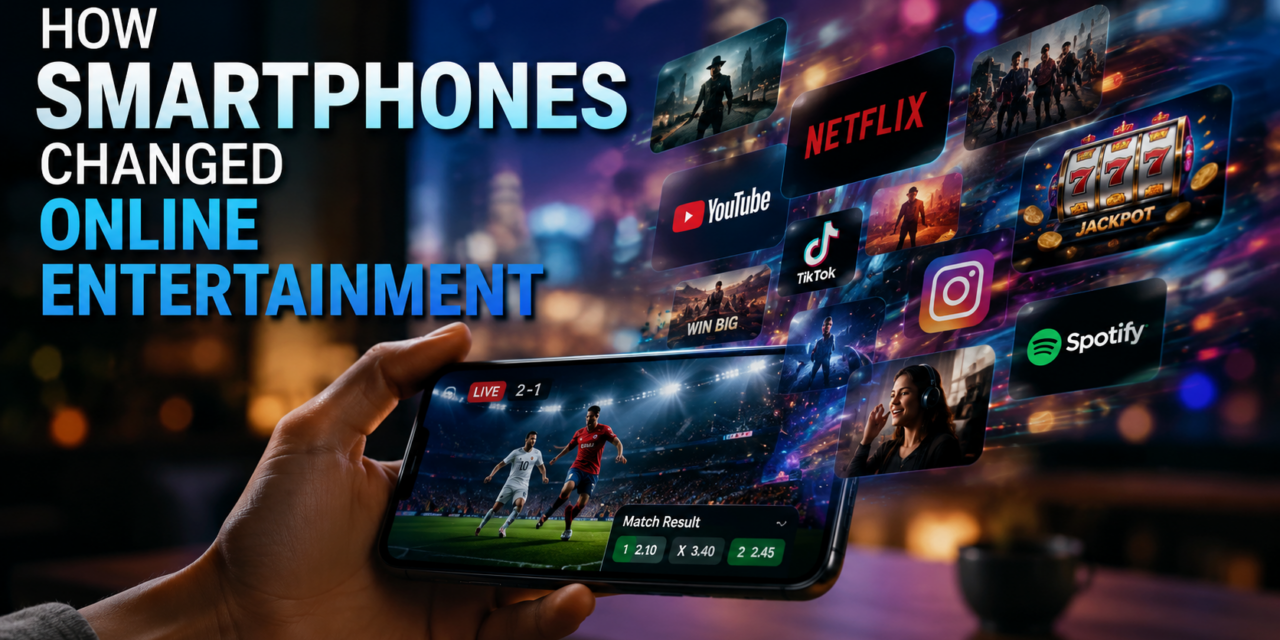
How Smartphones Changed Online Entertainment
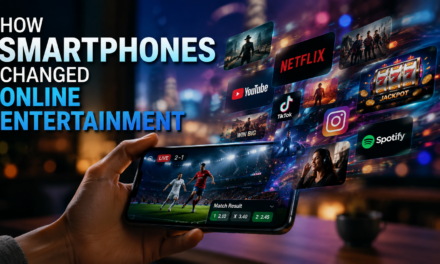
Have you noticed that recording a video in portrait has become “acceptable” in the last 10 years? In the days of camcorders and later on digital cameras, landscape videos were the standard. Then came mobile phones, and holding them vertically with one hand was a natural, ergonomic way to film. TikTok and Instagram built their feeds around full-screen portrait content and that was it. I was actually thinking of this while watching Chris Nolan’s The Odyssey (2026) and it struck me as ironic that Nolan took that same expanded vertical height to a 1.43:1 IMAX display. Anyway, these are the other ways in which phones changed how we consume online entertainment.
Screens became personal
Entertainment was never “optional” — It was always “default”. Watching movies, listening to music, reading books etc. were all things that families would do.
Phones changed this. Everyone could get their own feed, their own streaming service, their own algorithm. This meant that families could sit in the same room and be in completely separate worlds. Each person could choose to watch whatever they wanted, use whatever apps they wanted, look at however many timelines they wanted.
Then the “second screen” became the “main screen.” You’d watch a movie, but you’d also be checking messages on your phone. When you’re bored with a particular scene, you’d scroll through social media. Maybe you’d send a message. Maybe you’d forget a major plot point. You might even fast-forward back to the beginning of the scene. Or you might simply lose interest.
Phones made online betting popular
With 24/7 accessibility, games became less about enjoying the sport and more about winning money. Sports fans began to watch games in ways they hadn’t previously.
Watching a game is no longer a passive activity (watching) since people who bet on games watch every possession, every shot, and every decision made during a game. Isn’t this why people say it’s entertainment? Betting adds excitement to a game.
Interestingly, the same dynamic exists with free casino games — even when there is no real money at stake.
Some examples include sweepstakes-style casino games, which require no initial payment from players. While these games aren’t intended to promote actual wagering, they are structured similarly to create engagement among users.
Bedtime viewing evolved into prime time viewing
In the past, the Super Bowl halftime show and a few seconds before evening news defined when most people viewed television. Today, it’s the final hour before bedtime. Lights turned off; your face illuminated by a screen; you lie on your side while you continue to scroll through your feeds until you fall asleep. The pre-sleep scroll represents essentially the new prime-time time slot.
Worse yet, phones often fall onto our faces. Our arms begin to tingle. Our eyes grow tired. We continue to adjust how we hold our devices in order to continue watching.
We now binge-watching micro-content in the toilet
Toilets used to represent dead air time; today they serve as theaters. Toilets are one of the few areas where we can consume media without interruption. It is only natural that toilets have transitioned into locations where people tend to watch content.
Entertainment today is segmented into smaller units of time rather than occurring in a single extended session in front of a TV set. People tend to watch media in segments while waiting in lines, driving cars or completing tasks.
Audio-based privacy and isolation
Earbuds allowed us to listen to media in complete invisibility. You may be sitting directly adjacent to someone else and simultaneously consuming entirely different content without anyone realizing it. Earbuds eliminated the necessity for shared audio; consequently, the experience felt both more personalized and under user control.
Earbuds function as barriers too. Once inserted into ears, earbuds signify that the wearer is temporarily unavailable; i.e., although physically present, they are mentally located elsewhere within their own stream of content.
Subtitles by default
Much of today’s media consumption occurs with sound disabled. Videos play silently in public areas, at workplaces or merely based upon habit; subsequently, subtitles convey the entirety of the viewing experience. Consumers no longer rely upon audio in order to understand what is happening within a given scene.
Skip culture
Ten-second skipping has become second-nature among audiences. Whether a film progresses too slowly or whether the opening credits linger for too long, audiences will skip forward through those sections without hesitation.
Similar functionality exists with playback speed settings such as 1.5x or 2x that allow viewers to transform watching something akin to browsing.
YouTube content producers had to adapt to consumer behavior. Producers designed their videos with the assumption that consumers are impatient.