
















Why Marine Batteries Are Built Differently From Standard Batteries
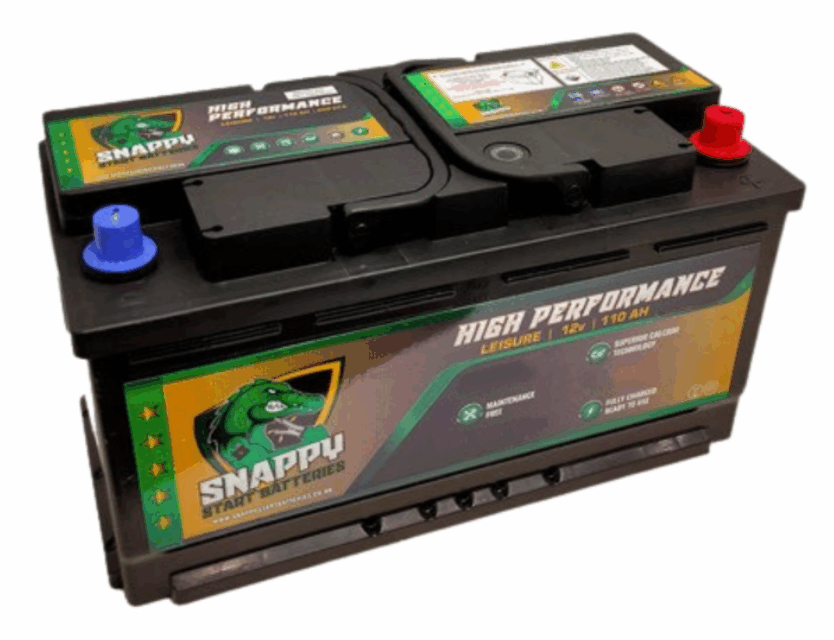
If you’ve ever wondered why a battery that works perfectly in a car can feel like a gamble on a boat, the answer is simple: the marine environment is unforgiving, and the electrical demands on board are fundamentally different. Marine batteries aren’t just “car batteries with a handle.” They’re engineered—internally and externally—to survive vibration, moisture, irregular charging, and long periods of deep discharge.
Let’s break down what actually changes in the design, and how those changes affect performance, lifespan, and safety.
The marine environment punishes weak battery design
A battery’s job is chemical, but its failure is often mechanical. Boats combine constant motion with a damp, salty atmosphere and cramped spaces that make maintenance easy to neglect. Standard automotive batteries are built for comparatively gentle conditions: short engine starts, a stable mounting position, and a mostly dry engine bay.
Vibration and shock: stronger internals, tougher cases
On the water, vibration is continuous and multi-directional—engine harmonics, hull slap, wave impact, trailering. That matters because inside a lead-acid battery are plate grids and active material that can shed over time. Marine batteries often use:
- More robust plate supports and separators to reduce plate movement and internal wear
- Heavier-duty casings designed to resist cracking and distortion
- Reinforced terminal structures to reduce failures from torque and vibration
Those details sound minor until you’ve chased an intermittent power issue that’s actually a damaged internal connection.
Moisture and corrosion: materials and sealing matter
Salt spray and humidity accelerate corrosion at terminals and cable ends. Marine batteries tend to prioritize:
- Better sealing around posts and lids, reducing acid mist and moisture ingress
- Corrosion-resistant hardware and improved venting design (for flooded models)
- Compatibility with battery boxes and tie-downs that reduce standing water exposure
Even in freshwater, persistent dampness can create leakage paths across the case top, slowly draining charge and causing messy terminal corrosion.
Boats ask batteries to do different work than cars do
A car battery’s main job is to deliver a high burst of current for a few seconds (starting), then get replenished immediately by a relatively consistent alternator and short cable runs. On a boat, the “house” loads can be the bigger story: fridges, lights, pumps, electronics, inverters—often running while the engine is off.
That leads to a key distinction: starting batteries vs deep-cycle batteries vs dual-purpose.
Starting vs deep-cycle: it’s about plate design and discharge style
Starting batteries are optimized for cranking power. They typically use more, thinner plates, increasing surface area and allowing high current output. Deep-cycle batteries, by contrast, are designed to be discharged and recharged repeatedly. They usually use fewer, thicker plates, which better tolerate repeated deep discharges.
Why does that matter in practice? Because deep discharging a typical starting battery is one of the fastest ways to shorten its life. Many standard starter batteries don’t like being pulled down below about 80% state of charge repeatedly; they’ll sulphate and lose capacity quickly.
Dual-purpose batteries try to balance both roles. They can be a sensible compromise for smaller boats, but there’s no free lunch: a battery that does “both” often won’t crank like a dedicated starter or cycle like a true deep-cycle under demanding conditions.
Around this point, many owners realize selection is less about brand names and more about matching the battery to the boat’s usage. If you want a practical way to compare types and specs while you narrow down what fits your system, a high-quality selection of marine batteries can be a helpful reference for understanding what’s commonly available and how different models are positioned.
Ratings and specs: marine priorities aren’t always what you think
Car owners tend to focus on CCA (Cold Cranking Amps). In marine use, CCA still matters for starting, but it’s often not the limiting factor—especially if your bigger problem is keeping electronics and hotel loads running reliably.
Here are the specs that deserve more attention on boats:
Reserve Capacity (RC) and Amp-hours (Ah): the “how long” numbers
- RC tells you how long a battery can supply a set load (typically 25A) before dropping below a cutoff voltage.
- Ah (amp-hours) gives a broader sense of capacity, but it depends on the discharge rate used in testing.
For house banks, capacity and cycle life typically matter more than raw cranking power.
Cycle life: the hidden spec behind “it keeps dying”
Cycle life varies massively by construction and chemistry. Flooded deep-cycle lead-acid can deliver solid value, AGM often improves durability and charge acceptance, and lithium iron phosphate (LiFePO₄) can multiply usable cycles if the system is designed for it. The important point: two batteries with the same Ah rating can have very different lifespans depending on how deeply and how often they’re cycled.
Chemistry choices: why marine offerings look different
The marine market leans into certain chemistries because they solve marine-specific problems—spillage risk, vibration, and inconsistent charging.
Flooded vs AGM vs Gel: trade-offs, not “best” answers
- Flooded lead-acid: Often cost-effective and tolerant of some charging abuse, but needs ventilation and maintenance; spillage is a concern.
- AGM (Absorbent Glass Mat): Better vibration resistance, lower self-discharge, no free liquid acid, and usually stronger performance under heavy loads.
- Gel: Excellent for deep cycling and resistant to vibration, but can be sensitive to incorrect charge voltages.
A common failure mode on boats is the “wrong charger for the battery.” Gel batteries, for example, can be damaged by charge profiles intended for flooded batteries.
Lithium (LiFePO₄): a different design philosophy
Lithium marine batteries aren’t just lighter; they behave differently. They hold voltage flatter across discharge, accept charge quickly, and typically allow deeper usable capacity. But they also require:
- A Battery Management System (BMS) for cell balancing and protection
- Thoughtful integration with alternators and charging sources (often DC-DC charging is recommended)
- Consideration for low-temperature charging limits
On the right boat, lithium can be transformative. On the wrong setup, it can be frustrating—and expensive.
Charging on a boat is messy, so batteries are built with that in mind
Marine charging is rarely a single, perfectly regulated source. You may have shore power chargers, alternators, solar, wind, or generator input. Cable runs are longer, voltage drop is real, and loads can be unpredictable.
Marine-focused batteries are often selected (and designed) to handle:
- Higher vibration while charging
- More frequent partial-state-of-charge operation (common with solar and short motoring periods)
- Longer periods sitting idle (seasonal storage)
That last point is big. A battery that survives winter layup well—without severe self-discharge and sulphation—can save you a springtime headache.
Practical guidance: choosing and keeping the right battery alive
You don’t need to overthink it, but you do need to match the battery to the job. Here’s a simple checklist to keep you honest (and this is where most installations go wrong):
- Size the house bank based on real usage (fridge, electronics, overnight loads), not guesswork
- Keep a dedicated starting battery if reliability matters (it usually does)
- Confirm your charger and alternator support the battery chemistry and required charge profile
- Plan for proper mounting, ventilation, and corrosion protection (especially terminals and lugs)
- Avoid regularly discharging lead-acid below ~50% if you want it to last
Marine batteries are built differently because boats demand different things: deeper cycling, harsher exposure, and less predictable charging. Get the match right, and you’ll spend less time troubleshooting power and more time doing what the boat is for in the first place—getting out on the water.