














VR, AR and High‑refresh Mobile Screens Are Reshaping What Online Casino Games Look and Feel Like in 2026


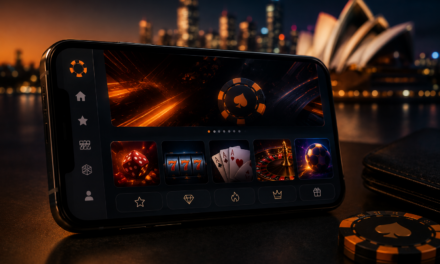
A few years ago, most digital casino platforms looked like polished spreadsheets with spinning reels. Menus were flat, lobbies were grids, and interaction rarely went beyond tapping a button. In 2026, that visual language is shifting dramatically. The online casino session no longer lives in flat 2D thumbnails and basic reel spins. It’s edging toward something closer to a streamlined game world, influenced by VR, AR, and the fluidity of high-refresh mobile displays.
The change is not just cosmetic. It reflects a broader transformation in hardware and design thinking. VR headsets are no longer experimental gadgets tucked away in research labs. Several operators and software studios now treat immersive casino halls as core product lines. At the same time, flagship smartphones with 120 Hz OLED panels and more powerful GPUs allow games to render smoother animations, layered particle effects, and live dealer video without visible stutter. When performance improves, expectations shift.
From flat menus to immersive spaces
In virtual reality, the familiar tiled lobby gives way to something closer to a digital resort. Instead of scrolling through icons, players can move through a three-dimensional hall, approach tables, and observe games already in progress. The design challenge becomes architectural rather than purely graphical. Lighting, spatial audio, and realistic materials play a role in shaping the atmosphere.
Interaction also changes. Buttons and overlay panels feel out of place in a headset environment, so user interfaces become embedded within the scene itself. Chips sit on tables. Cards are dealt in front of players. Gestures replace taps. This approach, often described as spatial computing, encourages developers to think in terms of presence rather than page views. How long does a person feel comfortable in the space? How does pacing influence user comfort? Those questions now matter as much as volatility or payout structures.
Technical requirements play a larger role than it might seem. With VR aiming for 90 to 120 frames per second, designers prioritize stability and visual clarity. Camera paths slow down. Dramatic beats come from shifts in space and environment, not quick flashes. It’s not loud, but the tonal adjustment is real.
Augmented reality brings games into everyday settings
While VR builds enclosed digital worlds, augmented reality does the opposite. It layers online casino elements onto the physical environment. Using a phone or tablet, a poker table can appear on a study desk, or a slot cabinet can be projected onto a coffee table. The surrounding room remains visible, which changes visual priorities.
Designers must account for unpredictable backgrounds, varied lighting, and battery limits. Interfaces tend to be cleaner, with high contrast elements that remain readable against real-world clutter. Sessions are often shorter and more modular, fitting naturally into mobile habits. A quick spin, a brief card reveal, a short animation. AR competes with daily life, so it adapts to it.
This hybrid model mirrors broader trends in entertainment. Social media filters, mixed-reality games, and live sports overlays have already accustomed users to digital layers blending with reality. Online casino products are applying the same logic. Whether that approach becomes mainstream is uncertain, but the groundwork is clearly being laid.
Why 120 Hz screens quietly change everything
High-refresh displays may not sound as dramatic as headsets, yet they arguably have the widest impact. Many premium smartphones now support 90 or 120 Hz by default. When reel animations, chip movements, and live dealer interfaces render at those speeds, the experience feels fluid in a way older devices could not achieve.
Smoothness shapes perception. Subtle delays during outcome reveals used to feel like technical quirks. On a stable 120 Hz display, transitions are immediate and precise. Moving through the lobby feels more like using a contemporary app than clicking through an older website. Gesture-based actions, dragging chips across the screen or swiping between tables, carry a tactile immediacy that earlier hardware couldn’t quite support.
There’s a trade-off, though. Pushing higher refresh rates means paying close attention to battery drain and heat buildup. Developers often end up favoring frame stability over piling on extra visual layers. As a result, design discipline becomes more important than spectacle.
Ultimately
What stands out in 2026 is not a single technology but their convergence. VR introduces spatial presence, AR connects digital play with physical surroundings, and high-refresh screens refine the everyday mobile experience. Together, they push online casino platforms toward a model that feels persistent, interactive, and visually dynamic rather than static and menu-driven.
There is room for debate about how far this evolution will go. Not every user owns a headset, and not every session requires immersive effects. Yet the direction is clear. Casino games are being designed less like isolated widgets and more like environments people enter, explore, and leave. In that sense, the industry’s visual transformation reflects a broader cultural shift toward experiences that are not just seen on a screen, but felt within a space.