














How Technology Is Improving Evidence Collection in Charlotte Personal Injury Lawsuits
Finding the right proof after an accident often feels like a race against time. In Charlotte, the city’s busy streets and high-speed traffic create complex scenes where memories fade, and physical marks disappear. Lawyers relied on police reports and witness stories to build a case. However, there has been a shift toward digital-first investigations. New tools now allow people to capture clear evidence quickly. This change helps victims document incidents more accurately, providing stronger support in claims for injuries or property damage.
How Digital Tools Assist Your Personal Injury Lawyer
Modern court cases increasingly rely on digital tools to paint a precise picture of an incident. When working with a personal injury lawyer, clients can now take advantage of real-time GPS tracking, dashcam footage, and vehicle telematics. These technologies serve as silent witnesses, capturing details that human memory often misses. Data on speed, braking, and steering can help establish fault, while high-definition video and sensor logs provide objective evidence to support a case.
Since North Carolina has strict contributory negligence rules, proving that the other party was fully at fault is often important. Handling these rules and gathering the right evidence can be complex without professional guidance. An experienced Charlotte personal injury lawyer from Stewart Law Offices provides dedicated support to help clients handle these challenges and build stronger claims. By leveraging digital tools alongside legal expertise, attorneys can transform complex data into compelling evidence that strengthens your case.
How does dashcam footage change the legal process?
Dashcam videos provide a detailed account of a crash, helping clarify aspects of liability. In North Carolina, these recordings are generally admissible if they are authenticated as accurate. They help disprove false claims and show the specific behavior of every driver involved.
Why is metadata important for legal evidence?
Metadata can help establish when and where a photo or video was taken. This digital fingerprint helps reduce the likelihood that the opposition can claim the evidence is from a different time or place.
How Drones Provide a New Perspective on Accident Scenes
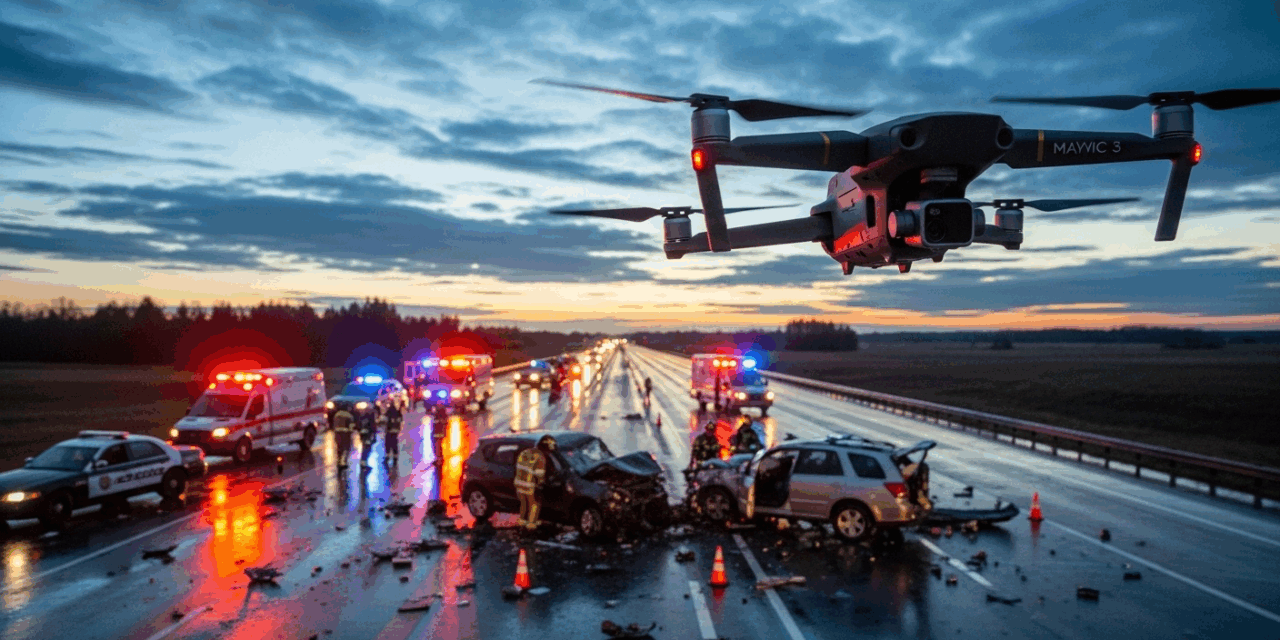
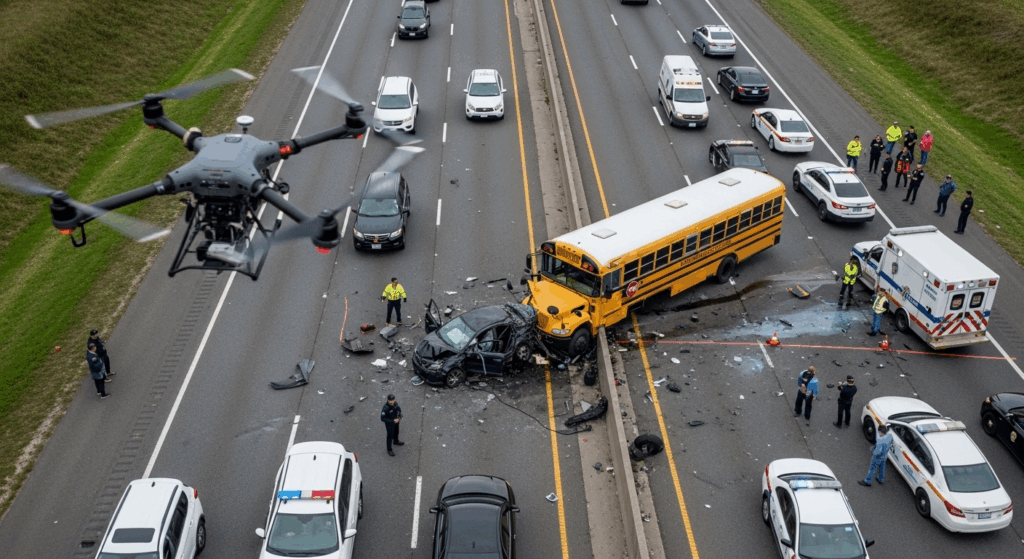
Drones have significantly enhanced accident investigations by capturing detailed aerial views that ground-level observation cannot match. They can map large areas in minutes, documenting skid marks, road signs, and debris patterns, and generate precise 2D maps and 3D models.
The U.S. Department of Transportation’s Federal Highway Administration notes that traditional mapping with a Total Station can involve 100–200 points and take up to about two hours, often requiring road closures. In contrast, drones (UAS) can capture 100–200 photographs in a 10–15‑minute flight, often allowing the roadway to remain open. By providing clear visual evidence from above, drones help clarify how a collision occurred, making it easier to determine fault and support legal cases.
Which Wearable Devices Help Prove Physical Injuries?
Smartwatches and fitness trackers are now used to show the daily impact of an injury on a victim’s life. These devices track heart rate, sleep patterns, and physical activity levels both before and after an accident occurs. If a victim claims they can no longer walk long distances, the data can back up that statement.
- Wearables provide a baseline of health from before the incident.
- The data shows sudden drops in movement that correlate with medical reports.
Charlotte personal injury lawyer Christian Gerencir notes that data from wearable devices can provide important insight, as drops in activity often match medical reports and help demonstrate the accident’s impact. This information helps link physical limitations to medical documentation, strengthening a case in court.
When Is 3D Reconstruction Used in Courtrooms?
When a crash involves multiple vehicles or complex turns, 3D reconstruction software creates a digital model of the event. Experts use data from the scene to build a simulation that judges and juries can watch, helping them visualize the physics of the crash and understand the force of impact. These models go beyond flat diagrams, showing scale, distances, and vehicle positions in detail.
Government agencies also recognize the importance of accurate crash analysis. The National Highway Traffic Safety Administration (NHTSA) supports standardized accident reconstruction and data collection to improve evidence quality and safety research. These reconstructions are especially useful in cases with disputed liability or multiple points of impact.
How Artificial Intelligence Finds Hidden Evidence
Artificial Intelligence can quickly scan thousands of pages of medical records, phone logs, and other documents to detect patterns that might otherwise be missed. It can identify missing records or highlight inconsistencies in a defendant’s statements.
By analyzing data rapidly, AI helps legal teams work more efficiently and can support building a stronger case. This technology may also help cases move toward a resolution more quickly, saving time for both clients and attorneys.
If you have been injured in a car accident near Charlotte Premium Outlets, you can visit personal injury lawyer at Stewart Law Offices at 2427 Tuckaseegee Rd, Suite A, NC 28208, just 16 minutes from the outlets, to review your options with a legal professional, or you can call (704) 521-5000 to speak confidentially.
FAQ
How can I protect my digital evidence after an accident?
You should save all photos, videos, and app data to a secure cloud drive immediately. Do not edit or crop the original files, as this can make them look unreliable in court. Keeping the original hardware, like a memory card, is also a smart move.
Can the insurance company use my social media against me?
Yes, insurance adjusters often look at social media to see if your posts match your injury claims. Even a simple photo of you at a park can be used to argue that you are not as hurt as you say. It is best to keep accounts private.
Will my phone’s GPS data be used in my case?
GPS data can be very helpful to prove you were at a specific location at a specific time. It can also show your speed and the route you took. Lawyers use this to confirm the facts of your story and build a timeline.