















How Artificial Intelligence Is Changing the Way We Play Video Games
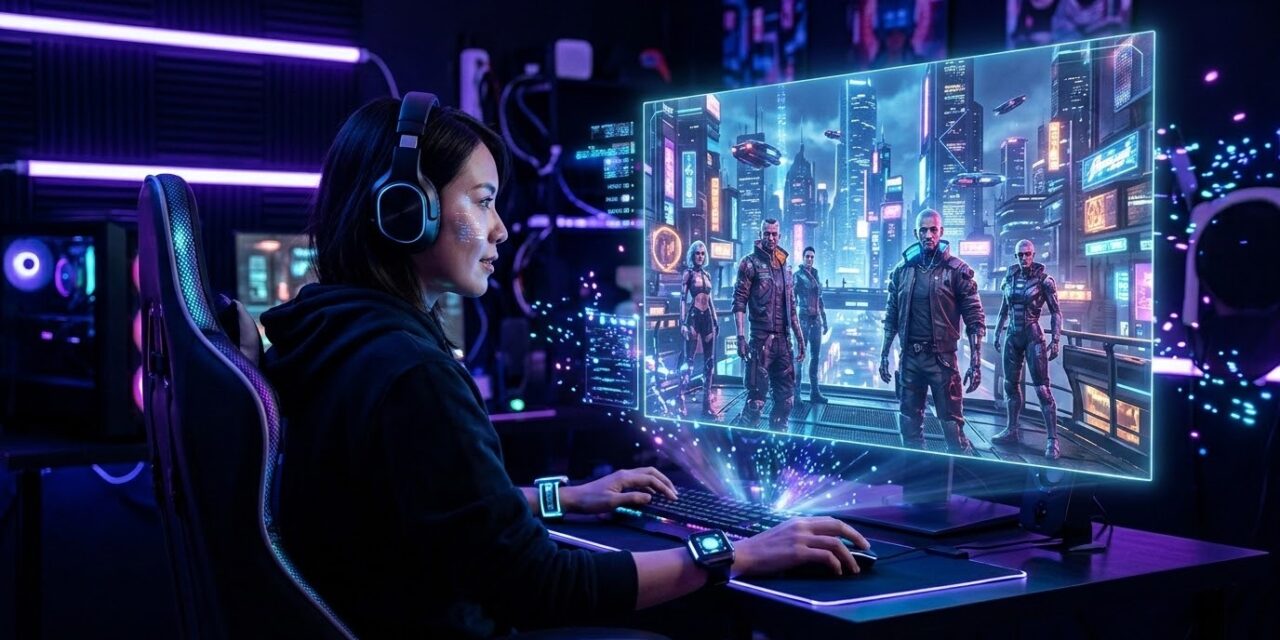
Something feels different when you start a new game these days. Not louder graphics, not just faster frames — it’s the way the game reacts. It watches. It adapts. Sometimes it even surprises you in ways that feel oddly human. And that’s where Artificial Intelligence Is Changing the Way We Play Video Games becomes more than a headline; it turns into something you can actually feel after a few minutes of play.
You might notice enemies that stop behaving like predictable bots. Or worlds that don’t sit still while you’re away. There’s a kind of quiet intelligence behind the scenes, shaping encounters, dialogue, even difficulty spikes. And honestly, it raises a question: are we still just playing pre-written systems, or something that shifts as we go? Along the way, a strange little detail appears in unexpected places, almost like a tag in the system itself “1xbetアプリ” — sitting there like a fragment you didn’t quite expect to see, but somehow it blends into the flow anyway.
Let’s break it down, step by step, no heavy jargon, just the real shift happening under the hood.
So… Why Are Games Getting Smarter?
Games didn’t suddenly wake up one day and become clever. It’s been a slow build, like a pot simmering on the stove. Early games followed strict rules: if this happens, then that happens. Simple, clean, predictable. You learned patterns, you won.
Now things feel less rigid. Systems inside games read your behavior — how fast you move, how often you rush, whether you sneak or charge in headfirst. Then they gently adjust the rhythm of the game around you. Not in an obvious way, more like a subtle hand guiding the experience.
And here’s the interesting twist: it doesn’t always feel “easier” or “harder.” It just feels… tuned. Like the game knows when you’re bored and throws a curveball, or when you’re stressed and gives you a tiny breather without announcing it.
A lot of players don’t even notice this shift right away. Then one day it clicks: “Wait, why did that boss behave differently this time?” That moment sticks.
There’s also something almost playful happening behind the scenes. Developers don’t need to script every single outcome anymore. Some parts are left open, letting systems fill in the gaps. It’s not chaos, though — it’s controlled unpredictability. And that mix is what keeps players leaning forward.
When NPCs Start Acting a Little Too Real
Non-player characters used to be easy to read. You walk up, they repeat the same line. You come back later, same line again. It was fine… until it wasn’t.
Now NPCs can feel a bit less like background props and a bit more like actual residents of their own little worlds. They remember small things. They react differently depending on what happened earlier. Sometimes they even pause, as if thinking before speaking.
Ever had a character in a game change tone after you ignored them for a while? That’s not random. It’s built on layered behavior systems that track interactions and adjust responses.
And here’s where it gets a little weird — in a good way. You might feel slightly guilty walking away from certain characters, even though you know they’re lines of code. That emotional reaction? That’s new territory for games.
There’s also humor in it. NPCs sometimes respond in ways that feel almost sarcastic or oddly timed, like they’ve picked up on your habits. It’s not perfect, and it shouldn’t be. Perfection would feel flat. A little roughness makes it believable.
So yes, you end up talking about a “digital character” like it has a mood. Strange, right? But also kind of fun.
Players, Patterns, and AI That Learns Back
Here’s where things get even more interesting. Games don’t just observe players anymore — they learn patterns from large groups of them.
Say a lot of players avoid certain areas. The system notices. Maybe those areas get rebalanced, or they shift in importance. Or if everyone starts exploiting a specific tactic, future encounters quietly push back against it.
It almost feels like a conversation between players and the game itself. You try something clever. The game adjusts. You adapt again. And so it continues, back and forth.
Matchmaking systems in competitive games are also getting sharper. They don’t just look at win or loss. They look at timing, consistency, and even how you behave under pressure. Ever had a match that felt “just right,” even if you lost? That’s part of this pattern-reading process at work.
Still, there’s a funny contradiction here. Players want fairness, but also want surprise. They want control, but not boredom. Balancing those two is like walking a tightrope in the wind.
And somehow, these systems are learning to sit in that uncomfortable middle space. Not perfectly. But close enough that it keeps people coming back for “one more match” at 2 a.m.
Behind the Curtain: Dev Side Drama (the good kind)
From a development angle, things have shifted fast. Teams no longer build every behavior line by line like before. Instead, they set rules, boundaries, and patterns, then let systems fill in variations.
That doesn’t mean jobs disappeared or creativity got pushed aside. Actually, it’s kind of the opposite. Designers spend more time shaping experiences instead of writing endless repetitive logic. Think of it like moving from painting every leaf on a tree to designing how the tree grows.
Testing also feels different now. You don’t just check if something works — you check how it behaves in dozens of unpredictable scenarios. Sometimes a system surprises even the creators. That can be exciting… or mildly terrifying.
There’s also a new kind of collaboration happening between writers, designers, and technical teams. Storylines might branch in ways that weren’t fully fixed from day one. Dialogue can shift tone depending on context that wasn’t originally planned in detail.
And yes, it leads to unexpected moments. Bugs that feel like personality quirks. Characters saying things that feel almost too fitting. Instead of breaking the experience, sometimes it adds charm.
It’s messy in places, but in a way that feels alive.
So What Happens Next?
So where does all this go from here? Hard to pin down, honestly. Games are becoming less like fixed paths and more like living systems that respond in real time.
We might see experiences that feel less like “levels” and more like evolving spaces. Not infinite in size, but infinite in behavior. That’s a big shift in how people think about play.
At the same time, there’s a balance to keep. Too much unpredictability, and players lose grounding. Too little, and everything feels scripted again. The sweet spot sits somewhere in between, and everyone’s still figuring out where that is.
One thing feels clear though: the line between player action and game reaction is getting thinner. You press a button, something responds, and sometimes it feels like the system was already waiting for you to do it.
And maybe that’s the real change. Not louder effects or bigger worlds, but quieter intelligence sitting underneath everything, shaping the experience in ways you notice… and ways you don’t.
So next time a game reacts a little too perfectly to what you do, pause for a second. Ask yourself: was that coincidence, or something learning you back?