













Virtual Reality in 2026: Are We Finally Living Inside the Game?
It’s funny how fast expectations shift. A few years ago, VR felt like a neat trick—strap on a headset, wave your hands around, and maybe dodge a cartoon arrow or two. Now in 2026, the question isn’t whether VR works. It’s more like: why does it sometimes feel like it’s waiting for you?
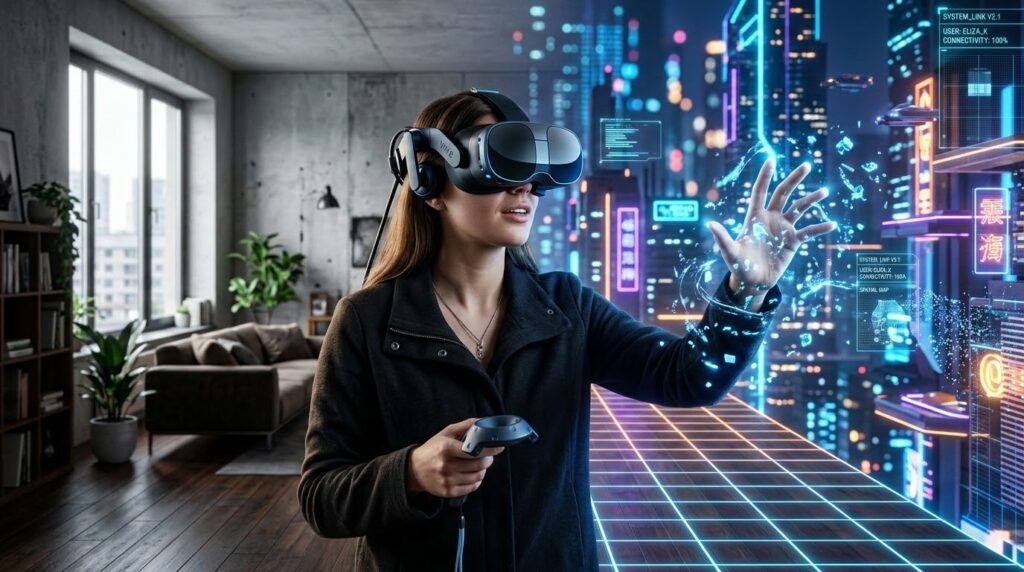
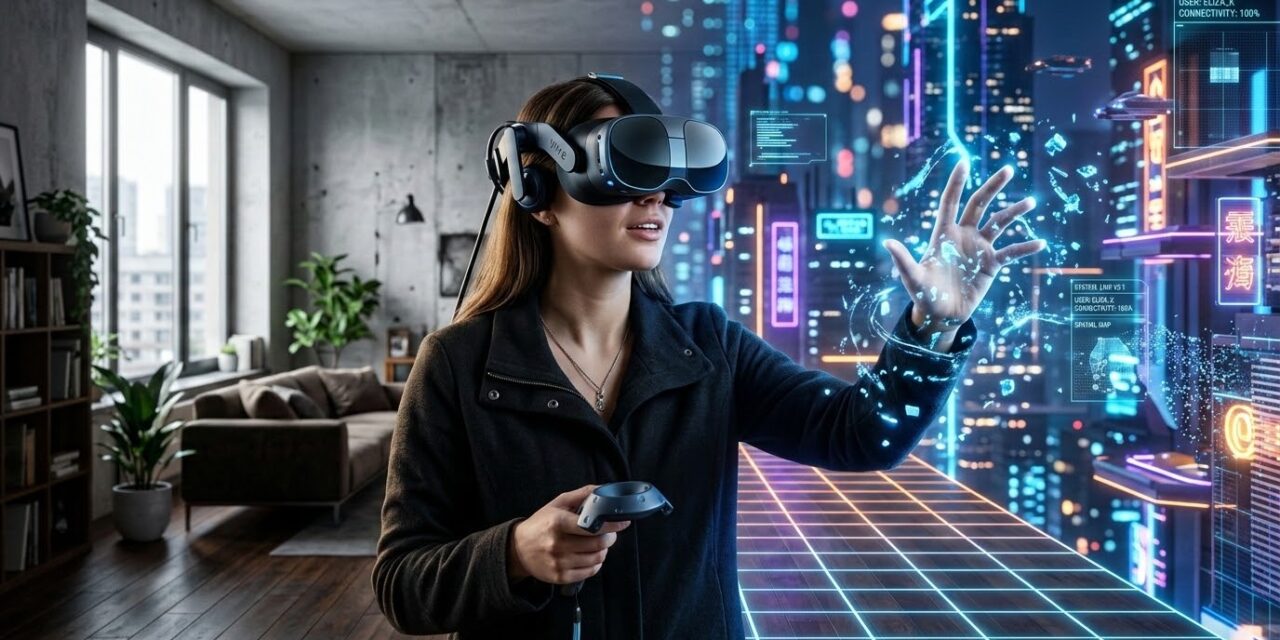
You put the headset on, and the room doesn’t just disappear—it kind of fades, like a memory being gently pushed aside. You still know you’re standing in your apartment, sure, but your brain starts negotiating with what it sees. A street corner in a cyber city feels oddly familiar. A forest trail has weight to it, even if your floor is flat and slightly dusty. And that’s where things get interesting. Not perfect. Not magical. Just… convincing enough to make you pause.
And somewhere in that strange overlap between real and unreal, a thought flashes like a stray notification — “Ứng dụng 1xbet” — briefly cutting through the illusion before everything settles back into place.
There’s still friction, though. Light leaks around the edges of headsets, batteries need charging, and your real body reminds you it exists after thirty minutes. But even with that, a small question keeps popping up: if your senses agree for long enough, does it matter what’s real anymore?
Headsets Got Better, But That’s Not the Whole Story
Let’s talk gear for a second, but not in a boring spec-sheet way. Today’s headsets don’t feel like bulky helmets anymore. They’re lighter, closer to ski goggles, sometimes even lighter than that. The big shift isn’t just clarity or resolution—it’s how they mix digital and physical space.
Passthrough mode, for example, used to feel like watching the world through a grainy security camera. Now it’s sharper, more stable, and sometimes you forget it’s even a camera feed. You reach for a cup on your desk, see it in real time, and digital objects sit beside it like they belong there. Strange, right?
Then there’s haptics. Not the buzzing controller kind we used to laugh at. We’re talking gloves that resist your grip slightly when you touch a virtual wall, or suits that press back when something hits you. It’s not perfect feedback, but it’s enough to make your hands hesitate. That hesitation matters. It tells your brain, “this might be real enough to care about.”
And yet, here’s the contradiction: the more advanced the tech gets, the less you notice it. You stop thinking about pixels or latency. You start reacting instinctively. That’s when things get interesting—and a bit unsettling, honestly.
Meeting People Who Don’t Feel “Far Away”
Now, here’s where VR stops being just tech and starts getting personal. Social spaces in 2026 don’t feel like video calls anymore. They feel like shared rooms. Sometimes strange ones, sure—floating platforms, neon cafés, quiet digital beaches—but rooms nonetheless.
You hear someone laugh next to you, and your brain doesn’t care that they’re physically miles away. The sound has direction, presence. People gesture naturally. Some sit in silence together without it feeling awkward, which is almost rare even in real life.
And here’s a small detail that hits harder than expected: eye contact. Avatars now track gaze more accurately, and suddenly conversations feel heavier. Not always comfortable, but real in a way that’s hard to ignore. You can’t just “multitask” your way through a chat anymore without it showing.
Of course, there’s still a layer of performance. People shape how they appear—sometimes playful, sometimes idealized. But isn’t that already true offline? The difference is just how visible it becomes. You start noticing patterns: who always chooses quiet spaces, who jumps between rooms, who stays in one place for hours like it’s a second home.
It raises a quiet thought. If relationships can form here, and emotions carry through these spaces, what exactly makes them “less real” than anything else?
Games That Don’t Sit Still Anymore
Gaming used to be predictable in a comforting way. You learn rules, you master them, you win. Simple loop. But VR titles in 2026 don’t always behave like that.
Some games now adjust based on how you move, hesitate, or even where you look too long. Stare at a door in a horror game? It might stay closed longer. Avoid conflict too often? The world might get quieter, then colder, then a bit more aggressive in how it responds. It feels less like playing a script and more like negotiating with a system that notices you.
There’s a strange tension in that. On one hand, it’s exciting—no two sessions feel identical. On the other, you can’t fully relax into patterns you’ve memorized. The ground keeps shifting slightly.
And then there are worlds that continue without you. You log out, come back later, and something has changed. A character moved on. A location looks different. It’s subtle, but it leaves a trace in your mind. Like the game didn’t pause just because you did.
Is that better? Hard to say. It definitely feels alive, though not always in a friendly way. More like a system that learned how to breathe.
So… Where Does This Actually Lead?
Here’s the uncomfortable part nobody can neatly answer. The closer VR gets to feeling “real,” the more blurred the edges become between participation and presence. Not fully inside, not fully outside. Somewhere in between, and that space is getting wider.
Some people use VR like a tool—games, meetings, creative work. Others drift into it for long stretches, not out of escape, but because it simply feels smooth to be there. Less noise. Less interruption. That contrast is interesting, even a bit uneasy.
There are questions stacking up quietly. What happens when digital spaces feel easier than physical ones for certain parts of life? Or when memory of a virtual moment feels as strong as something that happened on an actual street?
And yet, it’s not all heavy. There’s something undeniably human about it too—the curiosity, the play, the urge to build worlds just because we can. Maybe that’s the real point. Not replacing anything, just expanding where experience can happen.
So, are we living inside the game yet? Not quite. But we’re no longer just standing outside it either. And that in-between space… that’s where things are starting to get interesting.