
















How Online Casinos Prove Their Games Are Not Rigged

Every online gambler has the same nagging thought after a bad run: what if the game is simply rigged? Nobody is dealing cards in front of you, no wheel is spinning in the room, and the entire outcome is decided by software you cannot see.
The reassuring answer is that fairness is not something a licensed casino asks you to take on faith. It is tested by independent laboratories, enforced by regulators and, in some cases, verifiable by you personally in a matter of seconds.
The Question Every Player Asks
An online game is only as trustworthy as the evidence behind it, so the useful question is not whether a casino claims to be fair but what proof it can show. Reputable operators expect that scrutiny, and they build their sites to answer it.
The pattern is easy to spot once you know it, since transparency tends to come as a package. A site willing to publish its licence, its testing certificates and the exact return figures for each game is usually willing to be plain about everything else.
The same disclosure culture shows up in the small print, so a promotion advertised as an Stay casino no deposit bonus should state its wagering requirements openly, in the same spirit that a fair game states its RTP. Vagueness in one area is often a warning about the other.
Five Checks You Can Do In Two Minutes
You do not need to be a cryptographer or a statistician to judge a casino’s credentials. A handful of quick checks will tell you more than any amount of marketing copy.
Before depositing anywhere, run through this short list:
- Click the licence logo — it should open the regulator’s own register showing an active licence in that operator’s name.
- Click the testing seal — a genuine seal links to a live verification page on the lab’s website, not a dead image.
- Check the audit date — anything older than about eighteen months without a fresh report deserves a question to support.
- Open the game info panel — a certified game always discloses its RTP, and hidden payout figures are a poor sign.
- Look at the game studios — established developers submit their titles for certification as a matter of course.
None of these steps takes long, and together they separate a properly regulated operator from a site relying on nothing but a shiny homepage.
What The Seals Actually Mean
Those badges at the foot of a casino page represent independent laboratories, most of them accredited to the international testing standard known as ISO/IEC 17025. Their whole business depends on having no financial stake in whether players win or lose.
A few names appear again and again:
| Testing lab | Based in | Best known for |
|---|---|---|
| GLI (Gaming Laboratories International) | United States | The widest regulatory footprint, including strict US state markets |
| BMM Testlabs | Las Vegas | The oldest independent gaming lab, founded in 1981 |
| iTech Labs | Melbourne | RNG certificates widely recognised across Australia and Europe |
| eCOGRA | London | Player-facing seals and published payout reports |
A seal from any of these means a game’s software was examined by professionals with no interest in the result, which is the closest thing to a guarantee that exists in this industry. What matters is that the certificate is real, current and clickable.
Inside The Audit
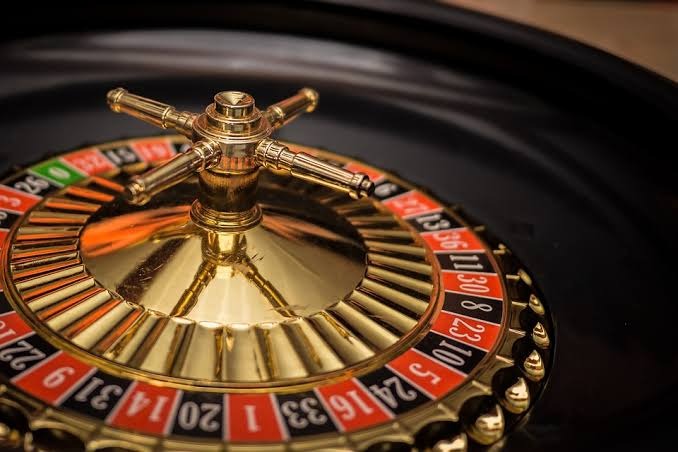
Certification is far more demanding than a quick glance at some code. Laboratories begin with a review of the source code itself, hunting for backdoors, errors or any mechanism that could nudge results in the operator’s favour.
From there the testing turns statistical, and the scale is enormous. Labs run anywhere from tens of millions to well over a billion simulated rounds, then push the output through recognised randomness batteries such as the fifteen tests of the NIST SP 800-22 suite, alongside chi-square and distribution checks.
Proving The RTP Is Real
Randomness alone is not enough, because a game could produce perfectly unpredictable results while still paying out less than advertised. So the lab also verifies that the realised return converges on the published figure, typically within a tolerance band of about two per cent.
A slot advertising 96.2 per cent must demonstrate that number across the simulated population or the certificate is simply withheld. Testers also confirm that no seed value is ever reused and that the software can detect tampering, closing the routes an unscrupulous operator might otherwise take.
One detail catches players out constantly, since a certificate applies only to the exact software version that was tested. If a studio ships a significant update, that build should go back for retesting, which is why the date on a report matters as much as the logo above it.
Why Regulators Insist On It
Testing would mean little if it were optional, so the major licensing bodies make it a condition of doing business. The UK Gambling Commission requires that games be tested against its technical standards by an approved test house before they reach a single player.
The Malta Gaming Authority maintains its own list of approved testing facilities and expects licensees to certify through one of them, while American state regulators such as the New Jersey Division of Gaming Enforcement go further still, demanding certification to the GLI standard with a full source-code review.
Even the jurisdictions once known for a light touch have tightened up, as Curacao overhauled its old master-licence model and now requires operators to submit their games and random number generators for independent certification. The loophole that let untested platforms trade on a cheap badge has narrowed sharply.
Provably Fair And Its Limits
Crypto casinos popularised a different model, one that hands the verification tools to the player. Before a round begins the server publishes a cryptographic hash of its secret seed, you contribute a seed of your own, and after the result the server reveals the original value so you can confirm nothing was swapped mid-bet.
It is a genuinely elegant idea, and for a single round it works exactly as advertised. What it cannot do is prove that the generator producing those seeds is unbiased in the first place, since a game could publish flawless proofs while quietly skewing its own odds.
| Lab certification | Provably fair | |
|---|---|---|
| Who verifies | An accredited independent lab | The player, using cryptography |
| What it proves | The RNG is unbiased and RTP is accurate | A single result was not altered after the bet |
| Scope | Millions of simulated rounds | One round at a time |
| Accepted by regulators | Yes, and usually required | Only as an extra layer, never alone |
That is why no top-tier regulator accepts provably fair as a replacement for laboratory testing, though the two work well together. The strongest operators run a certified generator and layer cryptographic proofs on top, giving players both statistical assurance and round-by-round verification.
Red Flags Worth Walking Away From
Knowing what good looks like also makes the warning signs obvious. Most problem sites give themselves away long before a player ever needs to dispute a payout.
Treat these as reasons to close the tab:
- A licence that cannot be verified — no entry on the regulator’s register, or a status listed as suspended.
- Seals that link nowhere — badges used as decoration rather than as a route to a real certificate.
- Missing RTP figures — games that will not tell you what they pay back over time.
- Unknown game studios — titles from developers with no certification history anywhere.
- Support that cannot explain — staff who dodge simple questions about who tests their games.
A casino that is genuinely fair has every reason to prove it, so reluctance to answer is itself an answer, and there are plenty of licensed alternatives that will.
Trust, But Verify
Online games are not rigged in the way suspicious players imagine, because a licensed operator has far more to lose from manipulation than it could ever gain. Between source-code reviews, billions of simulated rounds, RTP tolerance bands and regulators willing to revoke licences, the incentives point firmly toward honesty.
What none of that changes is the house edge, which is disclosed rather than hidden and remains the real reason most players finish behind. Fair games still favour the house, so anyone who feels their play is becoming hard to control can seek free, confidential support from services such as GamCare or the National Council on Problem Gambling.
FAQ
How do I know an online casino game is not rigged?
Check that the casino holds a verifiable licence, displays a working seal from a lab such as GLI or iTech Labs, and publishes the RTP for each game. Broken links are a warning.
What do testing laboratories actually check?
They review the source code, run millions of simulated rounds through statistical randomness tests, and confirm the real return matches the advertised RTP, usually within about a two per cent tolerance.
Is it probably better than an RNG certificate?
It is different, not better. Provably fair proves one round was not altered after your bet, while a lab certificate proves the generator is unbiased overall. Regulators require the certificate.
Do certificates ever expire?
They apply to the specific software version tested, so significant updates should trigger a retest. Always check the date on the report rather than trusting the logo alone.