














Shovelware-No-More: The Fading Stigma of the Licensed Game
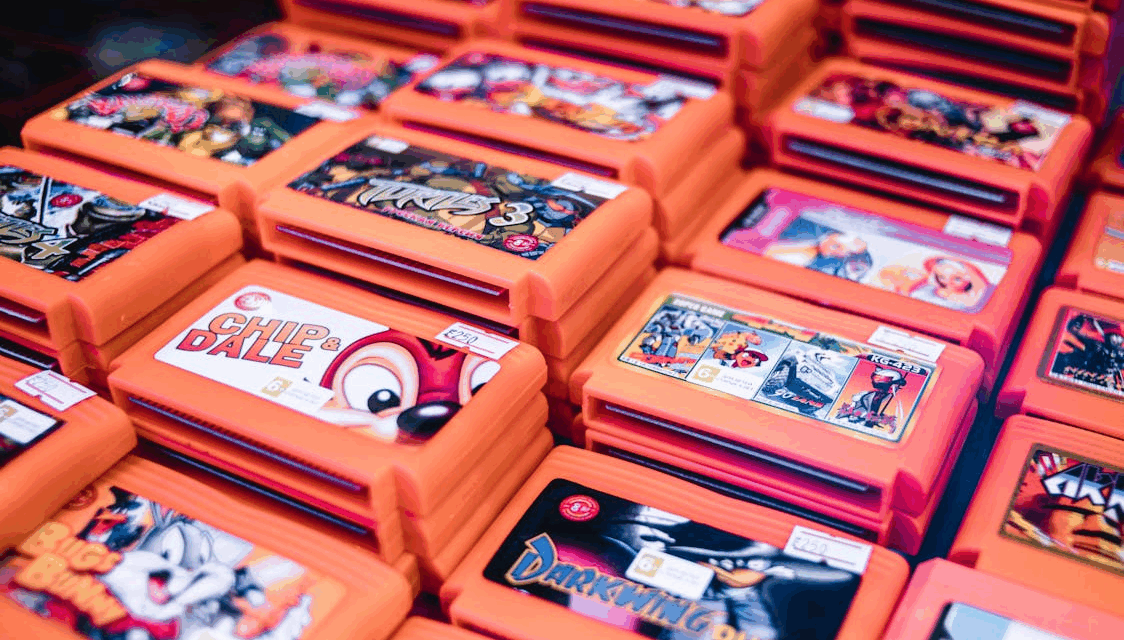
The licensed game, i.e., one built around another company’s property, the likes of Alien: Isolation and RoboCop: Rogue City, has a long history in video gaming.
Atari’s E.T. the Extra-Terrestrial (1982) is arguably the most famous example from the industry’s early days, but a handful of titles were made before 1980. The archetype is likely a 1976 arcade cabinet dedicated to the Happy Days character “The Fonz”. It was a simple motorcycle sim with the innards of Sega’s Road Race.
History of Licensed Games
A character we’ll mention again in this article, Indiana Jones, actually holds the Guinness World Record for the first video game adapted from a movie, beating E.T. by a month. The relevant entry is Raiders of the Lost Ark, also by Atari, a maze/adventure game played across several screens.
A note added to the latter record suggests that 1976’s Death Race, from developer Exidy, might have a case, too. It was the first title “tied into a movie release”, namely, Death Race 2000 (1975), something that would later come to typify the sub-genre of licensed games.
Unfortunately, the history of licensed games from that point onwards isn’t exactly worth remembering. Famed for offering an easy buck for developers and frequently enduring short development times to suit a movie’s release window, almost every popular franchise has earned the black mark of a licensed game.
Aliens: Colonial Marines, one of the most infamous cases from recent times, was famously undone by a spelling mistake in the game’s code (“teather” instead of “tether”). This seemingly minor error upset the way characters moved from one area to the next, resulting in a lack of interest from xenomorphs in their human prey.
Wii’s Collection of “Shovelware”
Licensing is big business in entertainment. In casino gaming, the developer Big Time Gaming lends its Megaways mechanic to companies in the same space. Megaways is found in slot games, randomising the number of symbols displayed on each reel, usually from two to seven.
Pop culture licenses add another level to this licensing pyramid, for example, in The Godfather Megaways. This is all relatively new for casino games, brought about by smartphone access to each slot.
In fact, it’s possible to find licensing on just about every product imaginable, from pencils to clothing. At the extreme end of things, rock band Kiss once launched a $3,300 branded coffin. Paperclips shaped like Porsche sports cars and a Coca-Cola toolbox are a few other oddities.
As mentioned, video gaming has parallels from decades ago. What might seem surprising is that the stigma that made licensed games all but unsellable during the 2000s (the Wii’s collection of “shovelware” will take decades to bury) is beginning to wear off.
A “Golden Age” of Licensed Games
The Ringer website introduces modern licensed games as part of a “Golden Age”, pointing to 2024’s Indiana Jones and the Great Circle as the best of the previous 21 entries to Indy’s video game canon. That number alone hints at the ease with which developers expected licensed games to sell.
Other recent success stories include a vast array of superhero and Star Wars titles, and even a game made for what might be the strangest franchise in modern history, the sci-fi epic Avatar: Frontiers of Pandora. For dino fans, the Jurassic World Evolution series of park sims is now on its third entry, each of which has been well-received despite offering much the same premise each time.
That’s not to say that licensed games aren’t still drawn to failure. Where the Alien franchise found forgiveness in Alien: Isolation, superheroes earned the ire of gamers with Suicide Squad: Kill the Justice League. This cynical live-service effort was a misstep for the once-beloved Rocksteady Studios. Sadly, it also marked the final appearance of Batman voice actor Kevin Conroy.
Narrative Strength
So, why have licensed titles finally started to shine out of their notoriously murky pile? It may have something to do with the fact that movies used to be ready-made for video game treatments, with action heroes of the day (RoboCop, Terminator, Rambo, etc.) providing a template for any number of shooter games.
As that hulking stereotype has faded from Hollywood, and modern games rely more on narrative strength, it’s not quite so easy to find a pop culture character worthy of an annual budget – unless they happen to be a superhero, of course.
That particular genre has the longest, most awkward run in licensed games. It’s perhaps surprising that there’s rarely been a year without a super-cameo in gaming.