













XRP Rich List 2026: Who Are the Top XRP Holders and How Much Do They Own?
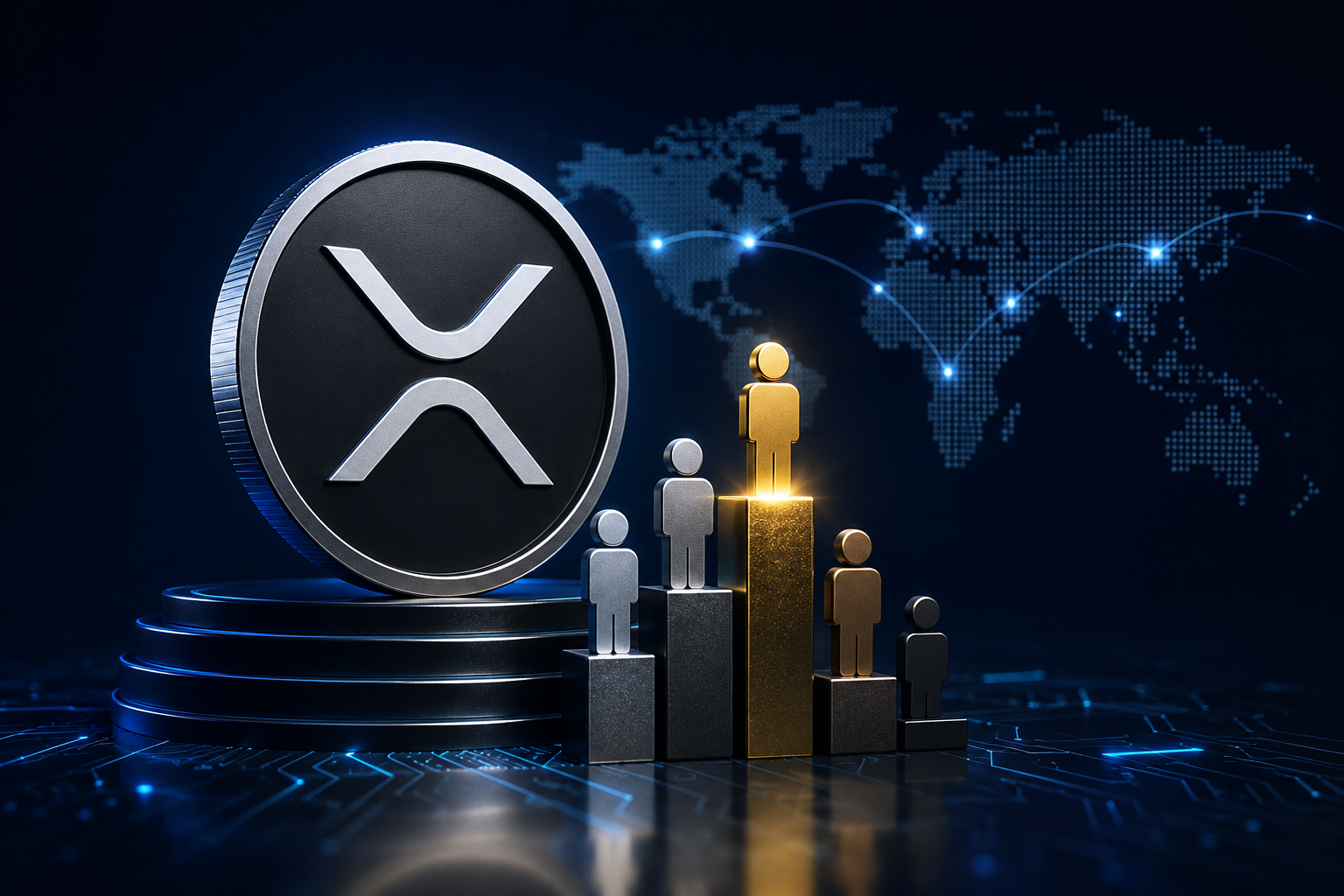
The distribution of XRP wealth is one of the most heavily debated topics in cryptocurrency. As the native asset of the XRP Ledger (XRPL), XRP powers low-fee, cross-border settlements. However, its unique supply structure, characterized by billions of tokens locked in corporate escrows and massive chunks held by centralized entities, frequently sparks questions about its true decentralization.
Who actually holds the keys to the XRP supply in 2026? Let’s dive into the on-chain data to break down the latest XRP rich list, uncover the biggest whales, and evaluate what this wealth distribution means for everyday investors.
Key Takeaways
- Ripple Labs remains the largest single XRP entity, managing tens of billions of tokens across corporate treasury and locked escrow accounts.
- Centralized exchanges dominate the top visible wallets, though these funds primarily represent aggregate retail user deposits rather than the platforms’ own wealth.
- Ownership concentration is distinctively high, with the top 50 wallets controlling roughly 43% to 45% of the circulating supply.
- Retail adoption is expanding rapidly, with total active XRPL wallets climbing past 7.7 million.
Quick Answers
This article analyzes the structural layout of the XRP wealth ecosystem in 2026. It breaks down the exact distribution of the 100 billion maximum token supply, shifting through corporate escrows managed by Ripple Labs, custodial cold wallets run by top exchanges, and the private positions of early network insiders. Furthermore, it details specific wallet volume benchmarks required for retail investors to qualify for elite holding tiers (such as the top 10%, 5%, and 1%) and compares these metrics against competing layer-1 blockchains.
XRP Rich List 2026 at a Glance
The following table provides a snapshot of the primary holder categories shaping the XRP supply architecture:
| Holder Category | Key Entities / Examples | Estimated Aggregate Holdings | Key Role & Market Function |
| Ripple Escrow Accounts | Ripple Labeled Escrows (10–13) | ~34B – 38B XRP | Non-circulating supply; locked for predictable programmatic release. |
| Centralized Exchanges | Bithumb, Binance, Uphold, Upbit | ~11.7B XRP (Top 10 addresses) | Custodial storage representing cumulative retail user balances. |
| Anonymous Whales | Unidentified Private Wallets | 700M – 1.4B XRP per wallet | Early insiders, institutional desks, or large private custodians. |
| Retail & Mid-Tier Investors | Individual Self-Custody Wallets | ~33B – 34B XRP | The broad user base, holding balances across millions of addresses. |
Who Owns the Most XRP in 2026?
Analyzing the XRPL via blockchain explorers reveals that the absolute pinnacle of the rich list is highly institutionalized.
- Ripple Escrow Wallets: Cryptographically secured ledger addresses holding locked tokens that do not contribute to daily circulating market liquidity.
- Centralized Exchanges (CEXs): Individual platform cold wallets consistently capture top spots. For instance, a single prominent Bithumb address holds roughly 1.79 billion XRP, closely followed by major clusters from Binance (~1.68 billion XRP) and Uphold (~1.51 billion XRP).
- Chris Larsen & Early Founders: Legacy allocations held by company founders still sit in prominent, trackable personal wallets.
Why Exchange Wallets Dominate the XRP Rich List?
It is a common misconception that the exchanges themselves own these multi-billion token positions. In reality, these are custodial wallets. They hold the combined deposits of millions of retail traders who prefer keeping their crypto on an exchange rather than moving it to a private, self-custody wallet.
How Much XRP Does Ripple Own?
Ripple’s Escrow Holdings
To ensure supply predictability, Ripple placed 55 billion XRP into a series of escrows in 2017. Following years of scheduled rollouts, Ripple’s locked escrow balance sits at approximately 38.15 billion XRP.
- Total Fixed Supply: 100 Billion XRP
- Circulating Supply: ~60 Billion XRP (Held by Exchanges, Whales, and Retail)
- Locked Escrow & Treasury: ~40 Billion XRP (Controlled by Ripple Labs)
Ripple Treasury and Operational Reserves
Outside of the formal escrow system, Ripple maintains a separate corporate treasury. These liquid reserves fund global operations, institutional partnerships, and liquidity solutions like On-Demand Liquidity (ODL).
How Ripple’s Monthly XRP Unlocks Affect Supply
On the first day of every month, Ripple executes a programmatic unlock of 1 billion XRP from its escrow accounts. This recurring event often triggers community discussion regarding market dilution. However, on-chain data shows that Ripple routinely returns a massive portion—frequently between 700 million and 800 million XRP, back into a new future escrow contract, neutralizing a significant amount of the immediate selling pressure.
Who Is the Richest Individual XRP Holder?
Chris Larsen’s XRP Holdings
Among independent individuals, Ripple co-founder and Executive Chairman Chris Larsen is widely recognized as the wealthiest holder. On-chain estimates credit him with a personal stash spanning several billion XRP, distributed across distinct, secure addresses for security and personal asset management.
Other Known XRP Billionaires and Early Investors
Other notable figures include early co-founders and initial corporate stakeholders. While former CTO Jed McCaleb famously concluded the multi-year structured liquidation of his “tacostand” wallet balances in 2022, a handful of early institutional partners and anonymous private entities hold individual wallets containing 700 million to 1.3 billion XRP each.
XRP Ownership Statistics in 2026
The structural realities of the XRPL network reveal a clear division between whale entities and the broader retail ecosystem.
- Total Supply: Fixed at 100 billion tokens (with negligible amounts burned via transaction fees).
- Circulating Supply: Approximately 60 billion XRP.
- Network Wallets: Exceeding 7.7 million activated addresses, showing steady long-term adoption.
- Top-Tier Distribution: The top 10 addresses account for nearly 20% of the circulating supply, while the top 50 addresses command roughly 43% to 44%.
How Concentrated Is XRP Ownership?
What Percentage of XRP Is Controlled by Whales?
Whale dominance is highly visible on the XRPL. If you aggregate Ripple’s corporate holdings, institutional custody desks, and major cryptocurrency exchanges, over half of the total nominal supply sits in a relatively tight circle of highly visible addresses.
Is XRP More Centralized Than Other Cryptocurrencies?
Compared to networks like Bitcoin, XRP wealth presents a more centralized layout. Because Bitcoin relies on Proof-of-Work mining, its distribution occurred organically over years of computing expenditure. Conversely, all 100 billion XRP tokens were minted instantly at inception, leaving the initial distribution directly in the hands of a single corporate parent entity.
XRP Whale Activity in 2026
On-chain tracking indicators show that retail positions under 10,000 XRP have expanded steadily. Concurrently, large institutional players frequently use periods of market consolidation to accumulate, moving large blocks out of exchange wallets into private, off-exchange custody.
When monitoring whale alerts, the direction of the transfer matters more than the volume:
- Whale to Exchange: Large movements of XRP from private wallets onto trading platforms generally signal a desire to liquidate or use funds for derivatives collateral, creating potential overhead resistance.
- Exchange to Private Wallet: Moving funds off trading venues into cold storage points toward long-term holding strategies, taking supply out of active circulation.
XRP Rich List vs Bitcoin and Ethereum
The wealth distribution profiles of the top three blockchain networks show clear structural differences:
| Metric | XRP Ledger (XRP) | Bitcoin (BTC) | Ethereum (ETH) |
| Top 50 Wallet Concentration | ~43% – 44% | ~10% – 12% | ~25% – 30% |
| Primary Top Holders | Corporate Escrows & CEXs | Asset Managers & MicroStrategy | Liquid Staking Protocols (Lido) |
| Supply Origin | 100% Pre-minted | Algorithmic Mining | Transitioned to Proof-of-Stake |
What the XRP Rich List Means for Investors
The tier thresholds offer clear milestones for regular retail investors looking to benchmark their progress:
- Top 10%: Requires a balance of roughly 2,200 XRP.
- Top 5%: Requires approximately 7,700 XRP.
- Top 1%: Requires at least 46,323 XRP (equivalent to roughly $65,000 to $68,000 depending on localized market fluctuations).
These attainable tiers show that despite institutional concentration, an average investor can still build a highly competitive portfolio position relative to the global user base.
The primary risk stems from supply governance. Should Ripple significantly alter its historical OTC selling patterns, or if an early insider chooses to liquidate an entire multi-million token wallet, the market can face sudden localized liquidity strains.
Conclusion
The XRP rich list highlights a fascinating dual reality. On one hand, institutional footprints, corporate escrows, and centralized exchanges command massive authority over the token supply. On the other hand, a booming retail community of over 7.7 million wallets shows that building a meaningful, top-tier position is entirely achievable for dedicated everyday investors.
Frequently Asked Questions
Who owns the most XRP in 2026?
Ripple Labs controls the single largest share of the asset via locked smart contracts.
How much XRP do you need to be in the top 1% of holders?
You need a minimum balance of 46,323 XRP to rank in the top 1% tier of active accounts.
Can large XRP holders affect the token’s market price?
Yes, significant transfers from whales or shifts in how Ripple handles its monthly escrow releases can introduce temporary volatility into active trading pairs.











![Deal – FIREBAT FD2 Mini PC [2026]](https://www.enostech.com/wp-content/uploads/2026/06/image-63-150x150.png)