













How Casino Bonuses Reflect the Gamification of Modern Entertainment

The Universal Appeal of Rewards
In an era where digital entertainment stretches across apps, streaming services, mobile games and beyond, one constant remains: the human attraction to reward. The concept of a “reward loop”—the repeated cycle of action and payoff—is no longer exclusive to video games. It now underpins most online experiences, from fitness apps to social platforms to learning tools. The world of online casinos embraced this pattern early, refining it through what we now recognise as “casino bonuses.” These are not merely marketing tools to lure users; they serve as UX engines, driving retention, engagement, and immersion. This article argues that these promotions constitute a clear and early example of gamification in digital entertainment, bridging behavioural psychology, design for delight and retention mechanics that are increasingly common in modern tech-driven platforms.
Understanding Gamification
Gamification is the systematic use of game-design elements in non-game contexts. At its core it exploits features like feedback loops (you act, you receive immediate or delayed feedback), progress tracking (you see your journey or level increasing) and achievement psychology (you want to unlock something, feel validated).
The same mechanics that keep us playing a mobile game — levels, badges, daily challenges — appear in productivity apps (“complete your daily streak”), streaming services (“you’re at 80% of the season”), and loyalty programs (“advance to Gold tier for extra perks”). These examples demonstrate that gamification has become a universal engagement strategy.
While content still matters, what distinguishes modern entertainment is the framing: users do not just consume; they participate. Gamification shifts the user from passive viewer to active engager — a change equally visible in gaming, apps, and the online-casino world.
Digital Game Design
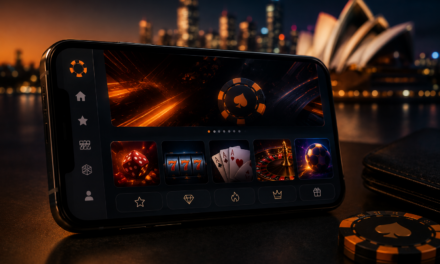
Platforms offering this promotions use gamified systems — from point accumulation to randomized rewards — to create a sense of participation and excitement like modern gaming.
Online casinos now use visible progress bars tracking your “loyalty points;” milestone triggers that unlock free spins, limited-time challenges like “play this game today for bonus,” and tiered rewards such as bronze, silver, and gold vip levels. These precisely mirror mechanics found in mobile and console games like loot boxes, season passes, and tier unlocks.
Just like a mobile game might sell a battle pass or award a loot box after a string of victories, online casinos embed progress-based offers, random bonus wheel spins, achievement badges, and leaderboard tournaments. The result is that a session of gambling becomes less about a single transaction and more about a layered experience of progression, status, and reward.
Technology’s Role in Personalization
Behind what appears as “just another bonus” is sophisticated data work: AI models, profiling, and segmentation. Online casino operators analyse behaviours such as which games players choose, how often they deposit, and how they respond to bonus offers. This data is used to generate targeted, timed, personalized offers—aligning each reward with individual preferences.
In broader digital entertainment, the same pattern holds: Netflix recommendations, Spotify playlists, fitness apps, adapting to your pace. In casinos, the technology drives not only “what offer you see” but “when you see it,” “what reward size you are given,” and “which challenge you’re presented with.” That level of personalization underpins retention and longer sessions.
The takeaway for tech-literate readers is clear: whether designing a streaming platform or a gamified training app, the architecture underpinning reward design is similar—data, triggers, personalization, and feedback loops.
The Psychology of Retention
Psychologically, the reward loop works because it triggers anticipation, perceived control, and goal-setting. Neuroscience shows the release of dopamine when goals are achieved, or near-misses occur. In the context of casino bonuses especially, the promise of unlocking the next tier or collecting free spins taps directly into these mechanisms.
By offering structured rewards — free spins, deposit match bonuses, loyalty points — casinos build a habit loop: deposit → play → bonus → repeat. Once a player sees bonus accumulation or tier-progress, they are more likely to return, increasing retention by design.
Gamification theory emphasises that immediate feedback and visible progress bring a sense of advancement. In casino systems, this mirrors loyalty ladders, avatar status, or badge towers — all reinforcing the feeling that the platform values continued participation.
From Casinos to Consoles – The Shared DNA of Engagement
The design patterns seen in online casinos and in video games or apps share the same DNA: levels, tiers, missions, badges, progress indicators. Online casino promotions have drawn directly from game design thinking — and in turn, game and app designers borrow loyalty-program metaphors from casino marketing. Loyalty tiers in subscription apps often resemble VIP levels in casinos.
In gaming, players earn XP, raise levels, and unlock perks. In streaming, users may unlock exclusive content for frequent usage. In casino ecosystems, loyalty points, VIP tiers, and “play X days in a row” style offers serve the same psychological function. This convergence shows that entertainment platforms increasingly operate like interactive games rather than passive services.
For UX professionals, the lesson is that retention and engagement depend less on content quantity and more on how experiences are designed — how rewards are structured, how progress is shown, and how motivation is triggered. The casino bonus model remains one of the clearest case studies of this principle.
Ethical Implications of Reward-Based Engagement
As gamification becomes ubiquitous, the question is not only how to keep users engaged, but how to do so responsibly. In online casinos, gamified mechanics can blur the line between entertainment and compulsion. Streak bonuses, time-limited promotions, and rising tiers may encourage users to continue playing beyond healthy limits.
Responsible design requires transparency in bonus terms, fair wagering requirements, clear communication, and easy opt-out features. This becomes crucial when reward systems, mimic game design so closely that they risk promoting addictive patterns.
Across industries — from apps to casinos to loyalty programs — the challenge will be creating reward loops that maintain engagement while preserving user trust, autonomy, and well-being. The convergence of gaming, entertainment, and behavioural design calls for both innovation and ethical restraint.
The Future of Digital Reward Culture
This promotion stand as a defining example of how gamification has evolved from niche gaming into mainstream digital entertainment. The mechanics — progress bars, milestone rewards, personalized offers, and leaderboard challenges — now appear across every form of media and technology.
As the future unfolds, immersive experiences like virtual and augmented reality will amplify these reward systems. Yet the real frontier lies in maintaining transparency and ethical engagement. The fusion of gaming, entertainment, and behavioural design has already arrived, offering lessons that extend far beyond casinos. In a world where every tap, stream, or scroll can feel like part of a game, the ultimate objective is clear: reward wisely, engage ethically, and design experiences that build trust as much as excitement.