













Maxon proudly launches powerful Cinebench 2026 with smarter and more accurate performance tests

Maxon has officially released Cinebench 2026, bringing a fresh update to one of the most trusted PC benchmarking tools in the world. Used for over 20 years, Cinebench helps users understand how well their computer performs in real-world tasks, especially heavy 3D rendering work.

The new version continues to use Redshift, the same rendering engine found in Cinema 4D, which means the results are closer to what users can expect in real creative work. Reviewers, hardware makers, gamers, and everyday PC users all rely on Cinebench to test both CPU and GPU performance in a simple and reliable way.
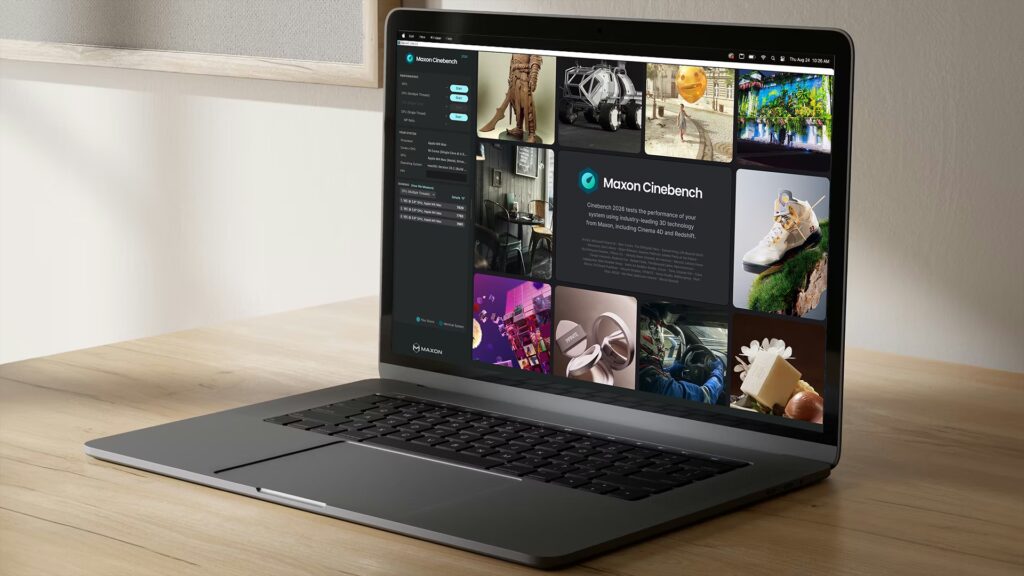
Cinebench 2026 is built to work with the latest hardware. It now supports NVIDIA Blackwell GPUs, including the 5000 series on Windows, along with AMD 9000 series GPUs. For professional users, it also supports NVIDIA Hopper and Blackwell data centre GPUs. On the Apple side, the tool now runs on systems powered by Apple M4 and M5 chips, making it useful for both Mac and Windows users.
Maxon has also updated Cinebench 2026 to the newest version of the Redshift rendering engine. This helps the software make better use of modern CPUs and GPUs. A new test has been added to measure how well CPUs perform when SMT, also known as multi-threading, is turned on. This allows users to clearly see the performance difference between single-core use and multi-core use.
The software supports a wide range of systems, including Windows x86-64, Windows ARM64, and macOS. This makes Cinebench 2026 suitable for desktops, laptops, and even ARM-based devices.

Maxon has confirmed that scores from Cinebench 2026 should not be compared with older versions like Cinebench 2024. Due to major engine updates and better optimisation, the new scores reflect modern hardware in a more accurate way.
Cinebench 2026 is available free of charge from the official Maxon website. With better hardware support, smarter testing, and more realistic results, the latest version offers a strong and reliable way to measure system performance for today’s computers.