













The Technology Keeping Finnish Casino Winnings Tax-Free Under EEA Licensing in 2026
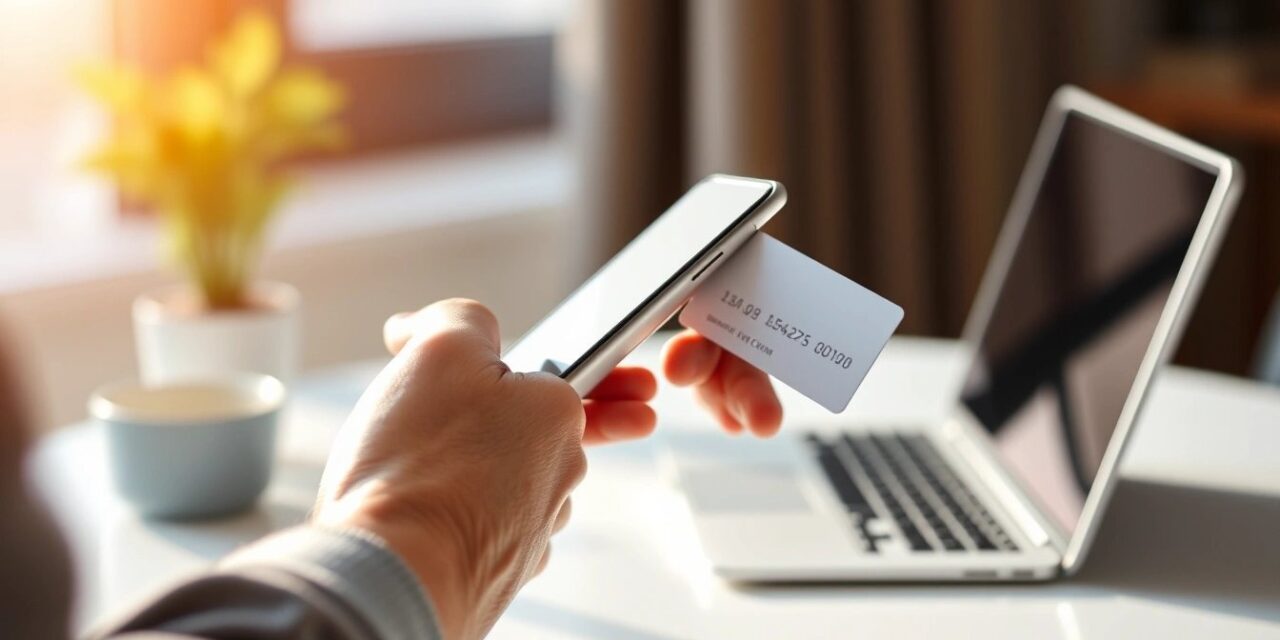
Ask a hardware reader what makes a fast payment feel fast, and you will usually get a good answer about latency, handshakes, and where the bottleneck really sits. The same instinct applies to money. When a Finnish player deposits at an online casino by tapping a bank app instead of typing a card number, a surprising amount of engineering fires in the background: an authentication challenge, a signed authorization, an encrypted instruction, and a settlement clock that now runs in seconds rather than days. None of it is visible on screen, which is exactly why it is worth pulling apart.
There is a second, less obvious layer stacked on top of the payment rail, and it is the one that decides whether winnings are taxed at all. For Finnish residents, money won from an operator licensed inside the European Economic Area (EEA) is generally tax-free, while winnings from operators outside that zone can be reported as taxable income. That single distinction turns a licensing database into a financial variable. Comparison sites built for the local market spend a lot of effort tracking it, and a Finnish guide such as Hyvat Kasinot, which curates verovapaat casino listings for players who want to understand where an operator is licensed before they deposit, is one example of how that information gets surfaced.
This piece takes the hardware writer’s approach and treats the whole thing as a stack. We will walk from the physical authentication device in your hand up through the encryption, the settlement rail, and finally the licence-verification layer that keeps the tax treatment clean. The point is not gambling advice. It is understanding the plumbing, because the plumbing is genuinely more interesting than the marketing around it. Everything below assumes an adult audience (18 and over) and a bit of skepticism, which is the correct default for anything involving your bank credentials.
Why a Hardware Audience Should Care About Payment Plumbing
Payment technology used to be dull because it was slow and opaque. That has changed. Account-to-account (A2A) transfers, open banking, and the instant-settlement mandates rolling across the euro area have turned the humble deposit into a small distributed-systems problem. There is a client (your bank app), a broker (the payment provider), an authorization protocol, a cryptographic signing step, and a clearing mechanism that has to reconcile across institutions in real time.
If you enjoy understanding how a request travels from a device to a server and back, this is the same class of problem with real money attached. It also has a security surface worth respecting. Your bank login, your device, and the authorization token are the three things an attacker would want, and the design of these systems is largely an argument about how to keep those three separated. Treating a deposit as an engineering event rather than a marketing funnel is a healthier way to read the whole category.
The Rail Underneath: Account-to-Account Transfers
The older model was card-based. You handed a long number and a code to a merchant, and a card network stood in the middle taking a cut and carrying the fraud risk. Account-to-account payments skip the card network. Money moves directly from your bank account to the recipient’s, authorized through open banking, the regulatory framework that lets a licensed third party connect to your bank with your explicit consent.
In practice a provider such as Zimpler or Brite acts as the connector. At checkout you pick the provider, choose your bank, confirm the payment inside your own banking app, and the funds move. Zimpler is the name Finnish players tend to recognize, having built its reputation on mobile-first bank transfers aimed at this market. Brite is the newer challenger and has put much of its engineering into fast payouts that run outside normal banking hours. The category is consolidating, too: reporting in 2025 pointed to Zimpler being acquired by open-banking firm TrueLayer, a reminder that the rail matters more than any single brand riding on it.
The important architectural detail is that the provider never needs your card details, and in a well-designed flow it does not store your banking password either. It initiates a payment that you approve inside your bank’s own environment. That separation is the whole point.
Authentication Is the Real Hardware Story
Here is where the physical device earns its keep. The Nordic markets lean heavily on BankID and mobile bank identification, a single credential that participating banks underwrite and that works across services. When you approve a deposit, you are not typing a password into the casino. You are completing a challenge inside a trusted app, usually backed by the secure element or trusted execution environment on your phone, the same protected hardware that guards your device biometrics.
European rules push this hard. Under the revised Payment Services Directive (PSD2), most electronic payments in the EEA require Strong Customer Authentication (SCA), which means proving at least two of three independent factors: something you know (a PIN), something you have (your phone or a hardware token), and something you are (a fingerprint or face scan). For a hardware reader, the interesting part is that the “something you have” factor is increasingly tied to a specific device and its secure hardware, not just a phone number that can be hijacked through a SIM swap. That binding is what makes the second factor meaningful instead of theatrical.
Encryption and Dynamic Linking: What Actually Protects a Deposit
Two-factor authentication only helps if the thing you authorize cannot be quietly changed after you approve it. This is where a rule called dynamic linking comes in. SCA under PSD2 requires that the authentication code be tied to a specific amount and a specific payee, so if either value is altered in transit, the authorization becomes invalid. In plain terms, you are not signing a blank check. You are signing “this amount, to this recipient,” and the cryptography refuses to let those details drift.
The confidentiality and integrity of the payment instruction have to be protected end to end, which is why these flows run over encrypted channels and why the sensitive approval happens inside your bank’s app rather than a casino’s web form. Some setups also use decoupled authentication, where you confirm on a separate device from the one making the request. If you have ever started a payment on a laptop and finished it by tapping your phone, you have used it. It is a small design choice that meaningfully raises the cost of a man-in-the-middle attack. If you want to go deeper on how these open-banking deposit flows became standard for the Finnish market, this companion piece on how open-banking payments are becoming the default for Finland’s online casinos covers the shift in more detail.
The Ten-Second Settlement Clock
Speed is not just a user-experience nicety here. It is now regulated. The EU’s Instant Payments Regulation, adopted in March 2024 and entering into force the following month, requires payment providers in the euro area to be able to receive euro instant payments by January 2025 and to send them by October 2025. The target is a settlement window of ten seconds, end to end, at any hour of any day.
That clock is why withdrawals from newer operators can feel almost immediate instead of arriving days later. The same regulation added a Verification of Payee step, meaning providers must check that the payee name matches the account number before the transfer goes through, which trims a common category of misdirected-payment fraud. For anyone who has watched a file transfer stall at 99 percent, there is something satisfying about a payment rail with a legally mandated deadline measured in seconds. The technical authority for how that instant rail is being built out for Finland and the wider euro area is documented in the Bank of Finland’s overview of instant payments, which is the primary source worth reading rather than any operator’s summary.
How the Tech Verifies an EEA Licence, and Why Tax Depends On It
Now the layer that connects all this plumbing to your tax return. For Finnish residents under current rules, winnings from an operator licensed inside the EEA are generally tax-free, while winnings from an operator outside the EEA can be taxable and reported as other income. Importantly, losses cannot be offset against those taxable winnings, so a player can end a year down overall and still owe tax on gross winning sessions from a non-EEA operator.
That makes one field, the operator’s licensing jurisdiction, financially significant. It is a data-verification problem. Regulators publish licence registers, licence numbers appear in operator footers, and comparison resources maintain their own checks against those public records. The technology that keeps winnings tax-free is therefore not only the payment rail. It is also the boring, essential work of confirming where an operator actually holds its licence, because that single attribute changes the tax outcome. This is exactly the reason careful players verify licensing before depositing rather than trusting a logo.
The Stack at a Glance
The table below lays out the layers as a hardware reader might diagram them, from the device in your hand up to the licence check that governs tax treatment.
| Layer | What it does | Why it matters for tax-free play |
|---|---|---|
| Device and secure element | Holds biometrics and signing keys in protected hardware | Anchors the “something you have” factor to real hardware, not a SIM |
| BankID and SCA | Two-of-three factor authentication under PSD2 | Confirms it is really you approving a specific deposit or withdrawal |
| Dynamic linking and encryption | Binds the approval to one amount and one payee | Stops a signed payment from being altered in transit |
| Instant payment rail | Moves euro funds in about ten seconds under the Instant Payments Regulation | Delivers fast, traceable deposits and payouts with a clean record |
| Licence verification | Confirms the operator’s EEA licensing jurisdiction | The attribute that decides whether Finnish winnings are tax-free |
Read top to bottom, the first four rows are about moving money safely and quickly. The last row is the one that determines whether the tax authority ever enters the picture. Both halves have to hold for the “tax-free” label to mean anything.
What Changes as Finland’s Licensed Market Opens
Finland is moving away from the long-standing Veikkaus monopoly toward a licensed multi-operator model. The reform is expected to take effect in the coming years, with commentary often pointing to around 2027, though the exact timing depends on the legislative process and should be treated as an estimate rather than a fixed date. The tax logic is expected to carry a subtle but important change.
As it stands, the EEA exemption is expected to remain: winnings from EEA-licensed operators should still be tax-free for Finnish residents. The nuance being discussed is that once a game is “made playable” in Finland under the new regime, winnings could become taxable if the operator providing it does not hold a Finnish licence. In other words, the licence-verification layer we described above may gain a new field to check, domestic licensing status, on top of the existing EEA question. Anyone relying on the tax-free framing should watch how the final rules land, because the technology will adapt to whatever the statute defines, not the other way around. None of this is tax advice, and edge cases are best confirmed with the tax authority directly.
Security Hygiene and Playing Within Limits
The same properties that make these rails efficient also concentrate risk in a few places, so a little discipline goes a long way. Keep your banking app and phone operating system patched, since the secure element only protects you if the software around it is current. Be wary of any flow that asks you to enter your full bank password anywhere other than your bank’s own app, because a legitimate open-banking deposit never needs that. Enable device-level biometrics so a lost phone does not become an open door.
On the play side, the technology is neutral about how much you spend, which means the guardrails have to be yours. Finland offers support through services such as Peluuri, and most reputable operators provide deposit limits, cooling-off periods, and self-exclusion tools. Fast payments make it easier to move money in both directions, so setting limits before you start is the sensible engineering approach: define the constraints up front rather than trying to add them under load. This category is for adults only, and treating it as entertainment with a budget, not a strategy, is the healthiest default.
Frequently Asked Questions
Does paying by bank instead of card change whether my winnings are tax-free?
No. The payment method moves money, but it does not decide tax treatment. For Finnish residents under current rules, what matters is where the operator is licensed: winnings from an EEA-licensed operator are generally tax-free, while winnings from outside the EEA can be taxable. Bank payments simply give you a cleaner transaction record.
What is Strong Customer Authentication and why do I keep getting asked to confirm in my bank app?
Strong Customer Authentication is an EEA rule requiring most electronic payments to be verified with at least two independent factors, such as your phone plus a fingerprint or PIN. Confirming inside your bank app keeps your credentials out of the casino’s environment and binds the approval to a specific amount and payee, so the payment cannot be quietly altered.
How fast should a withdrawal actually be on these rails?
Under the EU’s Instant Payments Regulation, euro instant transfers are built to settle in roughly ten seconds, at any time of day. Real-world payout speed also depends on an operator’s own review and verification steps, so the rail can be instant even when the operator adds its own processing time before releasing funds.
Is Zimpler or Brite storing my banking password?
In a properly designed open-banking flow, no. These providers initiate a payment that you approve inside your own bank’s app, so they do not need your banking password and should never ask for it. If any service asks you to type your full bank login into its own page, treat that as a warning sign and stop.
Will the tax-free status survive Finland’s gambling reform?
The EEA exemption is expected to remain after the reform, which commentators often place around 2027, though the timing is not fixed. The likely change is that games “made playable” in Finland by operators without a Finnish licence could become taxable. Because the details are still settling, confirm your own situation with the Finnish tax authority rather than relying on any single summary.