













The House of Tesla: Overview of the ideological successor to The House of Da Vinci
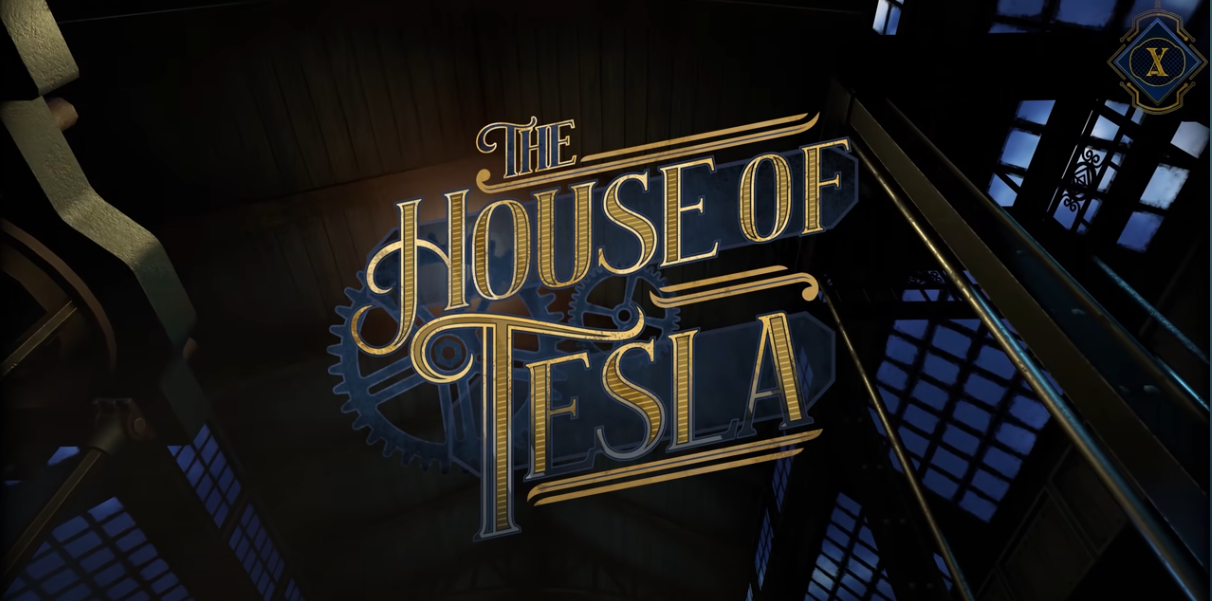
The House of Da Vinci series from the Slovak studio Blue Brain has long established itself as the spiritual successor to The Room franchise, a mystical three-dimensional puzzle game where you have to meticulously examine objects, search for hidden items, and solve puzzles. The latest instalment, The House of Tesla, continues the ideas laid out in The House of Da Vinci, only instead of the Renaissance, we find ourselves at the turn of the 19th and 20th centuries. Industrialisation had reached its peak, and scientists and engineers had made discoveries that we still use today.
Among this constellation, the figure of Nikola Tesla, a visionary inventor who was far ahead of his time, stood out in particular. Tesla’s biography is full of interesting moments, and he has been the hero of films and mentioned in games more than once. The House of Tesla is another project in which the developers attempt to pay tribute to the Serbian scientist. However, he seems to deserve a more ingenious and high-quality puzzle.
More great games for you – Frosty slots real money
The man who invented the 20th century
In The House of Da Vinci, we played as a student searching for his missing mentor. The House of Tesla has a different plot: we wake up in an office and remember nothing about our past. So we have to find out. Moving from one room to another, we solve puzzles, repair mechanisms and collect fragments of memories. In an attempt to find out what happened to him, the hero keeps a diary, which serves as another element of the narrative.
Chronologically, The House of Tesla unfolds when all the important events in Tesla’s life, such as the ‘war of currents,’ have already come to an end. He moved from Europe to the United States long ago, survived a fire in his New York laboratory, and never finished building the Wardenclyffe Tower.
As the plot moves forward, we periodically dip into the past — the 1893 World’s Fair in Chicago, arguments with financier J. P. Morgan, friendly gatherings with Mark Twain. Flashbacks are presented through cut scenes in which the camera flies around the characters, frozen in comically strange poses. It seems that The House of Tesla is not about humour at all, but it is simply impossible to watch such sketches without laughing.
The game often deserves praise for its historical accuracy. Tesla really did experience financial difficulties and tried to implement the idea of wireless energy transfer, and Morgan initially provided him with money, but then stopped — this is what the aforementioned flashback with the banker is about.
Thanks to the game, I learned that Tesla was friends with Twain. The writer supported the young scientist and his research into electricity, and during his childhood illness, Twain’s books were Tesla’s only consolation — this is also mentioned in The House of Tesla.
However, there is also some obvious embellishment in the game. For example, the English occultist Aleister Crowley and his wife Rose Kelly appear as antagonists. I have not found any information about their conflict (and relationship in general) with Tesla, so it seems that the scriptwriters wanted to include a colourful adversary in the story.
Given that Tesla actually had tense relations with Thomas Edison and Guglielmo Marconi, the choice of Crowley seems strange and is justified only by the fact that his character gives the plot a fantastical, mystical atmosphere. Overall, the story in The House of Tesla is not a revelation — the amnesia trope alone is worth mentioning. But, let’s be honest, people don’t play these kinds of games for the plot.
In The House of Da Vinci, there was a special tool — a glove with an ‘Oculi Tempus’ lens. It allowed the player to look inside other devices and see things that the human eye could not see, including scenes from the past.
The House of Tesla also has a similar invention, but it is related to electricity and is simply called the ‘Prototype’. It visualises so-called electrical potential nodes, and in certain places even allows you to control the current, connecting one device to another and making them work. However, this tool is not used very often.