












NVIDIA RTX PRO 4000 SFF & RTX PRO 2000 Review – Compact Blackwell GPUs for AI and Design
NVIDIA has officially introduced two new professional graphics cards at SIGGRAPH 2025 — the RTX PRO 4000 SFF Edition and RTX PRO 2000. Both are based on NVIDIA’s latest Blackwell architecture and are built to deliver powerful AI acceleration, improved rendering, and efficient performance in small form factor workstations. In this review, we’ll look at design, performance, features, and who these GPUs are best for.
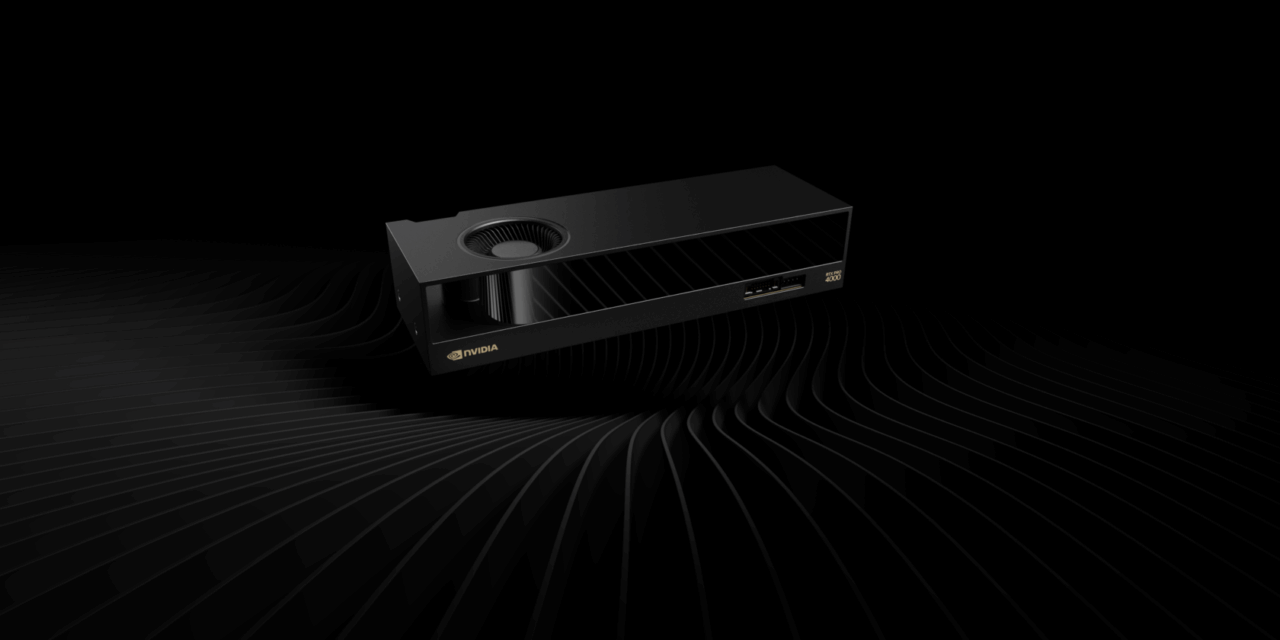
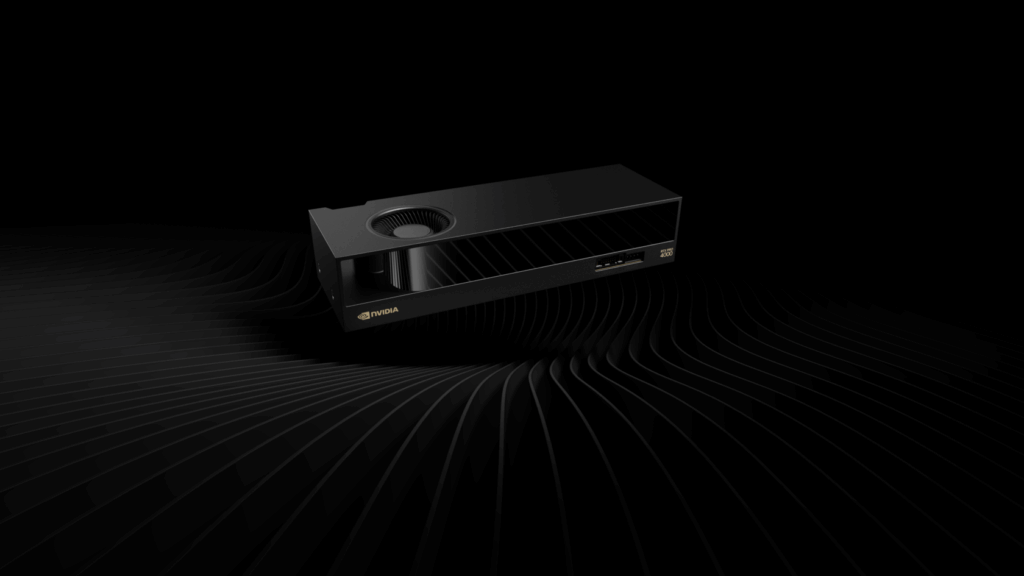
The RTX PRO 4000 SFF Edition is a dual-slot, half-height card measuring 2.7 × 6.6 inches, making it ideal for space-limited desktops. It uses active cooling and has a clean, functional design suitable for professional environments. The RTX PRO 2000 shares the same compact dual-slot form factor but is full height, giving it slightly more flexibility in certain workstation setups. Both cards are built for reliability with ECC GDDR7 memory, ensuring data accuracy for critical workloads like AI training, CAD, and scientific simulations.
Nvidia RTX PRO 4000 SFF Edition specifications
The RTX PRO 4000 SFF Edition comes with 8,960 CUDA cores, 24 GB of GDDR7 memory, 432 GB/s of memory bandwidth, and delivers up to 770 AI TOPS. Ray tracing is powered by 4th Gen RT Cores, and it runs on just 70 W of power. The RTX PRO 2000 features 4,352 CUDA cores, 16 GB of GDDR7 memory, 288 GB/s bandwidth, and 545 AI TOPS. It also uses 4th Gen RT Cores and the same low 70 W power draw. Both include 5th Gen Tensor Cores for faster AI processing, PCIe 5.0 x8 for improved data transfer, and Mini DisplayPort 2.1b outputs for high-resolution setups.
In AI and machine learning, the RTX PRO 4000 SFF delivers up to 2.5× faster AI performance compared to the RTX A4000, while the RTX PRO 2000 improves AI text generation by 2.3× and image generation by 1.4× over the RTX A2000. For AI developers, this means faster training times and quicker inference when working with large datasets or generative AI tools. In 3D design and CAD, the RTX PRO 2000 offers 1.6× faster 3D modeling and 1.4× faster CAD performance than its predecessor, making it a great fit for engineers and architects. The RTX PRO 4000 SFF pushes ray tracing performance 1.7× higher, resulting in smoother real-time previews for animators and designers.
Content creators will benefit from the 9th-gen NVENC encoding and 6th-gen NVDEC decoding, which allow for faster export times and smoother playback, even in 4K and 8K workflows. Despite these big performance gains, both GPUs maintain a very low 70 W total board power. They run cool and consume less power than many previous-generation cards, making them perfect for compact workstations with limited PSU capacity.
Connectivity is handled by four Mini DisplayPort 2.1b ports, supporting up to four 4K displays at 165 Hz or two 8K displays at 100 Hz. This is excellent for multi-monitor productivity, immersive design work, or running multiple AI dashboards side-by-side. Both cards support major graphics APIs like DirectX 12, OpenGL 4.6, and Vulkan 1.4, along with compute APIs like CUDA 12.8 and OpenCL 3.0. They are fully compatible with popular professional software such as Autodesk Maya, Blender, SolidWorks, Adobe Creative Cloud, and AI frameworks like TensorFlow and PyTorch.
The RTX PRO 2000 will be available through PNY and TD SYNNEX, while both GPUs will also be offered in complete systems from Dell, HP, and Lenovo. They will launch later in 2025, with pricing yet to be announced.
These GPUs are best suited for AI researchers and developers who need faster training and inference speeds, 3D artists and animators looking for smooth ray-traced previews, engineers and architects wanting faster CAD workflows, video editors who need better encoding performance, and small workstation owners who want top-tier power in a compact size.
The NVIDIA RTX PRO 4000 SFF Edition and RTX PRO 2000 are excellent upgrades for professionals who want more performance without changing their entire system. They combine next-gen AI and rendering power with energy efficiency and compact design. If pricing is competitive, these GPUs could become some of the most popular workstation upgrades of 2025.