









Trump’s NVIDIA H200 China rethink turns US export controls into a 25% paywall
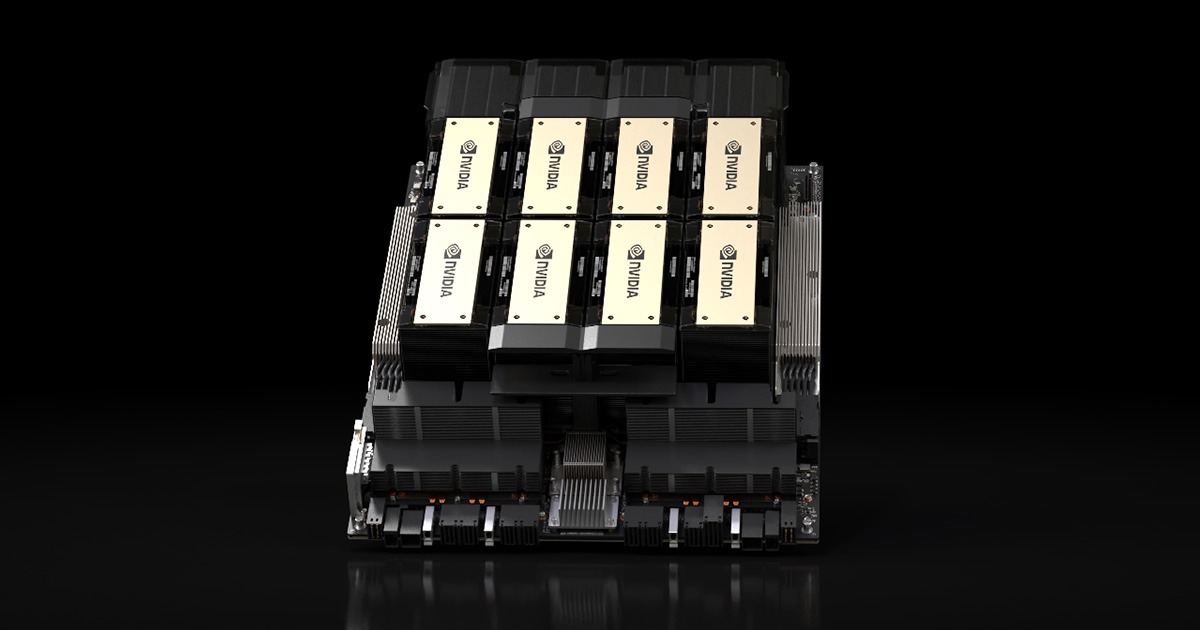
The Trump administration is now conducting an interagency review that could allow Nvidia to resume shipping its H200 AI accelerators to China. The new wrinkle is not the review itself. It is the reported plan to take a 25% government fee on those sales, turning what used to be a national-security policy tool into something that looks a lot like a toll booth.
Reuters reports the Commerce Department has circulated Nvidia’s licence applications for review across State, Energy, and Defense, with a 30-day window for input. The final decision, per Reuters, sits with President Trump. That alone is a shift in tone from the Biden-era posture, in which the rules were intended to prevent advanced computing from landing in China, not to price it.
Trump has already publicly argued for allowing H200 shipments to proceed, provided the US receives a 25% cut. If that framing sticks, export controls stop being a hard line and become a dial. You can still call it “control” if you want. Everyone else will call it “negotiable.”
The NVIDIA H200 is not a consolation prize
The H200 is a Hopper-generation datacenter GPU, positioned below Nvidia’s newest Blackwell parts, but it is still a serious accelerator. It ships with HBM3E, it targets training and high-end inference, and it exists in the same world where bandwidth and memory capacity matter as much as raw TOPS marketing slides.
This is the part that gets lost when policy debate collapses into “old chip” versus “new chip.” “Not the newest” does not mean “not useful.” For the workloads that dominate real deployments, a step-up in memory bandwidth and capacity can change the economics of a cluster overnight. Fewer GPUs for the same job means fewer servers, fewer NICs, less networking pain, less power overhead per unit of useful work, and less time spent tuning around bottlenecks.
If Washington greenlights H200 exports, it is not sending China a toy. It is sending a platform that can meaningfully move capability, even if it is one rung down from the latest rack-scale banner product.
The 25% cut changes what the policy is for
Under the Biden administration, the story was a familiar one: set thresholds, tighten the rules, push vendors to comply, and accept that enforcement is messy, but the intent is denial. A 25% fee flips that logic. It treats access as something the US can sell, which means the policy is no longer purely about preventing the transfer of capabilities.
That creates an obvious credibility problem. If the US position is that advanced AI computing can accelerate military capability and erode a strategic lead, then putting a price tag on the risk is odd. It invites the question critics are already asking: Is the US restricting exports because the chips are dangerous, or because the chips are leverage?
It also complicates allied alignment. The US has pushed partners to harmonise controls and close loopholes. If the new model is “approved customers plus a fee,” that is a very different sell to governments that signed up for a security rationale, not a revenue mechanism.
Why Nvidia is obviously interested in all of this
Nvidia does not need to pretend this is about anything other than business. China is a large market, and the appetite for high-end accelerators is not subtle. Reuters also reported earlier this month that Nvidia has seen unexpectedly strong demand from Chinese firms for H200 and has considered increasing output to meet it.
But supply is not magic. The availability of advanced packaging and high-bandwidth memory constrains the availability of high-end AI parts. Nvidia can say “ramp” as much as it likes. However, it still faces the same reality as everyone else: packaging capacity is finite, HBM supply is contested, and the company is also trying to meet Blackwell demand globally.
So even in the pro-export scenario, the likely outcome is not a flood of H200s into China. It is a controlled trickle that must fit inside a supply chain already stretched thin.
Why the US might still choose to do it, ego centric?
There is a defensible strategic argument for allowing some level of sales, even if you do not like it. It basically boils down to three points:
- Denial is not permanent. Restrictions buy time, not eternity. Workarounds, domestic alternatives, and ecosystem adaptation are slow, but they happen.
- Keeping China a generation behind is still a goal. If you believe a lead matters, then maintaining distance can be framed as a win, even without total exclusion.
- Market presence is influential. Nvidia’s platform brings CUDA, tooling, and operational patterns. Some policymakers see that as a strategic advantage in itself, because it keeps the global centre of gravity anchored to US companies.
Trump’s reported reasoning leans on the idea that sales keep US firms ahead and reduce demand for Chinese domestic alternatives. That may be true in the near term in the narrow sense that customers buy what is available. The catch is that access also builds experience. Running big clusters is an operational discipline, not a procurement checkbox. Shipping H200 not only ships silicon; it also ships confidence, deployment know-how, and the chance to harden AI pipelines at scale.
That is why critics are not just waving flags. They are pointing to a practical reality: capability is not only the chip but also what you learn while using it.
Expect pushback from both directions
Reuters notes backlash from national security voices and political figures concerned that the H200-class computing can support both military modernisation and commercial AI. That criticism will not disappear because it is not partisan; it is structural. The US wants to lead in AI, US companies want to sell AI infrastructure, and China wants to buy it. Those three truths do not coexist neatly.
The “25% fee” angle makes the pushback easier to sharpen. If the argument for restriction is security, then charging for access looks like a way of monetising risk. If the argument is industrial strategy, then charging a fee seems like a domestic political flourish that may not meaningfully shape China’s long-term trajectory.
It also sets a precedent. If Nvidia gets a carve-out with a toll, do AMD and Intel get the same treatment for their datacenter AI plays? Does “pay to export” become a new category in the US toolkit? If it does, the global response will be predictable: more hedging, more localisation, and more urgency to reduce dependence on US-controlled supply chains.
There is another complication: China might not want to be seen buying
Even if Washington approves licences, Beijing still has agency. Reuters has reported that Chinese authorities have been weighing how foreign accelerator purchases intersect with domestic industry goals. In plain terms, China wants the computer, but it also wants to build its own alternatives and sell self-reliance as inevitable.
That can lead to awkward policy compromises on the Chinese side: allow imports but cap them, require bundling with domestic silicon, or steer purchases through approved channels. None of that is confirmed as a final policy, but the direction of travel is clear. Both countries want the benefits of trade and the optics of independence. Those goals collide.
What to watch next
- The licence conditions. “Approved customers” can mean many things. Who qualifies, what oversight exists, and what reporting is required will define whether this is symbolic or material.
- Whether the fee is real policy or campaign theatre, a headline number is easy to produce. A workable mechanism that survives scrutiny is harder to find.
- Supply allocation. If H200 output rises, something else gives. Watch where Nvidia chooses to sacrifice, if it decides to sacrifice at all.
- The next rule rewrite. Export controls have been in constant motion. If this gets approved, the next question is where the line is drawn for Blackwell-class parts.
Export controls were sold as a barrier. This review suggests they are really a negotiation lever, and possibly now a revenue stream. That is a big change, even if the paperwork still says “licence.”