















Sandblasting Safety Tips for Workshops and Industrial Projects
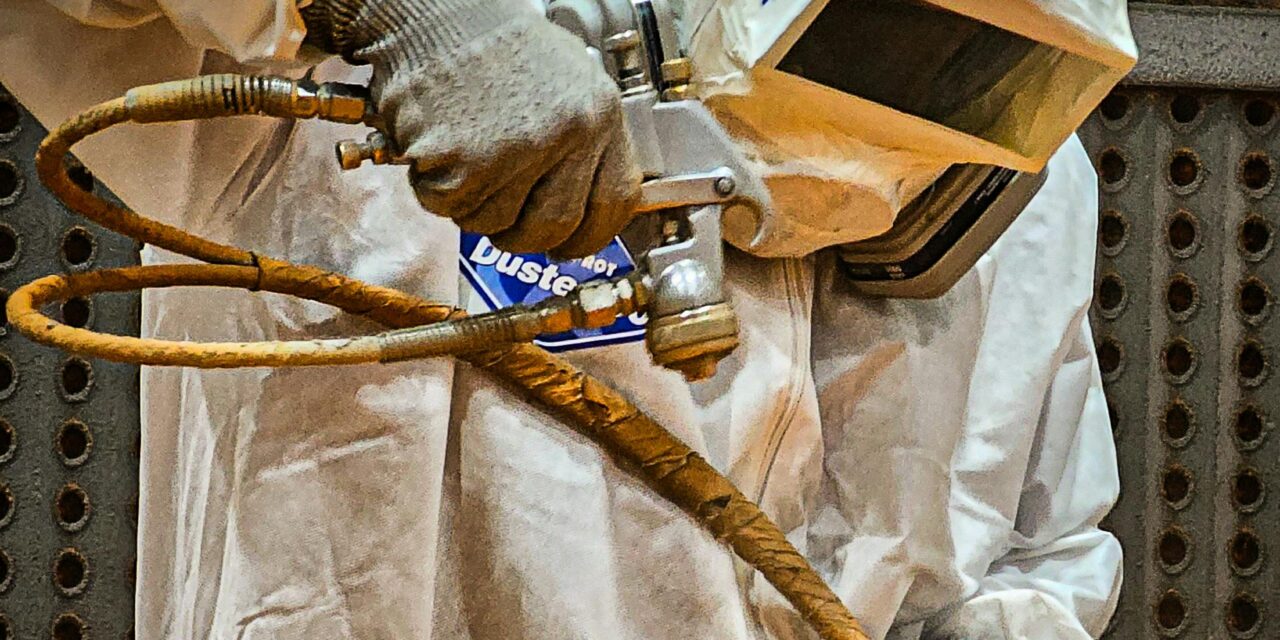
Sandblasting, also known as abrasive blasting, is commonly used to remove rust and coatings, clean corrosion, and create an “anchor profile” for coatings inside fabrication shops, maintenance bays, and industrial plants. This technique brings multiple high-harm events into one place, including airborne dust, rebounding abrasives, high noise, compressed air hazards, and substances being blasted off that may be hazardous.
Prioritize safety as a business strategy, not just compliance. It’s not only OSHA fines that matter—injuries, rework, equipment damage, downtime, and higher workers’ compensation premiums all cost money over time. Workers’ compensation premiums and experience ratings can also be affected over multiple years, so safety improvements may reduce insurance costs in the long run. Safer blasting can be cheaper over time.
And remember the General Duty Clause: employers must manage recognized hazards that could cause serious harm, even when there is not an exact rule for every scenario. Safety is a shared responsibility—the employer generally manages controls, policy, and training, while the worker complies with procedures and wears the required PPE.
Common Blasting Hazards
Blasting hazards come from the abrasive, the substrate and coating, equipment hazards, and the environmental setting. Common examples and dangers include:
- Dust: Fractured abrasive plus pulverized substrate and coating.
- Respirable crystalline silica: Small particles that can reach deep lung gas exchange surfaces.
- Toxics in coating debris: Lead, chromium, cadmium, and unknown legacy coatings.
- Rebounding abrasives: Impact to the face, eyes, hands, arms, body, legs, and feet.
- Noise exposure: Blasting noise can be extremely high at the nozzle; OSHA’s PEL is 90 dBA as an 8-hour TWA.
- Reduced visibility: Increases the risk of trips, hose entanglement, and surface defects.
- Compressed air and pressure hazards: Hose whip, foreign object debris, and deadman-control issues.
- Static electricity: Buildup and discharge.
- Secondary exposure: Nearby workers may be exposed if they are not protected, trained, or kept out of the work zone.
Often, the hazard driver is the coating being stripped. Even low-silica abrasives can become contaminated dust once they pick up metals or other hazardous materials from coatings.
Job Hazard Assessment
Before hooking up the blast hose or starting compressors, document a job hazard assessment. Break down the job, identify hazards, and assign controls using the hierarchy of controls: engineering controls, administrative controls, and PPE.
Review the following before work begins:
- What you’re blasting: Material, size, location, condition, and access.
- What’s coating it: Paint system, rust scale, and contaminants.
- Uncertainty around coatings: Anything pre-1980 or unknown may require XRF screening, lab analysis, or other testing.
- Blasting media choice and SDS: Review the safety data sheet and, if needed, confirm “silica-free” documentation such as XRD analysis.
- Work setting: Cabinet, room, shop, outdoor area, field site, or confined space.
- Ventilation and containment: LEV or dust collection capability, barriers, negative pressure, and make-up air.
- Who may be exposed: Blaster, attendant, forklift drivers, nearby trades, and adjacent production lines.
- PPE: Respiratory protection, head and face protection, hearing protection, gloves, clothing, and boots.
- Cleanup and decontamination: HEPA vacuuming and wet methods, not dry sweeping.
- Waste handling: Whether sampling or TCLP testing may be needed, and how spent media and debris will be packaged and disposed of.
This avoids the most common failure mode: treating blasting like a routine job when the exposure conditions are not routine.
PPE Requirements
Blasting PPE is extremely important because residual risks often remain even after engineering and administrative controls are in place.
Respiratory Protection and Breathing Air
Disposable nuisance dust masks are not appropriate protection for abrasive blasting exposures.
Many open blasting scenarios require a Type CE supplied-air blasting helmet designed for extreme dust and abrasive rebound. Tight-fitting respirators, including half-face and full-face respirators, require a respiratory protection program with medical evaluation, training, and fit testing.
For breathing air systems, confirm the following:
- Grade D breathing air requirements are met.
- Compressor air quality is monitored and maintained.
- Oil-lubricated compressors have appropriate carbon monoxide controls or alarms where required.
- Breathing air couplings are incompatible with non-respirable gases.
- Hoses, fittings, filters, and cartridges are inspected before use.
Maintain respiratory system integrity from “hose to nose.” Use respirator components only in the manufacturer- and NIOSH-approved configuration. Mixing unapproved parts can invalidate the approval and compromise protection.
Head, Face, Eye, and Body Protection
Use blast-rated helmets or hoods with tearaway lens shields so workers can maintain visibility without removing protection.
Workers should also use:
- Blast gloves
- Coveralls or blast suits
- Safety boots
- Protective capes where required
- Eye and face protection appropriate to the task
Abrasive rebound damages skin quickly, and contaminated dust can go home on clothing.
Hearing Protection
Blasting noise is very high. Use rated earplugs, earmuffs, or integrated hearing protection. Proper fit and consistent use matter.
Inspect all PPE every shift. Look for cracked lenses, damaged gloves, worn capes, clogged breathing air filters, damaged hoses, loose fittings, and other defects.
Dust Control with Ventilation and Containment
Engineering controls protect the blaster and everyone else in the shop.
Key controls include:
- Containment: Blast cabinets for small parts, rooms or booths for larger controlled work, and curtains or barriers for temporary containment.
- Sealed barriers: Curtains should be impermeable and intact, with overlapped seams so dust does not escape.
- Restricted or regulated areas: Use access control and signage if exposure may exceed limits.
- Local exhaust ventilation: Capture dust instead of simply diluting it.
- Dust collectors: Maintain filters and pulse-cleaning systems. Poor collectors cause poor visibility, higher exposure, and poor surface quality.
- Make-up air: Exhausting without make-up air creates negative pressure, reduces capture, and can backdraft combustion appliances.
Ventilation and containment should be designed around the actual blasting method, media, coating, and work area—not guessed during production.
Choose Blasting Media and Blaster Type Appropriately
Safety and quality improve when you use blasting equipment and media appropriate to the substrate and coating system. Equipment choice also affects exposure control. Enclosed cabinets, blast rooms, wet or vapor systems, and different types of sandblasters create different dust, rebound, cleanup, and PPE requirements, so crews should match the equipment to the substrate, coating, work area, and available controls.
Consider the following when selecting media and equipment:
- Aggressive media: Steel grit and similar media can create the anchor profile needed by coatings. Too smooth can cause coating failure; too rough can waste coating.
- Low-silica substitutions: Glass, garnet, and similar options may reduce silica concerns, but removed coatings can still dominate toxic exposure and waste classification.
- Moisture control: Compressors create condensation. Wet media can clump and cause plugging or surging. Aftercoolers and separators reduce repair and maintenance issues.
- Water and vapor blasting: These methods may produce less visible airborne dust, but that does not mean exposure limits are not exceeded. PPE is still required unless testing shows otherwise.
Equipment Inspections
Inspect equipment before blasting and as needed during long shifts.
Check the following:
- Blast hoses for cracks, soft spots, leaks, or wear.
- Banded fittings, not makeshift clamps.
- Safety couplings and whip checks where applicable.
- Nozzle wear; replace if the orifice grows about 1/16 inch, since air demand and performance change.
- Deadman controls for proper response.
- Valves and metering for stable control; do not adjust by choking.
- Breathing air filtration indicators and cartridge condition.
- Compressor placement upwind and away from the dust plume.
Small profit leaks, such as air leaks and worn nozzles, are safety leaks too. Longer blast times mean increased exposure, fatigue, and production loss.
Safe Blast Operating Procedures
A written SOP helps make safe blasting repeatable.
At minimum, the SOP should cover:
- Controlled work zone and restricted access.
- Communication between blaster and attendants.
- Nozzle control: aim only at the work surface, never at people.
- Minimum effective pressure for the job.
- Consistent angle and distance for quality and control.
- Stop-work conditions, including poor visibility, leaks, shifting hose fittings, unpredictable valves, or deadman-control changes.
- Grounding where needed to reduce static risk.
- Protection during shutdown and transition phases, since dust can remain airborne after blasting stops.
Workers should know when they have authority to stop work and who to contact when conditions change.
Cleanup: Where Shops Re-Aerosolize the Dust Cloud
Cleanup is often where shops re-aerosolize the dust they just tried to control.
Use the following practices:
- Keep PPE on as needed until dust has settled and cleanup is complete.
- Use HEPA vacuuming and wet methods.
- Avoid dry sweeping.
- Avoid compressed air unless there is no other choice and dust collection is in place.
- Maintain dirty and clean zones.
- Keep contaminated clothing out of break rooms, offices, and company vehicles.
- Wash hands and face before eating, drinking, or smoking.
Cleanup should be treated as part of the blasting job, not an afterthought.
Waste — Don’t Guess, Sample if Needed
Anything other than clean, known steel may require waste characterization. Analytical results for spent media and coating debris may indicate whether TCLP testing is needed to determine hazardous versus non-hazardous classification.
Waste classification affects:
- Disposal costs
- Packaging requirements
- Transportation requirements
- Storage rules
- Reporting obligations
- Contractor and facility acceptance
When coatings are unknown, old, or suspected to contain lead, chromium, cadmium, or other hazardous materials, sampling is often cheaper than guessing wrong.
When Extra Controls or Help Are Needed
Some blasting jobs require additional controls, testing, or professional oversight.
Escalate when the job involves:
- Lead paint or heavy metal coatings.
- Confined space blasting.
- Oxygen deficiency or toxic atmosphere concerns.
- Unknown coatings that may contain chromates, cadmium, or other hazardous materials.
- Large open-shop blasting near adjacent trades or occupied production lines.
- Ventilation or containment that is not sufficient to control exposures.
- Unclear hazards that require industrial hygiene testing or oversight.
Do not just “try it live” when the hazards are uncertain.
Sandblasting Safety Checklist for Shops and Industrial Teams
Use the following checklist as a pre-job review before each abrasive blasting task:
- Substrate and paint history reviewed; testing completed if unknown.
- Media SDS reviewed.
- Silica and heavy metal considerations addressed.
- Containment or regulated area established.
- Signage and access control in place.
- LEV, dust collection, and make-up air confirmed.
- PPE selected, inspected, and worn.
- Type CE or supplied-air respiratory protection used where needed.
- Grade D breathing air compressor controls verified.
- Breathing air filtration indicator status checked.
- Blast hose, banded fittings, nozzle wear, and deadman controls inspected.
- Compressor placed upwind and away from the dust plume.
- Grounding used where needed.
- Controlled blasting technique confirmed.
- Stop-work conditions understood.
- HEPA or wet cleanup methods ready.
- Take-home contamination controls in place.
- Waste sampling and disposal requirements reviewed, including TCLP when needed.
Sandblasting is highly effective when safety is designed into the job. Assessment, containment, PPE, SOPs, cleanup, and waste planning all work together to protect workers, control costs, and improve project quality.