











Comparing The Best Air Purifiers for Smoke in 2026
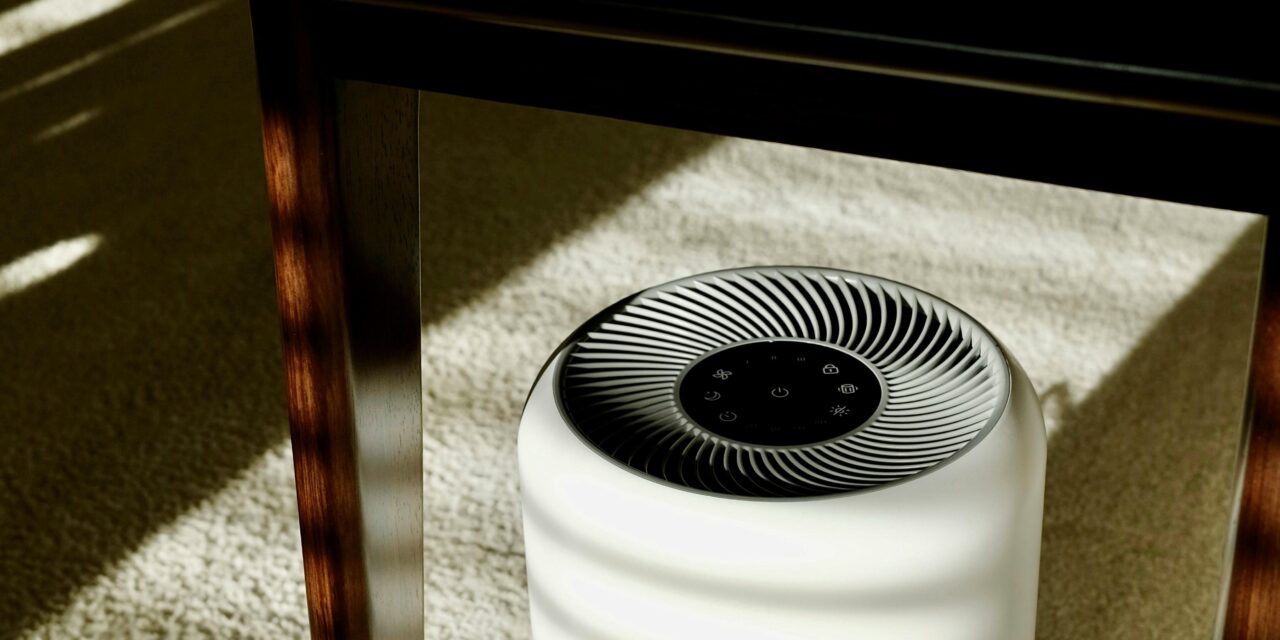
Smoke is the toughest air quality problem a home purifier has to solve. Unlike dust or pet dander, smoke is a two-part problem: fine particles you can see and VOCs (volatile organic compounds) you can’t. An air purifier for smoke has to remove smoke particles from indoor air quality and chemically absorb toxic chemicals, gases, and odors. Most purifiers handle one reasonably well. Fewer handle both, which is essential for maintaining a healthy indoor environment.
That matters because the difference between “this unit reduces smoke” and “this unit actually clears the air after someone lights up in the next room” comes down to how a machine is built, what its real CADR (Clean Air Delivery Rate) number is, and whether it has enough activated carbon to absorb gases before they recirculate. The best air purifiers for smoke feature hepa air purifiers combined with a smoke remover filter rich in activated carbon.
This comparison covers five air purifiers built for smoke-heavy environments: the Airdog X8, the Coway Airmega Mighty AP-1512HH, the LEVOIT PlasmaPro 400S, the Shark Air Purifier MAX with True HEPA, and the Austin Air HealthMate. Each one takes a different approach. We break down exactly what that means for your space and lung health.
What Makes an Air Purifier Good for Smoke
Before getting into the individual units, it helps to understand what separates a strong smoke purifier from a general-purpose one.
Particle filtration (HEPA or equivalent) handles the visible side of smoke: fine particles between 0.09 and 1 micron, including cigarette smoke particles and other fine particles. A true HEPA filtration system captures 99.97% of tiny particles and other fine smoke-related pollutants in indoor air. The AHAM smoke CADR rating tells you how fast a unit cleans fine particles from a specific room size. A smoke CADR of 150 or higher is adequate for a bedroom. For a living room, you want 250 or higher.
Activated carbon filtration handles the invisible side: gases, odors, and VOCs that pass straight through a HEPA filter. The amount of carbon in the filter matters a lot here. Standard air purifiers often rely on thin carbon-coated sheets with 2 to 8 ounces of carbon, and those can become ineffective against smoke within days under sustained exposure. Serious smoke purifiers use significantly more, and real carbon pellets outperform carbon-coated fabric when you need better control of smoke smell and harmful chemicals. Once carbon is saturated, it stops working, and chemicals pass through unchecked. Homes dealing with regular tobacco smoke, wood stoves, or heavy wildfire seasons need significant physical carbon weight rather than a thin carbon layer.
Air quality sensors add intelligence by detecting smoke and other pollutants in real time, allowing the purifier to adjust fan speeds automatically for optimal smoke removal. The ability to purify continuously with smart modes helps maintain a smoke-free environment, especially when dealing with secondhand smoke or neighbor smokes drifting in.
Air changes per hour (ACH) tells you how many times per hour a unit cycles all the air in the room through its filters. For smoke, you want at least 4 air changes per hour in the room you’re treating.
Airdog X8 Air Purifier
The Airdog X8 is the unconventional pick on this list. It doesn’t use a HEPA filter at all. Instead, it uses Airdog’s patented TPA (Two-Pole Active) technology, which generates a high-pressure ionic field to charge and then collect airborne particles on washable graphene collecting plates. The brand claims it filters particles down to 14.6 nanometers, roughly 20 times smaller than what a standard HEPA filter captures at 0.3 microns.
For smoke specifically, Airdog states the X8 maintains near-identical filtration efficiency after filtering smoke from 440 cigarettes without a filter change. You just wash the collecting plates with soap and water and put them back in.
How it handles smoke
The X8’s ionic filtration captures smoke particles effectively. The 470 CFM CADR rating is genuinely high and puts it among the most powerful units in this class by airflow alone. The 360-degree air intake design with two air inlets pulls in air from all directions, which is particularly useful in larger open-plan spaces where smoke tends to spread and settle.
One honest note: ionic purifiers collect particles rather than trapping them in filter media, the way HEPA does. The collecting plates need to be washed regularly, typically every 1 to 2 weeks, depending on usage, or performance degrades. The X8 also has a more limited activated carbon presence compared to some HEPA-based competitors. For heavy odor removal from sustained smoking, a carbon-heavy HEPA unit can outperform it on that specific dimension.
Smart features and usability
The X8 includes a wireless Air Quality Index sensor you can move to different rooms to monitor AQI, temperature, humidity, and formaldehyde levels. It connects to a smartphone app, supports auto mode, and has 5 fan speeds total.
The filter cost argument
There are no replacement filters to buy. HEPA filters typically cost $40 to $100 each and need to be replaced every 6 to 12 months. Over 5 years, that adds up to $400 to $1,000 or more, depending on the unit. With the X8, your ongoing cost is essentially $0 beyond electricity. The upfront price is steep, but the total cost of ownership over several years is genuinely competitive.
Who it’s best for
The X8 is best for someone willing to pay more upfront to avoid recurring filter costs, who has a large primary room to cover, and who is comfortable with a cleaning routine instead of a replacement routine. It’s a particularly strong fit during wildfire season when you’d otherwise be burning through HEPA filters repeatedly.
Who should look elsewhere?
If your primary concern is odor removal from cigarette or cigar smoke, especially heavy, sustained indoor smoking, a HEPA unit with a dense activated carbon filter may serve you better. The X8 excels at particle capture; odor elimination is where HEPA-plus-carbon units can pull ahead.
Coway Airmega Mighty AP-1512HH
The Coway Airmega Mighty has been a top-rated air purifier for years. It delivers strong, independently tested performance at a price point most people can actually afford. The CADR-per-dollar ratio at its regular price is one of the best in the category.
How it handles smoke
The AP-1512HH uses a 4-stage filtration system: a washable mesh pre-filter, a carbon deodorization filter, a True HEPA filter, and a bipolar ionizer (Vital Ion). The HEPA layer captures particles down to 0.3 microns at 99.97% efficiency. The carbon deodorization filter handles smoke odors and VOCs.
A smoke CADR of 233 cfm puts this unit in solid territory for rooms up to approximately 350 square feet. At that room size on its highest setting, it achieves roughly 4 to 5 air changes per hour, which is the threshold where you’ll actually notice the air clearing. In a standard bedroom, den, or home office where someone occasionally smokes, it handles the load well.
For heavy, sustained cigarette smoking in a larger room, it will struggle. The carbon filter is adequate for everyday odor control, but it is not a thick, pellet-based carbon block. Coway does offer an Intense Smoke replacement filter set specifically designed for heavier smoke environments, sold separately at around $58. This is a thoughtful option that makes the unit more adaptable.
Smart features and usability
The AP-1512HH is a no-frills purifier in the best sense of that phrase. A real-time air quality indicator uses colored LEDs to show pollution levels. Auto mode adjusts fan speed based on the sensor reading. Eco mode turns the fan off when clean air has been detected for 30 consecutive minutes, saving electricity. No Wi-Fi, no app, no voice control. For many buyers, that’s a feature, not a bug.
Filter costs
At roughly $48 per year for a HEPA replacement and a carbon pre-filter swap every 6 months (often $10 to $15 per set), annual filter costs land around $60 to $75.
Who it’s for
The Airmega Mighty is the practical choice for a bedroom or office where smoke exposure is occasional rather than constant. It’s also ideal for anyone who wants a simple, proven machine without smart features adding to the price and complexity.
Who should look elsewhere
Anyone dealing with persistent heavy smoking in a room larger than 350 sq. ft. will hit the limits of this unit quickly. If you want app control, scheduling, or smart home integration, the Airmega Mighty isn’t built for that.
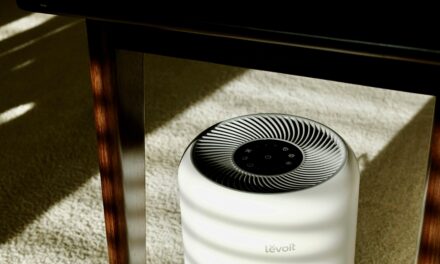
LEVOIT PlasmaPro 400S Smart Air Purifier
The LEVOIT PlasmaPro 400S is the smart home pick. It’s AHAM Verifide certified, meaning the CADR ratings have been independently tested and verified rather than self-reported. It connects to the VeSync app, supports Amazon Alexa and Google Assistant voice control, and includes a laser dust sensor for real-time air quality monitoring.
How it handles smoke
The 400S uses a 3-stage filtration system: a pre-filter, an H13 True HEPA filter, and an activated carbon filter treated with Levoit’s ARC Formula (Advanced Removal Carbon). The ARC Formula is designed to increase the surface area of the carbon media, which improves VOC and odor adsorption compared to untreated carbon.
A smoke CADR of 226 cfm is nearly identical to the Coway Airmega Mighty, meaning both perform similarly on particle removal in a comparably sized room. The difference is in coverage area and features. The PlasmaPro 400S, with broader air handling capacity, is a better choice for open-plan spaces and larger rooms.
The PlasmaPro technology works by generating positive and negative ions that bind with airborne pollutants, similar to the PlasmaWave technology used by Winix. The unit is CARB certified, meaning it meets California’s ozone emission limit of 0.050 ppm, which matters for anyone running it in a bedroom continuously.
For smoke odors, the ARC-treated carbon filter handles everyday cooking smells, pet odors, and light to moderate cigarette smoke well. For heavy, repeated smoke exposure, the carbon will eventually saturate, at which point you’ll want to swap the filter sooner than the 6 to 8-month recommendation.
Smart features and usability
The VeSync app gives you remote control from anywhere, filter life monitoring, scheduling, and air quality history. Auto Mode uses the laser dust sensor to detect real-time particle levels and adjust fan speed automatically. Sleep Mode reduces both fan noise and display brightness for uninterrupted overnight operation at 22 to 24 dB, quieter than a whisper. The display can be turned off completely, and the unit responds to Alexa and Google Assistant voice commands.
Filter cost
Replacement filter sets run approximately $30 to $45, with a replacement interval of 6 to 8 months under normal use. Annual costs fall somewhere in the $45 to $90 range, depending on usage intensity and whether you use OEM or compatible third-party filters.
Who it’s for
The PlasmaPro 400S is the right pick for someone who wants smart controls, a larger coverage area than the Coway Mighty, AHAM-verified performance, and a solid feature set at a mid-range price. It’s particularly well-suited for open living areas where you want to control the purifier remotely or through voice.
Who should look elsewhere?
If you’re dealing with very heavy smoke, this unit will manage it, but it isn’t specifically optimized for that use case the way a high-carbon unit would be. It’s also not the choice if you want zero filter expenses.
Shark Air Purifier MAX with True HEPA
The Shark Air Purifier MAX sits in a comfortable position: large-room capability, a polished feature set, and a price well below the Airdog X8 while covering significantly more square footage than the Coway Airmega Mighty.
How it handles smoke
The HP202 uses Shark’s Anti-Allergen NanoSeal HEPA filter with a Microban antimicrobial coating. The filter captures 99.98% of particles from 0.1 to 0.2 microns, which exceeds the standard HEPA threshold. For smoke, this means it handles fine particles extremely well, including wildfire PM2.5 particles that are some of the smallest and most harmful.
Shark’s Pure Air MicroForce fan delivers four speed settings optimized to push air through the NanoSeal filter quickly. Clean Sense IQ monitors three particle size ranges (PM1, PM2.5, and PM10) in real time and automatically adjusts fan speed based on air quality changes. In independent testing, a closely related Shark model reduced TVOCs by 83.2% in a 5-minute smoke test, indicating strong gas-phase performance for the platform.
A notable feature is Odor Neutralizer Technology, which uses an odor-guard element on the filter to neutralize household odors and VOCs rather than just trapping particles. This is distinct from a standard carbon filter and is more targeted at eliminating smell in addition to removing particles.
One transparency note on CADR
The Shark HP202 does not publish a standard AHAM smoke CADR rating. Shark tests to the IEST-RP-CC007 standard for particle efficiency and markets the unit primarily on that basis. This makes direct numerical CADR comparison with the Coway Airmega Mighty or the LEVOIT PlasmaPro 400S difficult. If AHAM verification matters to your purchasing decision, the LEVOIT PlasmaPro 400S is explicitly AHAM Verified certified; the Shark HP202 is not.
Smart features and usability
The Clean Sense IQ particle monitoring system with a real-time LED display is one of the better quality-of-life features on this unit. You can watch PM readings drop as the purifier works. Auto mode, sleep mode with dimmable display, and a filter life indicator round out the feature set. There is no Wi-Fi or app control on the HP202. If you want remote operation, Shark offers app-connected models at a higher price point.
Filter cost
Replacement filters run approximately $40 to $55 and are rated for 6 to 12 months. Annual costs land in the $55 to $110 range at recommended replacement intervals. Several compatible third-party options exist that bring that cost down.
Who it’s for
The Shark MAX is the right pick for a large living room or open space where you want strong smoke particle removal, Odor Neutralizer technology, a compact form factor for its coverage rating, and a reliable experience at a price well below the Airdog X8.
Who should look elsewhere?
If AHAM CADR verification matters to you, choose the LEVOIT PlasmaPro 400S instead. If app control is important, check Shark’s connected models. If you want zero filter costs over time, the Airdog X8 is the only option on this list that delivers that.
How to Choose The Right Air Purifier
Pick the Airdog X8 if you have a large space (800 to 1,500+ sq. ft.), plan to own the unit for 5 or more years, and want to eliminate the recurring cost and hassle of filter replacement. The upfront cost is steep, but the total cost of ownership over time is genuinely competitive. It’s also the strongest choice during wildfire season when you’d otherwise be burning through HEPA filters repeatedly.
Pick the Coway Airmega Mighty AP-1512HH if your budget is under $200, you’re treating a room up to 350 sq. ft., and you want a simple, proven machine without a learning curve. This is still one of the best values in air purification, and its performance-per-dollar ratio is hard to beat for the right room size.
Pick the LEVOIT PlasmaPro 400S if you want a mid-range unit with AHAM-verified performance, a larger coverage area than the Coway Mighty, and smart features including app control and voice integration. It’s the strongest choice for someone who wants the Coway Mighty’s performance profile in a bigger space with connected home features.
Pick the Shark Air Purifier MAX HP202 if you have a large living room or open floor plan, want strong particle capture that exceeds standard HEPA thresholds, and appreciate Odor Neutralizer technology for ongoing smell management. It covers more space than the two mid-range options at a price well below the Airdog X8.