















ID-Cooling Frost X55 Thermal Paste Review: A scented Paste that refreshes the performance!
Thermal paste plays a crucial role in the effective cooling of the main components such as the CPU and GPU etc. There are multiple factors contributing to the optimal performance of the given thermal paste over the period of time like its thermal conductance, viscosity, operating temperature range, make-up, electrical conductivity, cure time etc.
ID-Cooling X45 got praise from all around for its high-performance, durability, and other characteristics. This time, ID-Cooling has come out with a new generation of thermal paste named Frost X55, but with a twist. They have released thermal pastes with scents. Yes, you read that correctly. They have released a total of 5 variants of this thermal paste, which are:
- Luna [Where ocean meets the moon]
- Poma [Apple Flavor]
- Bella [Strawberry Flavor]
- Viola [Violet, in full bloom]
- Core [Scent-free]
Another key parameter is that these pastes are only available in a 4 g pack. A 2 g pack is also expected soon. No more, no less. The Core variant is listed at USD 7.99, whereas the other scents are available in USD 8.99.
A latest trend in the market is the thermal pastes being released with high thermal conductivity ratings, and part of it comes from high viscosity (coming from filler content), which is an effort to rule out the pump-out effect, though it is not that effective in achieving this goal. Anyhow, high thermal conductivity makes these pastes perform much better, which is the ultimate goal.
Another issue with high viscosity is application of these pastes on the CPU. Regardless of what the marketing of these pastes says, you will face a challenge applying the paste. My solution is simple. Put the tube in a hot cup of water for some time and then quickly apply the paste on the CPU and even spread it if you want to opt for an even spread; otherwise, dot methods will also cover you well.
This thermal paste is available in 2 g, 4 g, and 8 g packs with a shelf life of 5 years.
Closer Look
We will take a look at the packaging and tube before moving on to the testing section.
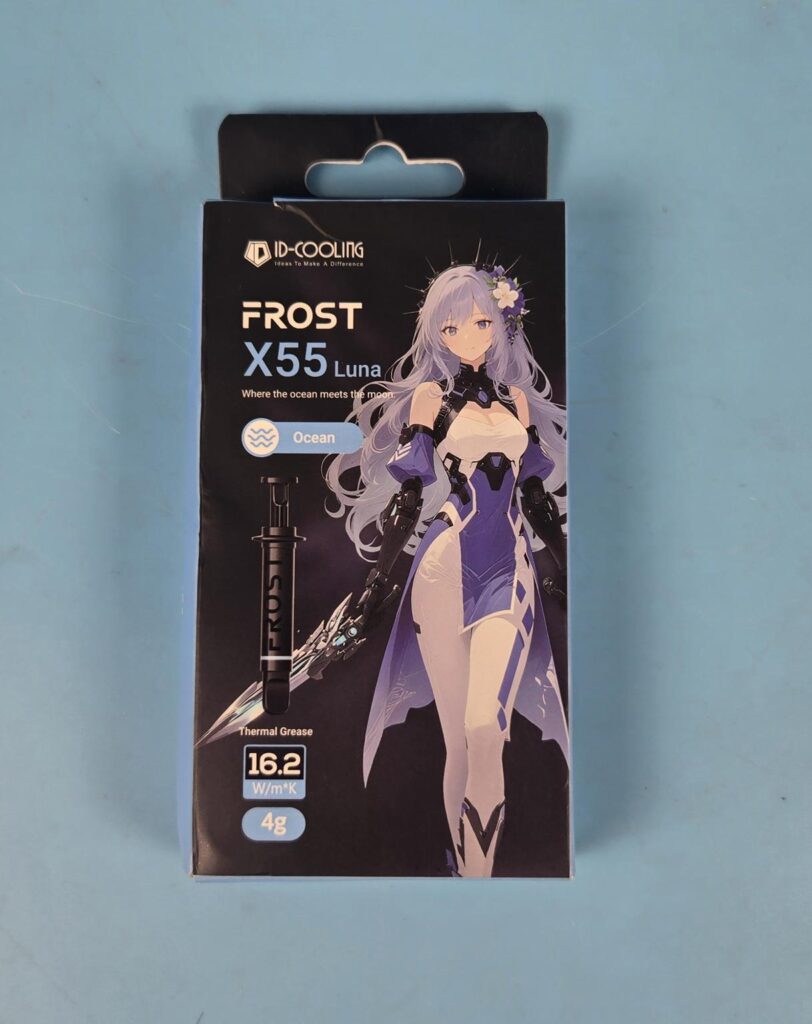
The paste is shipped inside a paperboard packing box with one key change. These boxes come with a picture of figures, which reminds me of ADATA/XPG, as they commonly use figures on the packaging boxes and products.
Our sample (Somehow, ID-Cooling only sent one pack!) has a Luna scent, which ID-Cooling resembles with the calmness of the ocean. Two salient highlights are a 16.2 W/mK thermal conductivity rating and 4 g packing.
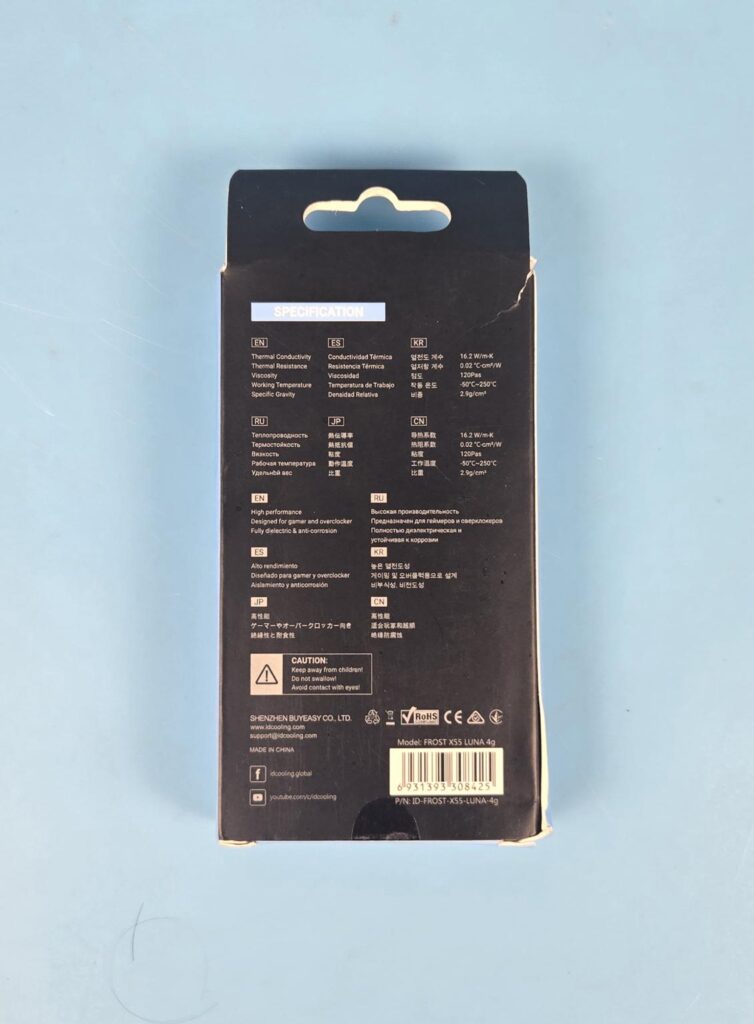
The salient specifications of the paste are printed in multiple languages on the backside. The paste is made in China.
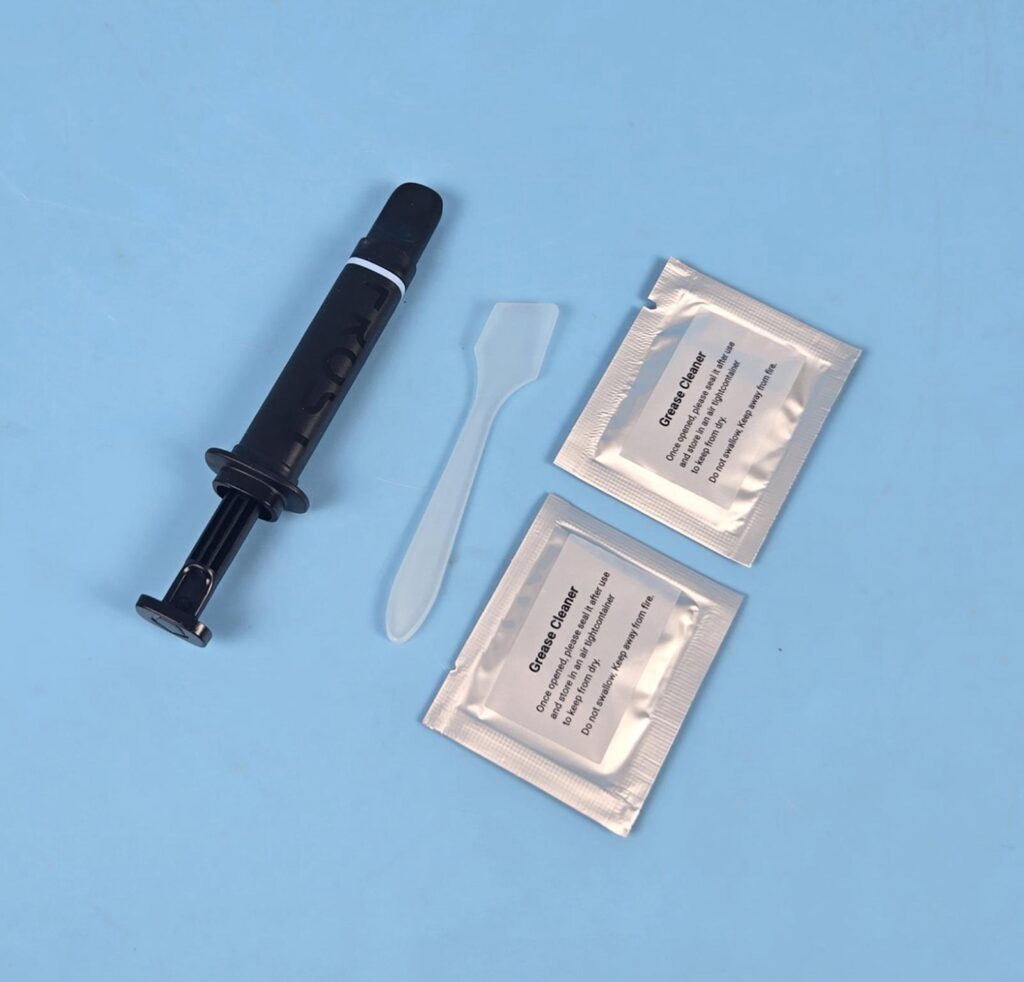
ID-Cooling has provided the following:
- 1x Tube of thermal paste
- 2x Grease Cleaners
- 1x Spatula
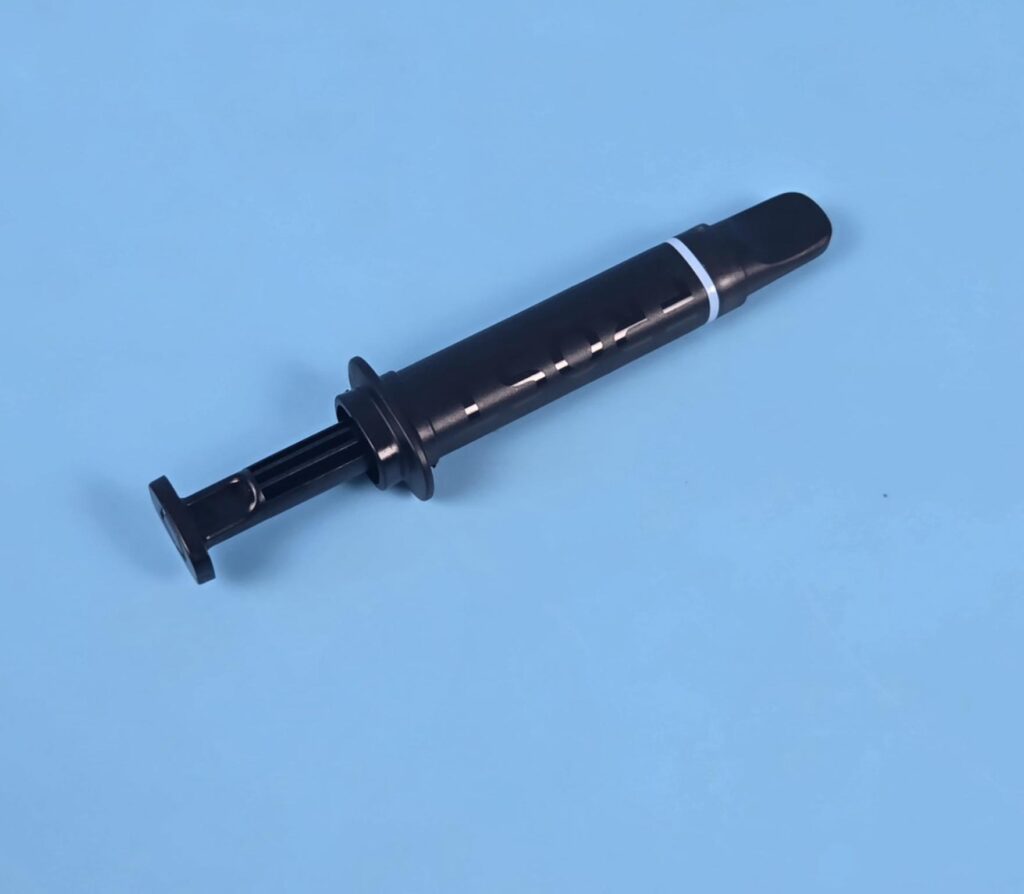
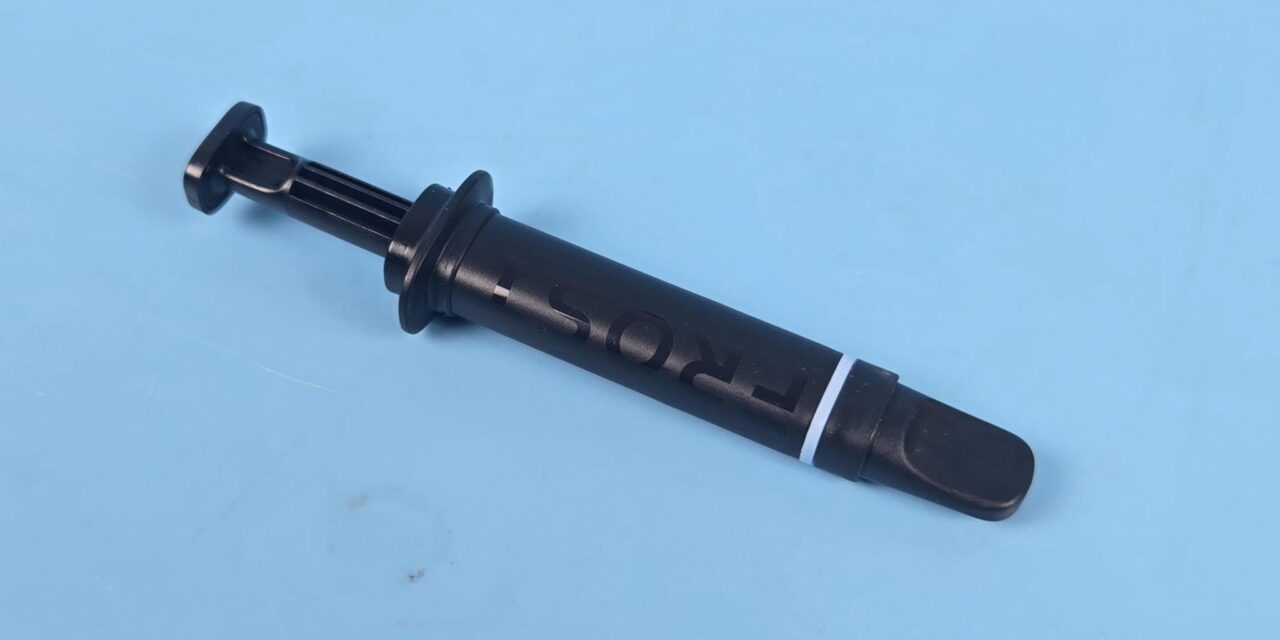
ID-Cooling has switched to a better-looking container tube with Frost X55, as it is not circular like the old design. The color coating on the neck of the tube indicates the scent of the paste. FROST in chrome is printed over the tube.
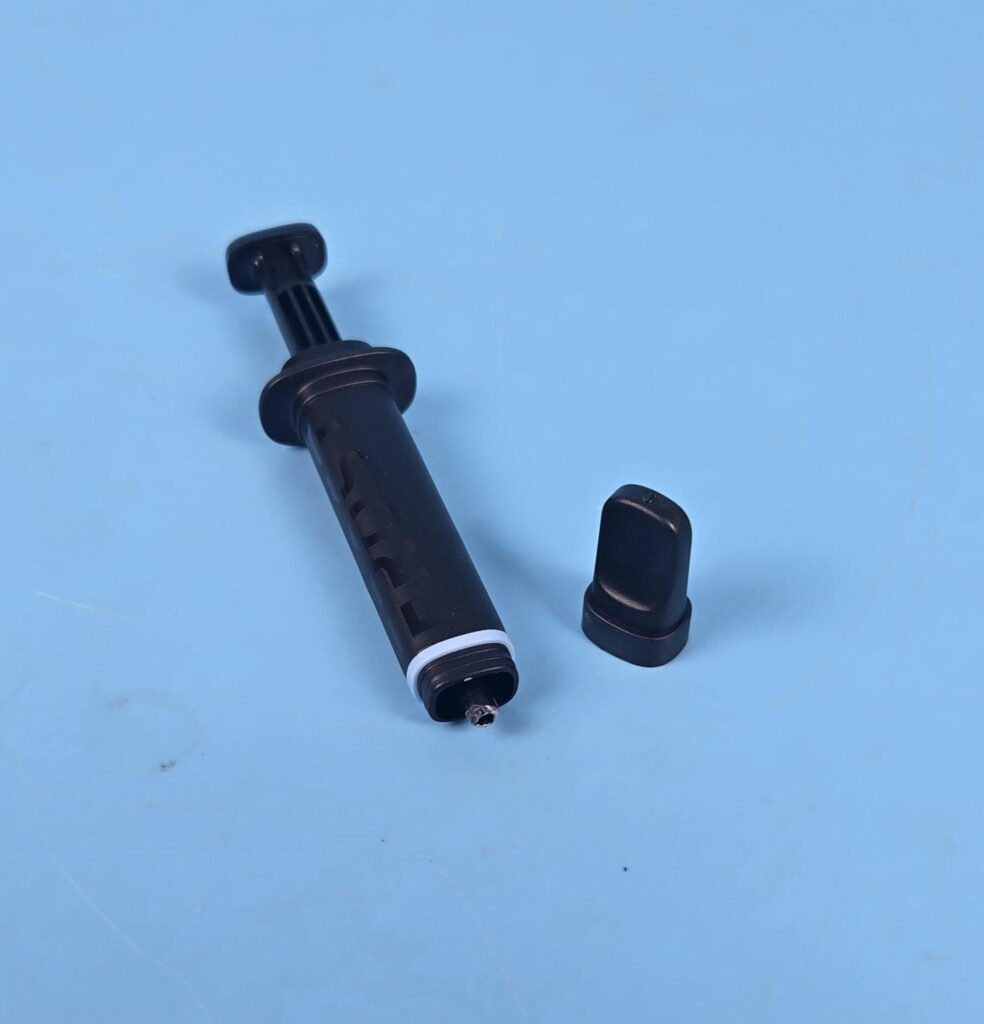
Grab the tip of the cap and pull it to remove the cap. It is a simple function. The narrow nozzle becomes visible from where the paste emits.
Specifications
| Color | Grey |
| Net Weight | 2gm/4gm |
| Density | 2.9 g/cm³ |
| Viscosity | 120 Pas |
| Thermal Conductivity | 16.2 W/mK |
| Thermal Resistance | 0.02°C-cm2/W |
| Operating Temperature | -50°C to 250°C |
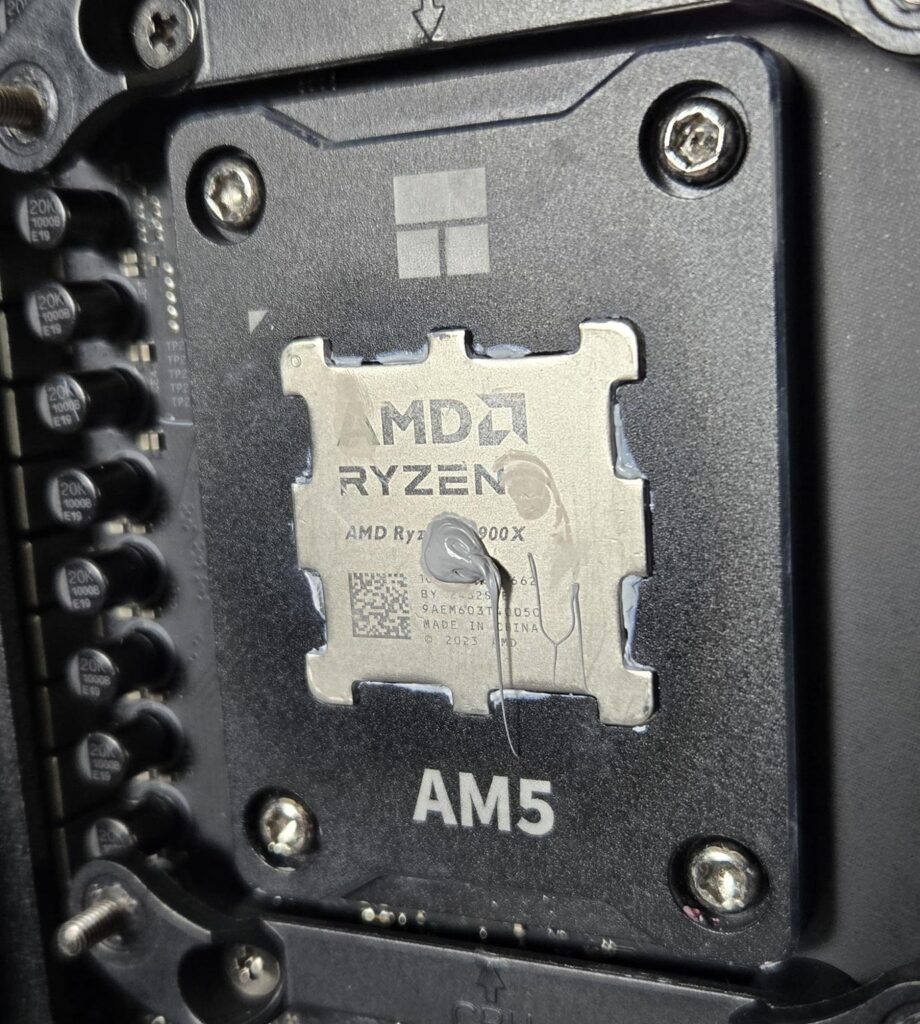
This thermal paste is silicone-based, using aluminum in concentration with other compounds. I did not get the datasheet; otherwise, I would have provided the composition. The MX-7 from ARCTIC uses aluminum with polydimethylsiloxane and melanin concentration. If I remember correctly, the HY-P17 from Halnziye that I recently tested uses Aluminum and zinc oxide in combination along with dimethylsiloxane.
Unlike what the manufacturer says, this paste is liquid. Since it has high viscosity, it is a bit dry, which makes its handling challenging. You can think of this as a trade-off for high performance over easy application. It is gray color, odorless paste, and it is not electrically conductive. It is also non-corrosive, meaning it will not damage the components over time.
You will get the same smudgy, sludge sort of dry paste that I have seen from the likes of Thermal Grizzly Duronaut, ID-Cooling Frost X45, and Halnziye HY-P17. All these pastes have high viscosity. It is quite difficult to even spread this thermal paste. This paste seems to have high cohesion, which makes it last long without cracking or drying out, resulting in a stable composition.
A better alternative is using 9 small dots on the IHS or 5 medium dots depending on the SKU, and the rest of the job will be done by the cooler’s weight and mounting pressure. The other way around is using an X-shape application.
Here is a quick tip from me: Put the tube in a hot cup of water for a few minutes and then apply in X shape for easy application. Be quick before it changes its state!
Testing
The following configuration is used for thermal testing:
- AMD Ryzen 9 9900X [243W]
- ASRock X870E NOVA WiFi
- GSkill TridentZ NEO RGB 32GB 6400MHz CL30 DDR5 kit
- Lian Li GA-II Lite 360 Performance
- ASRock Phantom Gaming RX 7600 Graphics Card for Display
- Biwin Black Opal X570 Pro 4TB NVMe SSD
- Fractal Design ION+ 2P 860W Platinum PSU
- Thermaltake Core P6 TG Snow Edition in an open frame layout
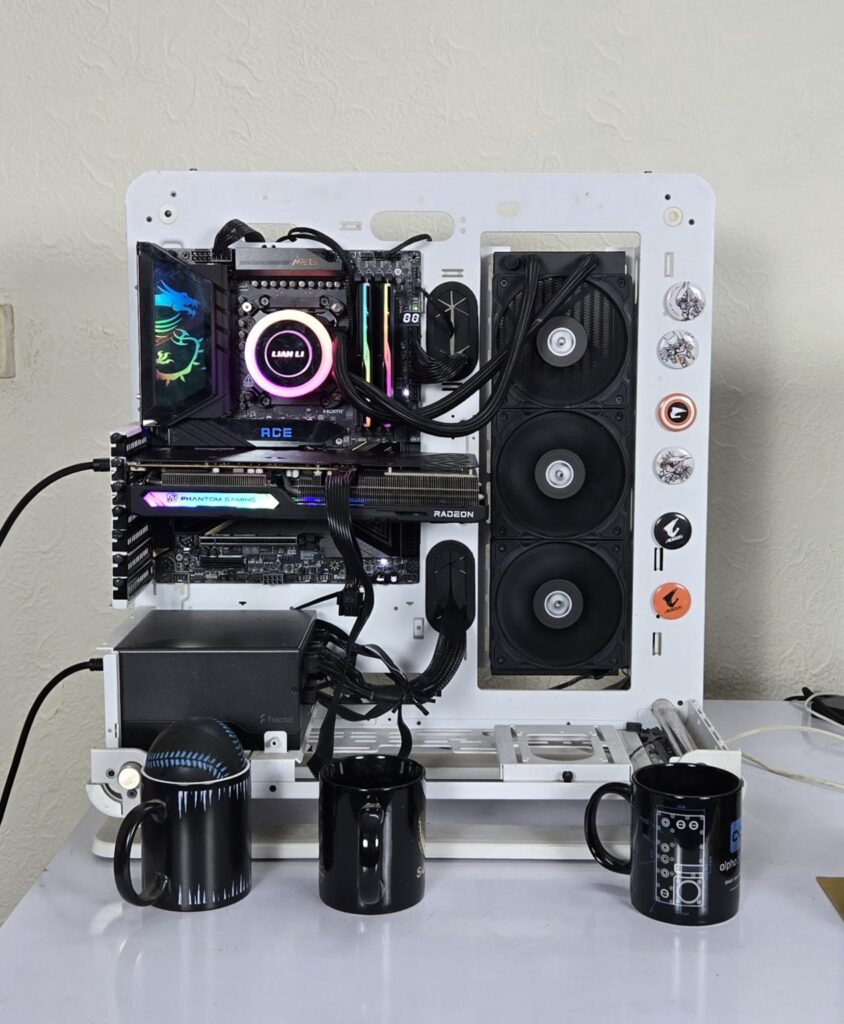
Here is the settings table for testing:
| Settings | PBO Enabled [243W] |
| Clock (MHz) | Auto |
| Voltage (V) | Auto |
| Thermal Paste Application | 5 dots Method |
| Test Run Time | 30 minutes |
| Idling Time | 10 minutes |
| All Fans Speed | 100% PWM Duty Cycle |
| Pump Speed | |
| Stress Software | CINEBENCH R23.2 |
| Monitoring Software | HWINFO64 |
I am reporting delta temperature in the graph since throughout the testing, ambient temperature varies from 16°C to over 17°C. Yup, winter is here. The testing is done on an open-air bench system. Once inside the chassis, the temperatures are expected to rise and would largely depend upon the optimal airflow inside the chassis.
I complete multiple thermal cycles before actually testing thermal paste. In my testing experience, every paste has some cure time regardless of what marketing says otherwise. Every run uses an R23.2 run for 30 minutes stress test followed by letting the CP cool down and then powering it off. All pastes are tested using the same method hence, results are comparable. I retest thermal paste whenever testing a new paste.
Result
Let’s take a look at the results.
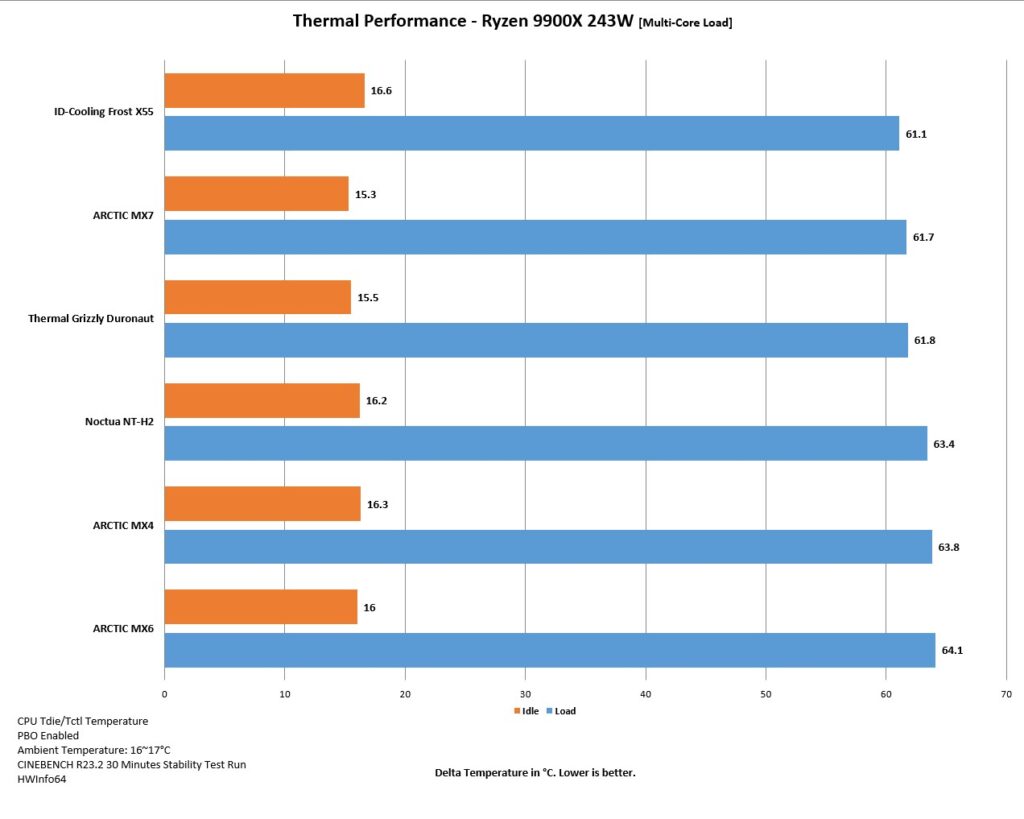
The result speaks for itself. Although Frost X55, MX7, and Duronaut are in close margin, the Frost X55, with some margin, has a lead.
Editor’s Note: Hey ID-Cooling, where is the scent on this?
Conclusion
I have tested ID-Cooling Frost X55, which is a new-generation high-performance thermal paste from the manufacturer taking over the famous X45. This paste is listed to be available in 2 g and 4 g packs, but right now only 4 g is available.
This thermal paste comes in 4 scents and 1 non-scented edition. This is a new thing for the users, but only if it smells. I could not smell anything; plus, what is the point of scent if the PC Case is to remain closed with proper ventilation coming from optimal airflow. Anyhow, I digress.
Coming back to the main topic, the new thermal paste seems to be a combination of mainly aluminum with other compositions of other metals, which I could not get data on. This thermal paste also comes with high viscosity, which is contributed by the filler content.
This means it would be difficult to spread even in application because it is less liquid. This paste has low adhesion and high cohesion, and it is designed to reduce the pump-out effect. I can’t say it would totally eliminate the pump-out effect, though. This thermal paste has a thermal conductivity rating of 16.2 W/mK.
This thermal paste is electrically non-conductive and non-corrosive, which is good, as the paste is likely not to damage any component. In case you find it difficult even to spread this paste, you can put the tube in a cup of hot water for some time and then quickly apply it on the surface. Alternatively, the 5-dots method or a single line/cross line would also do the job for you.
The 4 g pack of scented tube is listed at USD 8.99 with a per-gram price tag of USD 2.25. The non-scented pack has a price of USD 7.99 for a 4 g pack with a per-gram price of USD 1.99. This price and that of the competition make the Halnzyie thermal pastes a better value, given their low prices and similar performance characteristics [Just saying].
ID-Cooling is back with yet another solid proposition in the thermal paste category, providing a sucker punch to the competition, and guess what? This performance is scented as well! It is recommended by us.