















ARCTIC MX-7 Thermal Paste Review: A True Successor of MX-4!
Thermal paste has a crucial role in the effective cooling of the main components, such as the CPU, GPU, etc. There are multiple factors contributing towards the optimal performance of the given thermal paste over the period of time like its thermal conductance, viscosity, operating temperature range, make-up, electrically conductive, cure time, etc.
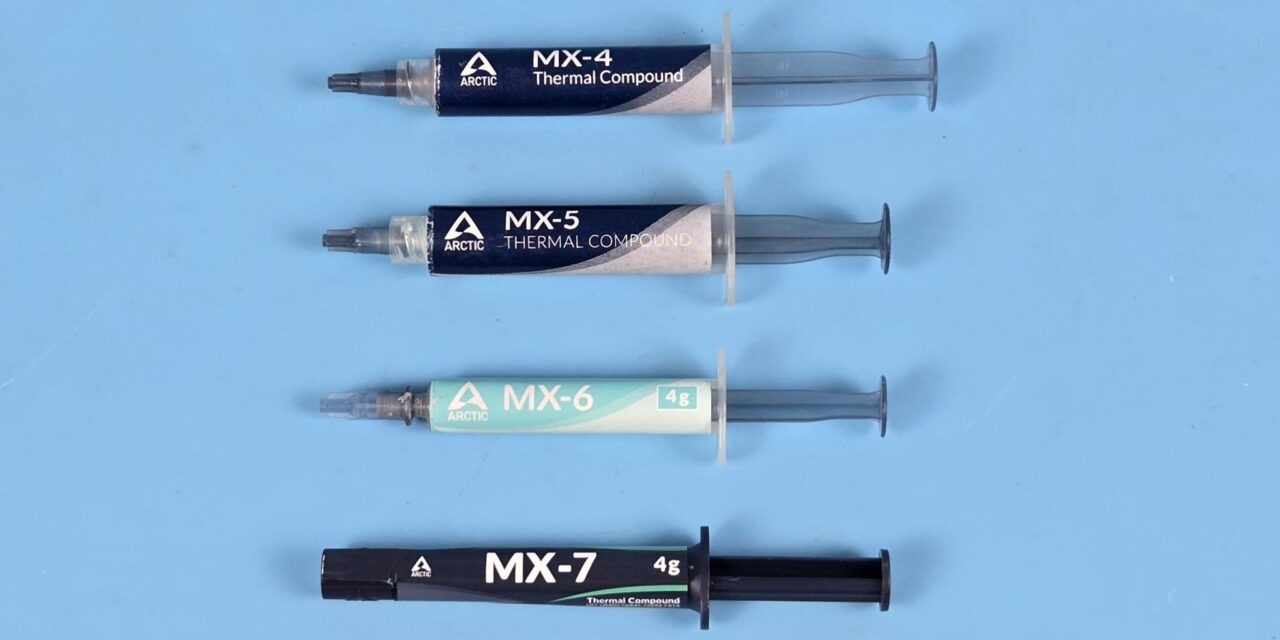
MX-4 has a special place in the hearts of PC users and enthusiasts. This thermal paste has been quite popular ever since its launch. In my opinion, MX-5 and MX-6 could not be a true successor of the MX-4, but tides are changing as ARCTIC has released its next high-performance thermal paste named MX-7.
The thing with the recent release in the market is that these new thermal pastes, including MX-7, have high viscosity, making it hard to even spread these pastes on the CPUs. This, in part, comes from the high filler content. ARCTIC has suggested using X shape application for MX-7.
This thermal paste is available in 2gm, 4gm, and 8gm packs with a shelf life of 5 years.
Pricing
It is important to pay attention to the packing quantity of the thermal paste when comparing the price. Here is the table:
The MSRP of this paste is definitely on the high side, but the current retail price is actually quite good, giving a good value to these thermal pastes.
Closer Look
We will take a look at the packaging and tube before moving on to the testing section.

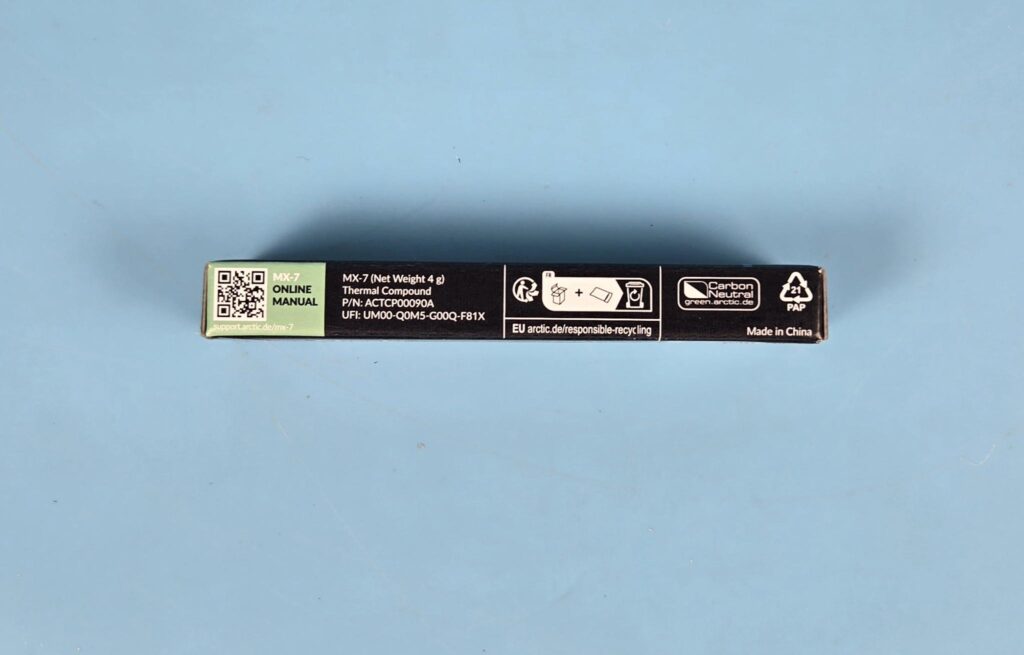
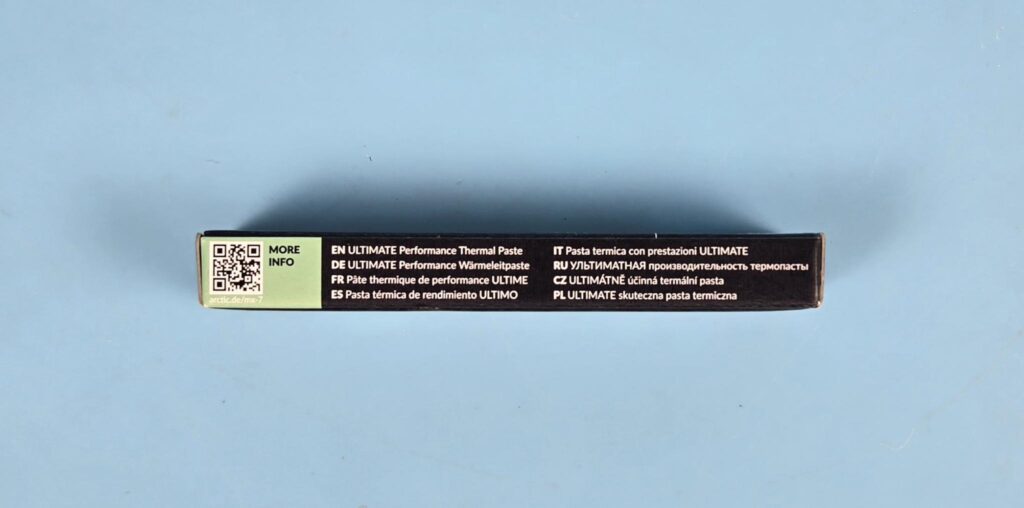
We have got the 4gm pack for testing. It comes inside a paperboard packing box. MX-7 and 4g are prominent on the front of the box. The part number is printed as well. The packing box has a link on which you can verify if the paste is fake or real. Too bad we have come this far that manufacturers are now resorting to providing this crucial check!
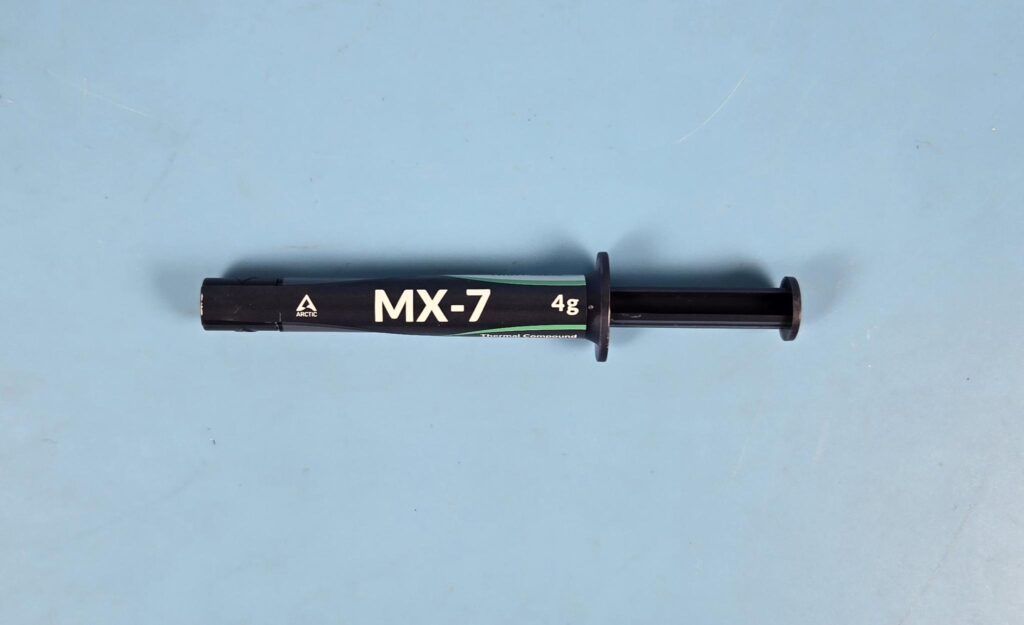
The packing box has nothing but a tube of thermal paste in it. The tube is black.
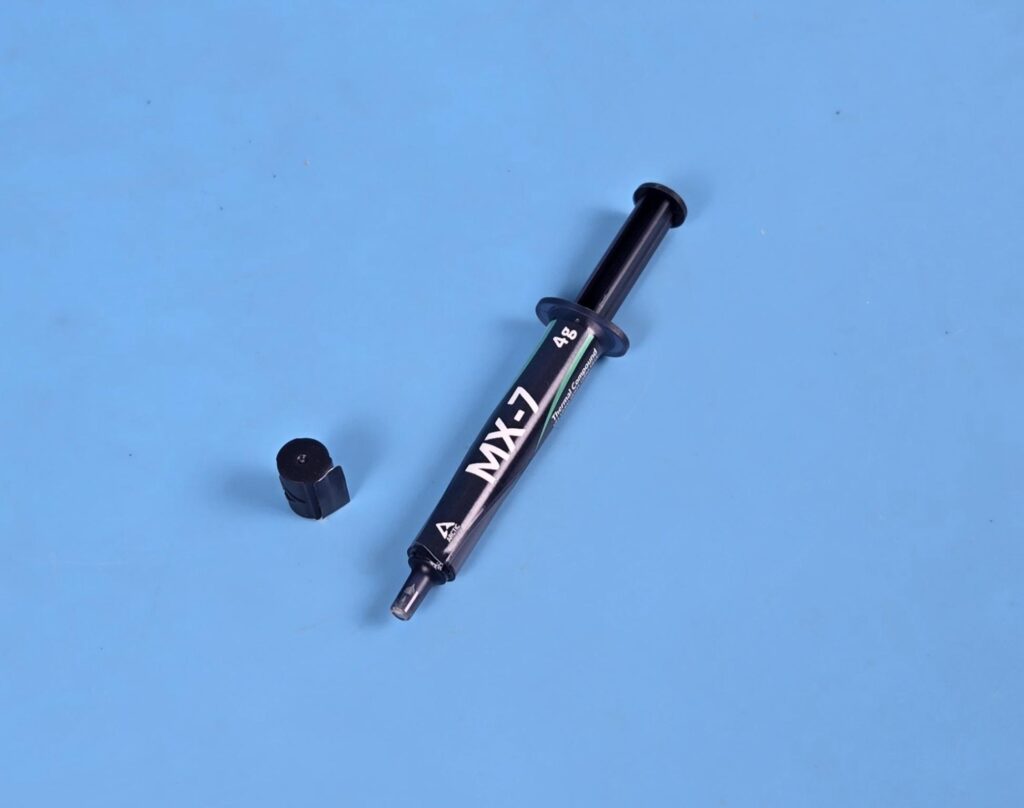
The tube has a thick cover, removing which shows the nozzle of the tube from where the thermal paste comes out.
Specifications
| Color | Grey |
| Density | 2.9 g/cm³ |
| Viscosity | 35,000 to 38,000 Poise |
| Thermal Conductivity | NA |
| Volume Resistivity | 1.7×10¹²Ω-cm |
| Breakdown Voltage | 4.2 KV/mm |
| Working Temperature | -50°C to 250°C |
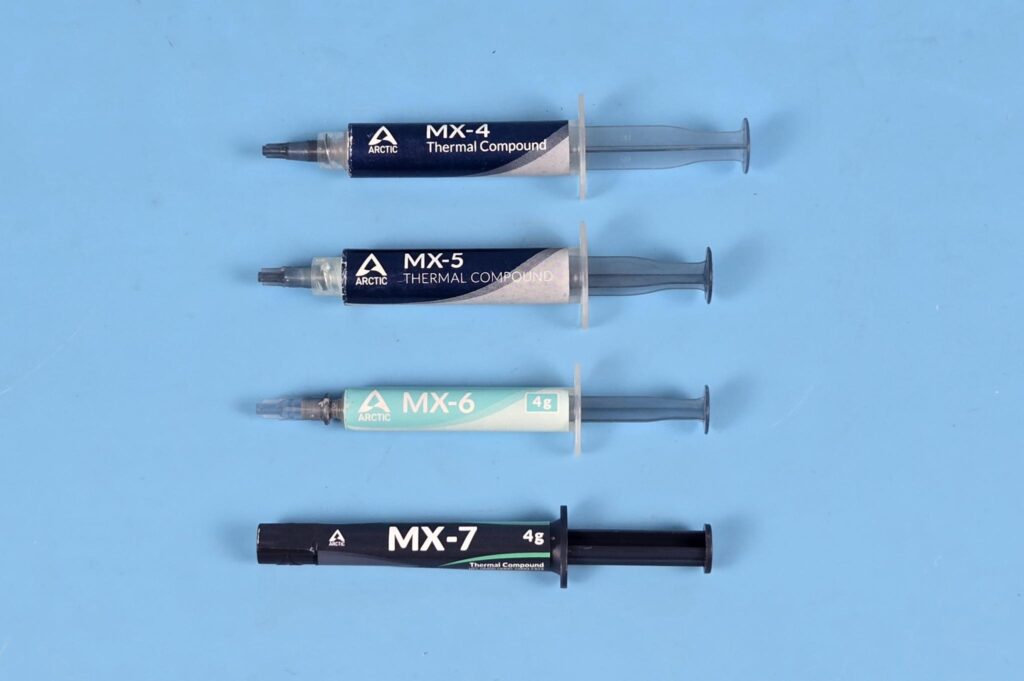
This thermal paste is silicone-based, using aluminum in 88.4% concentration with Polydimethylsiloxane in 11.5% and Melanins in 0.1% concentration (% w/w). If I remember correctly, the HY-P17 from Halnziye that I recently tested uses Aluminum and zinc oxide combination along with dimethyl siloxane.
The MX-7 is drier than its predecessors, which comes from high filler content. You can think of this as a trade-off for high performance over easy application. It is a gray color, odorless paste, and it is not electrically conductive.
You will get the same smudgy, sludge sort of dry paste that I have seen from the likes of Thermal Grizzly Duronaut, ID-Cooling Frost X45, and Halnziye HY-P17. All these pastes have high viscosity. It is quite difficult to even spread this thermal paste.
A better alternative is using 9 small dots on the IHS, or 5 medium dots, depending on the SKU, and the rest of the job will be done by the cooler’s weight and mounting pressure. The other way around is using X shape application.
Here is a quick tip from me: Put the tube in a hot cup of water for a few minutes, and then apply it in an X shape for easy application. Be quick before it changes its state!
According to ARCTIC paste’s high cohesion ensures a stable composition and guarantees long-lasting, consistent performance without drying ou,t whereas the low adhesion allows for optimal distribution into a fine bond line and ensures maximum heat transfer. High cohesion prevents cracks or leakage even during repeated thermal cycles with high thermal stress.
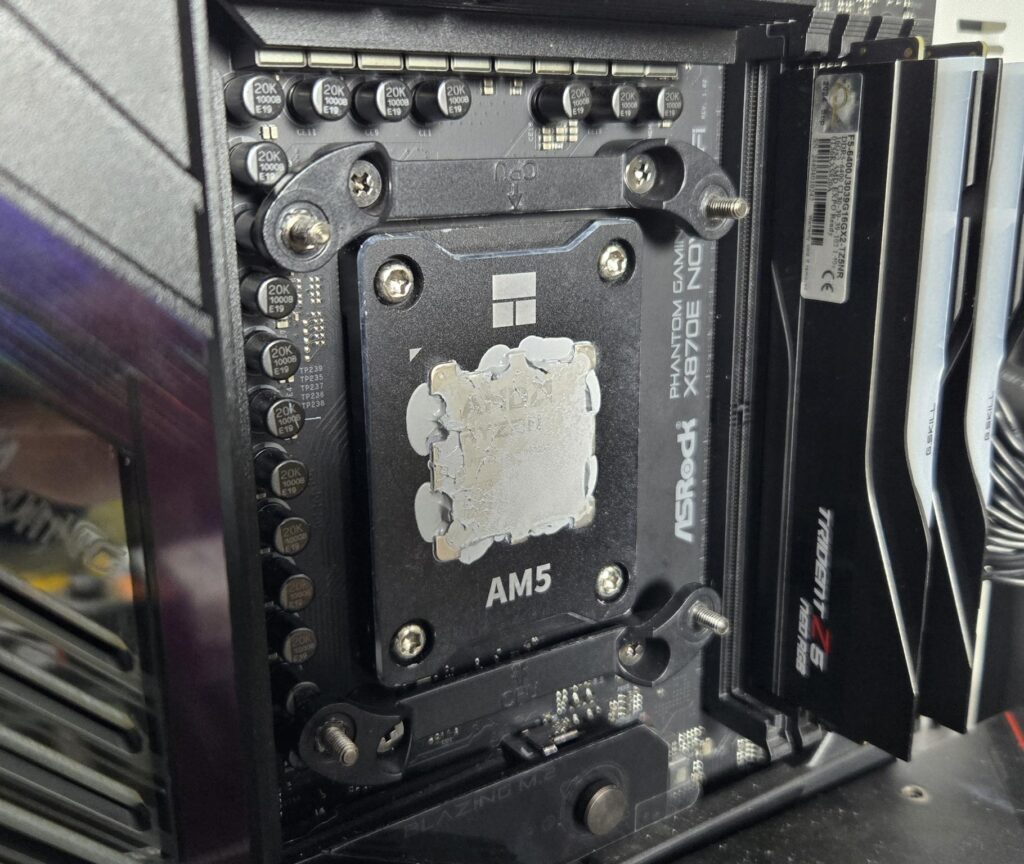
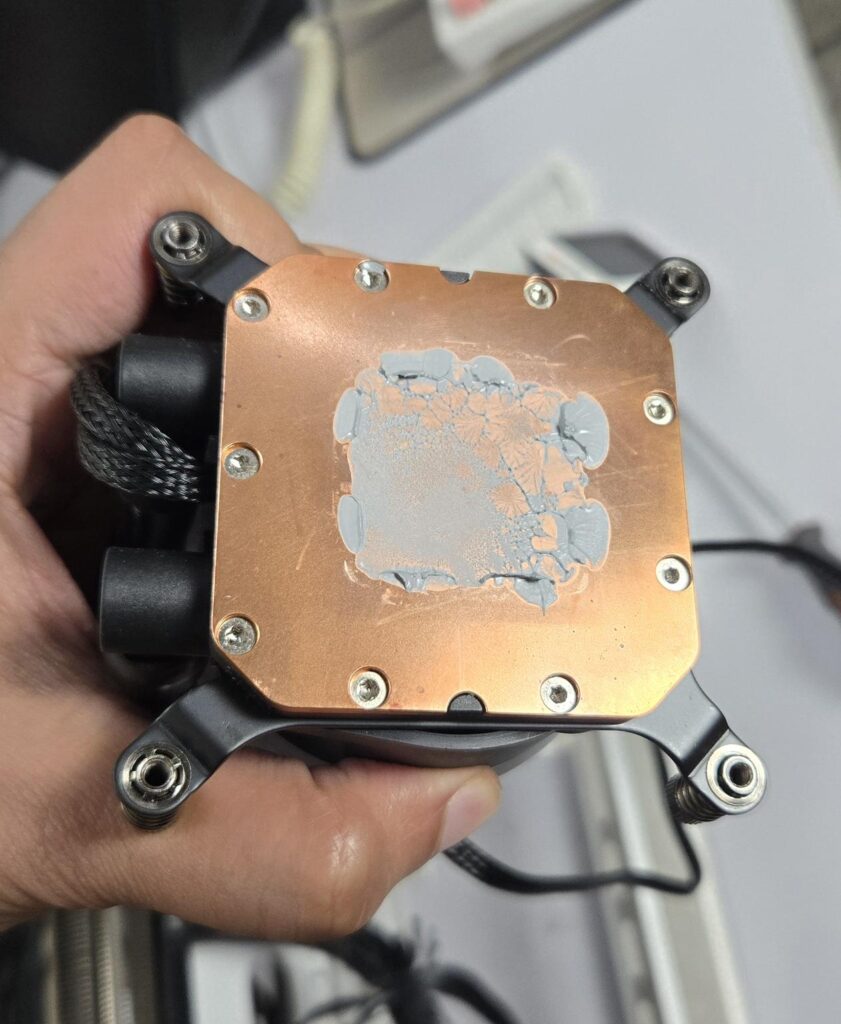
I had a tough time (before heating the tube), and it seems like I applied too much, and it pumped out easily, as you can see in the pictures. After heating the tube, its application was way better and optimal. The gray color is easily visible in the pictures as well.
Testing
The following configuration is used for thermal testing:
- AMD Ryzen 9 9900X
- ASRock X870E NOVA WiFi
- GSkill TridentZ NEO RGB 32GB 6400MHz CL30 DDR5 kit
- Lian Li GA-II Lite 360 Performance
- ASRock Phantom Gaming RX 7600 Graphics Card for Display
- Biwin Black Opal X570 Pro 4TB NVMe SSD
- Fractal Design ION+ 2P 860W Platinum PSU
- Thermaltake Core P6 TG Snow Edition in an open frame layout
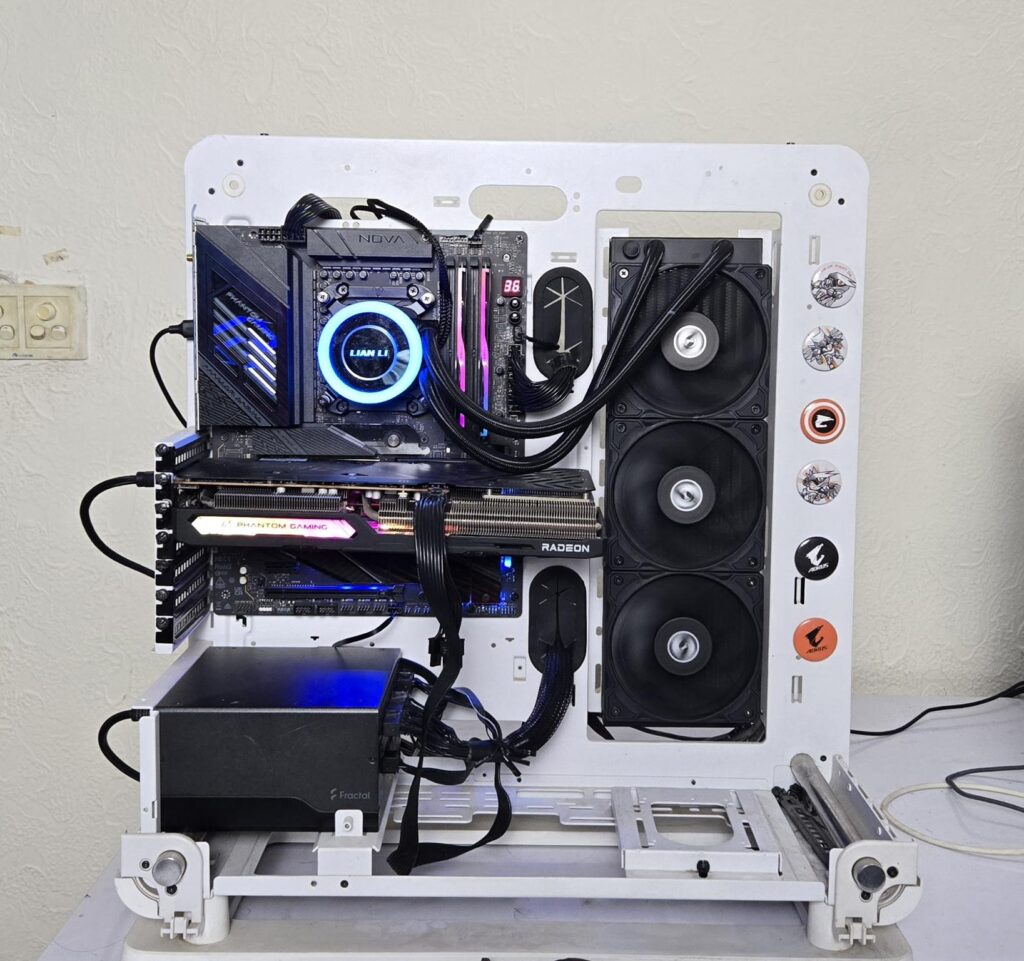
Here is the settings table for testing:
| Settings | PBO Enabled [243W] |
| Clock (MHz) | Auto |
| Voltage (V) | Auto |
| Thermal Paste Application | X Method |
| Test Run Time | 30 minutes |
| Idling Time | 10 minutes |
| All Fans Speed | 100% PWM Duty Cycle |
| Pump Speed | |
| Stress Software | CINEBENCH R23.2 |
| Monitoring Software | HWINFO64 |
I am reporting the delta temperature in the graph since throughout the testing, the ambient temperature varies from 16°C to over 17°C. Yup, winters are here. The testing is done on an open-air bench system. Once inside the chassis, the temperatures are expected to rise and would largely depend upon the optimal airflow inside the chassis.
I ran the R23.2 30-minute stress test first and then let the PC cool down and shut it down. This way, at least one thermal cycle was completed. The testing was done on the next boot after 30 minutes of wait.
Result
Let’s take a look at the results.
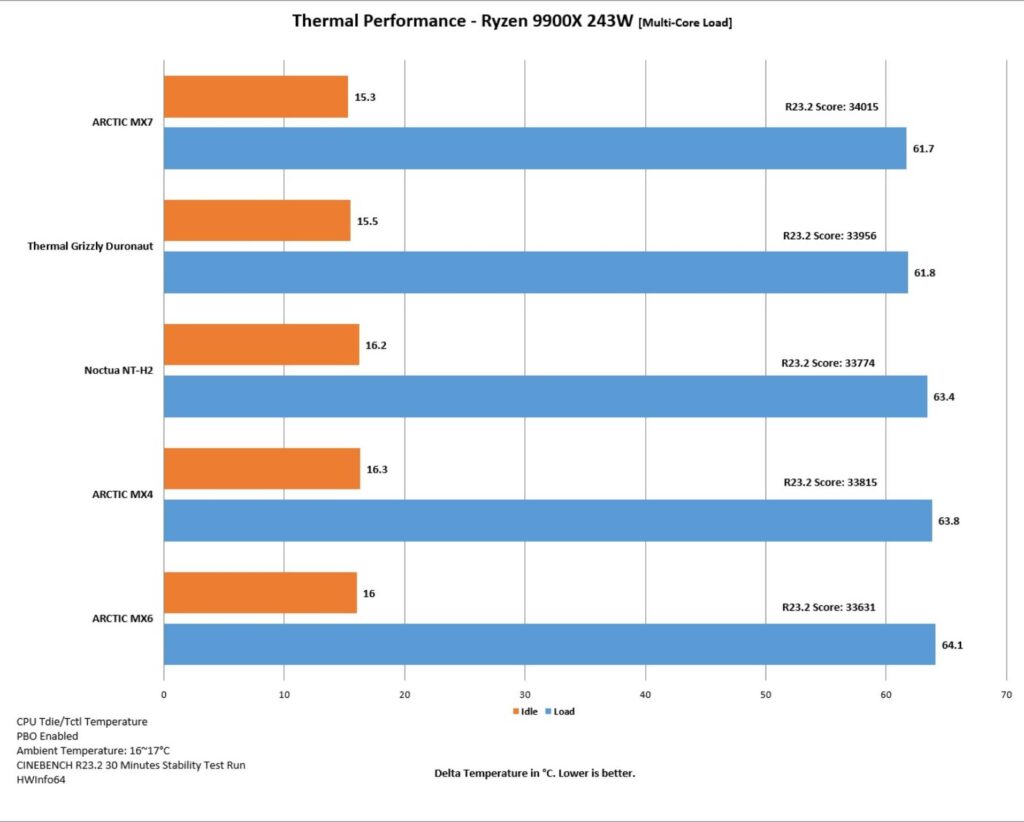
The results are self-explanatory, and they show the true performance of MX-7. It matches the performance of the high-performance Duronaut from Thermal Grizzly and provided maximum R23.2 Multi score as well.
Conclusion
ARCTIC is back with yet another release after the P12/P14 Pro Reverse fans. This time it is the MX-7. This is ARCTIC’s new high-performance thermal paste, taking over the MX-6. In my so far testing, MX-6 has never delivered the promised performance. I think this particular tube may be problematic! It is authentic for that matter.
Anyhow, I digress, coming back to the main topic, the new thermal paste is available in 2g, 4g, and 8g packs, and they carrya 5-year shelf life, which is ok. The new paste is a mixture of aluminum, Polydimethylsiloxane, and Melanins in 88.4%, 11.5%, and 0.1% concentration (% w/w), respectively.
It has a viscosity rating of somewhere between 35,000 and 38,000 Poise, making it a high viscosity paste. It would be hard to apply and even spread on the surface because it is less liquid. This paste has low adhesion and high cohesion, and it is designed to reduce the pump-out effect. I can’t say it eliminates pump out effect, though.
This thermal paste, like the Duronaut, HY-P16, HY-P17, and Frost X45, is hard to even spread on the CPU. ARCTIC has recommended to use X shape application. I would suggest soaking the tube in a hot cup of water for a few minutes before application, and then try the X shape application. This would make your life easy. You can thank me later – Pun Intended!
ARCTIC has not specified the thermal conductivity rating of the thermal paste. The pricing of these thermal pastes is as follows:
I can say with confidence that we finally have a true successor of MX-4, and its current retail price is making it even more giving one heck of a good value for your bucks. However, MSRP is a steep price in my opinion, and it is one that would not disturb the competition. ARCTIC should consider effective pricing on the webshop. MX-7 comes strongly recommended from us.