













ARCTIC P12/P14 Pro Reverse ARGB White Fans: Power Horse
ARCTIC has recently released much-awaited reverse-blade design fans under the famous P12 and P14 categories of the PC fans. These are P12 Pro Reverse and P14 Pro Reverse fans. They are available in non-RGB and A-RGB configurations. These fans are also available in 3 fans pack.
The salient feature here is obviously the reverse blade design, making these fans suitable for the case ventilation, particularly, but here is a catch. These are not regular P12 and P14 variants in reverse blade; they are Pro versions that come with high specifications. The airflow and air pressure ratings on both types of fans are remarkably high, meaning you can also use these fans on CPU coolers.
These fans feature PST (PWM Sharing Technology), which is a common feature on ARCTIC fans. It is a simple concept that allows these fans to be daisy-chained for a single source of control. ARCTIC has focused on reducing the airflow loss by making changes in the design of these fans. The tip clearance stands at 1.1mm, which, according to ARCTIC, generates more airflow at high air pressure.
Pricing:
| P12 Pro Reverse ARGB White – Single Fan Pack | €25.49 |
| P14 Pro Reverse ARGB White – Single Fan Pack | €26.49 |
| P12 Pro Reverse ARGB White – Triple Fan Pack | €47.49 |
| P14 Pro Reverse ARGB White – Triple Fan Pack | €51.49 |
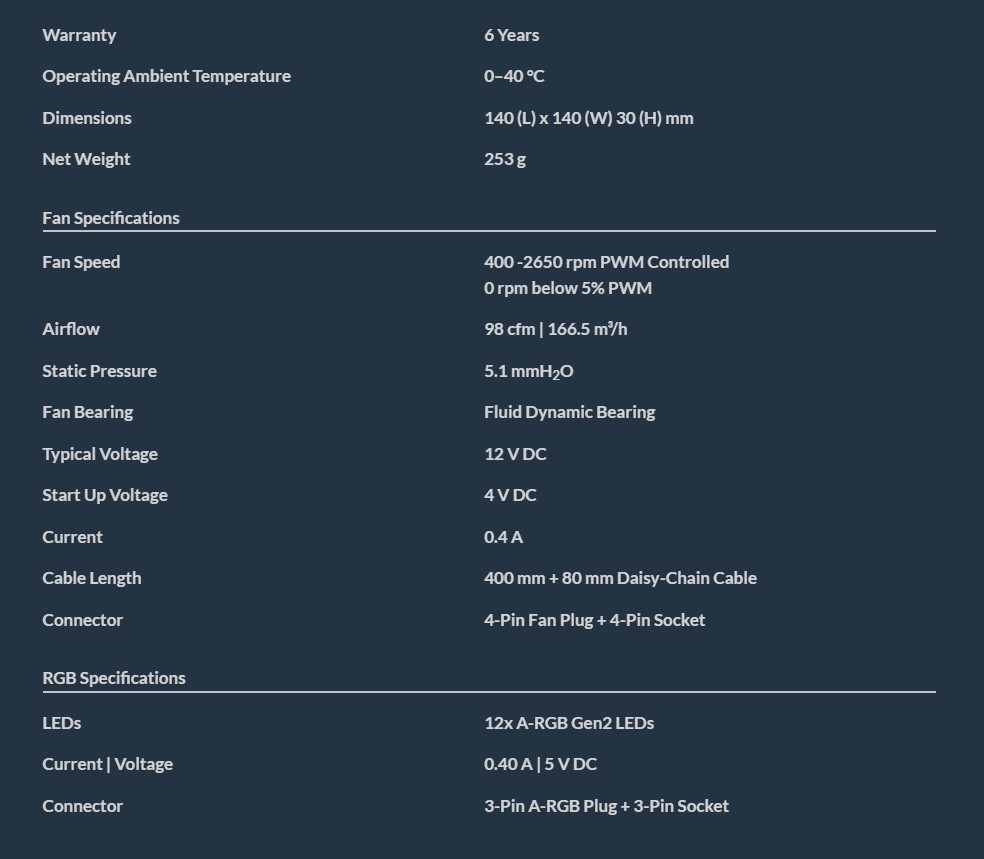
Specifications
Closer Look
It is time to take a look at the fans.
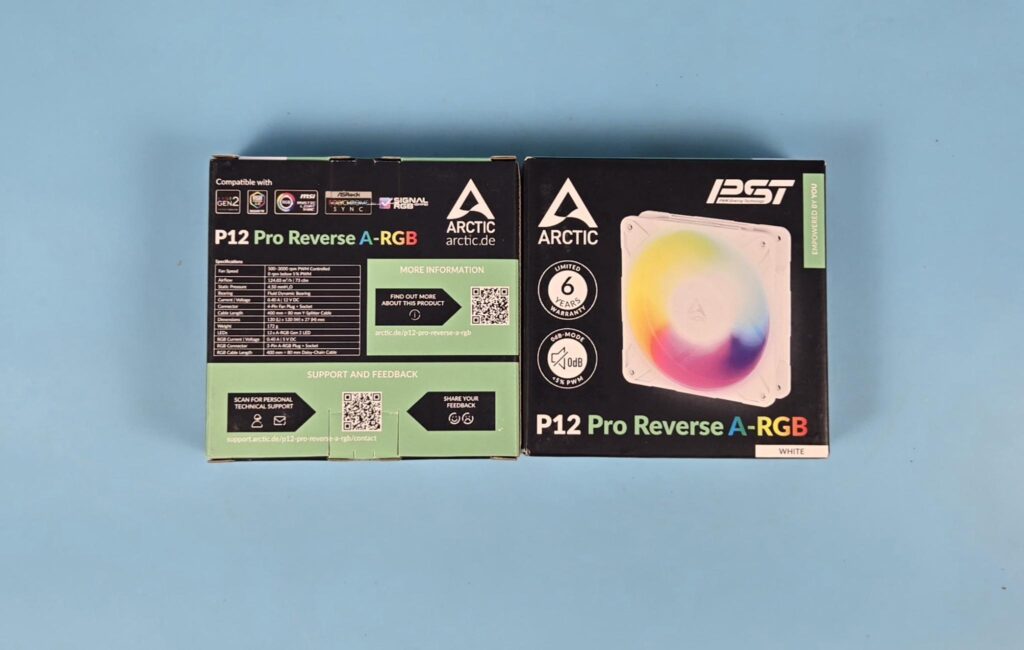
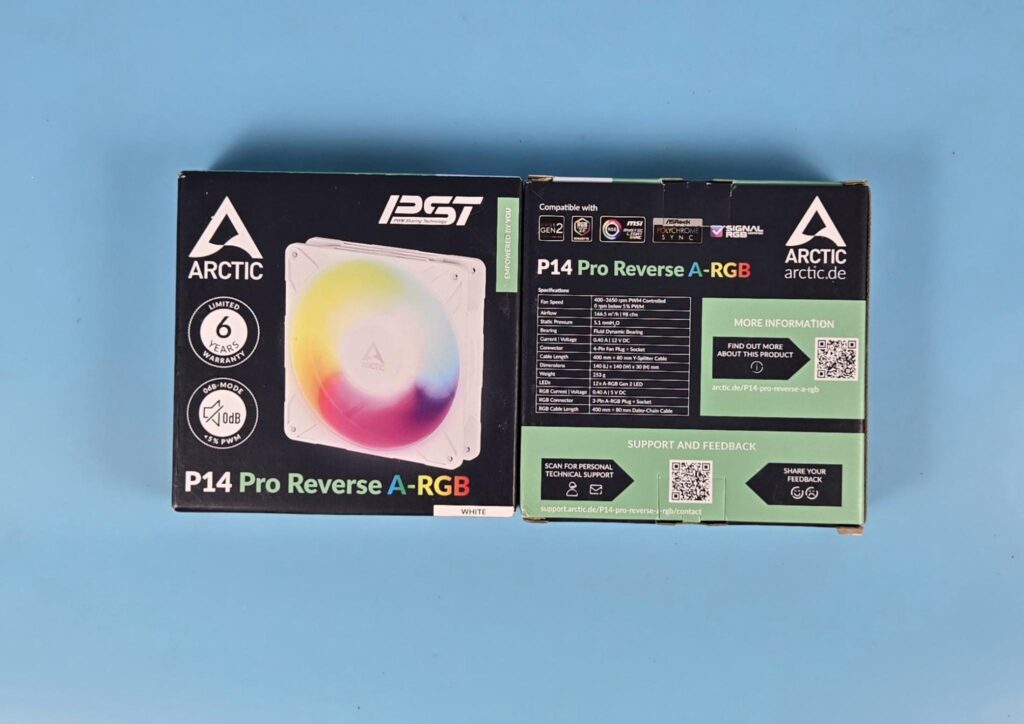
We have received 3x fans of each type in a white ARGB configuration. They are shipped inside cardboard boxes with minimal packaging, and each packing box has a fan and 4x self-tapping screws in it.
We have received the value pack of 3 fans. They are shipped in a simple cardboard box with minimal packaging.
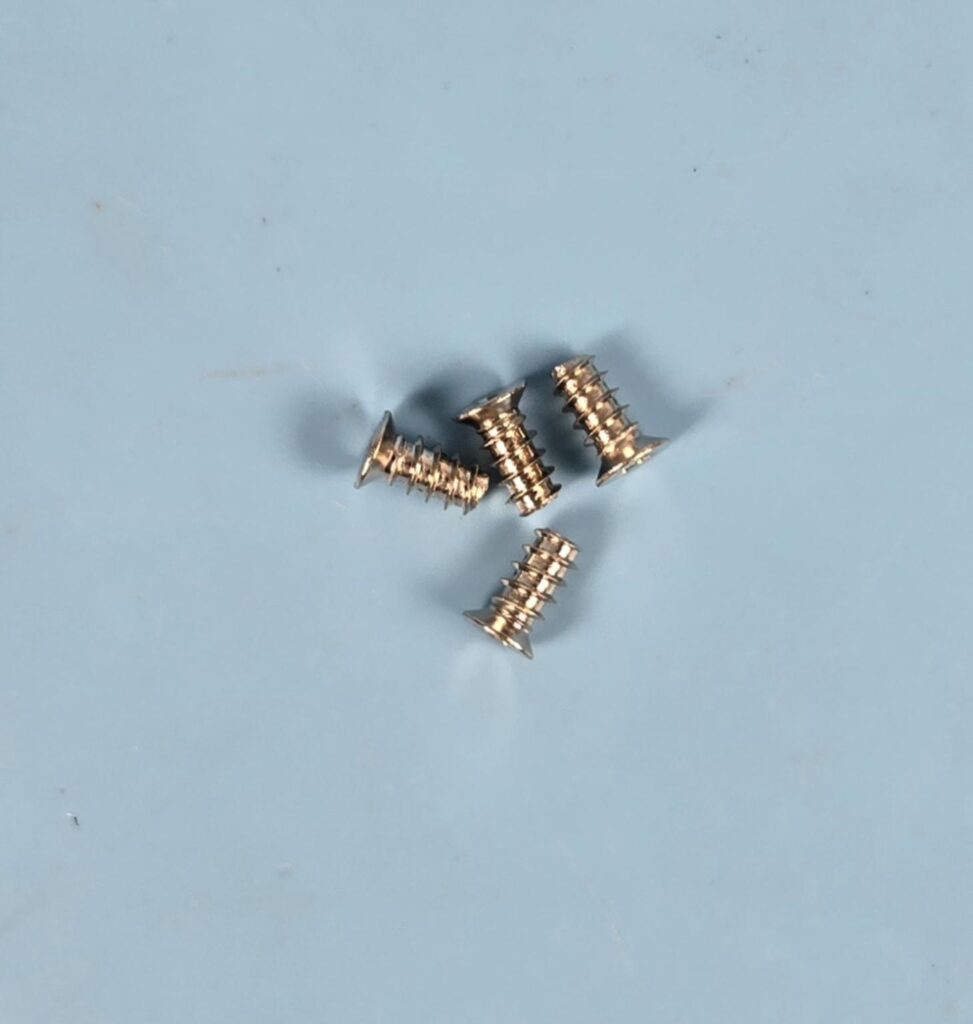
ARCTIC has provided4x self-tapping screws in each box.
Since 120mm and 140mm fans have the same design concept, I am covering both fans in a single content.
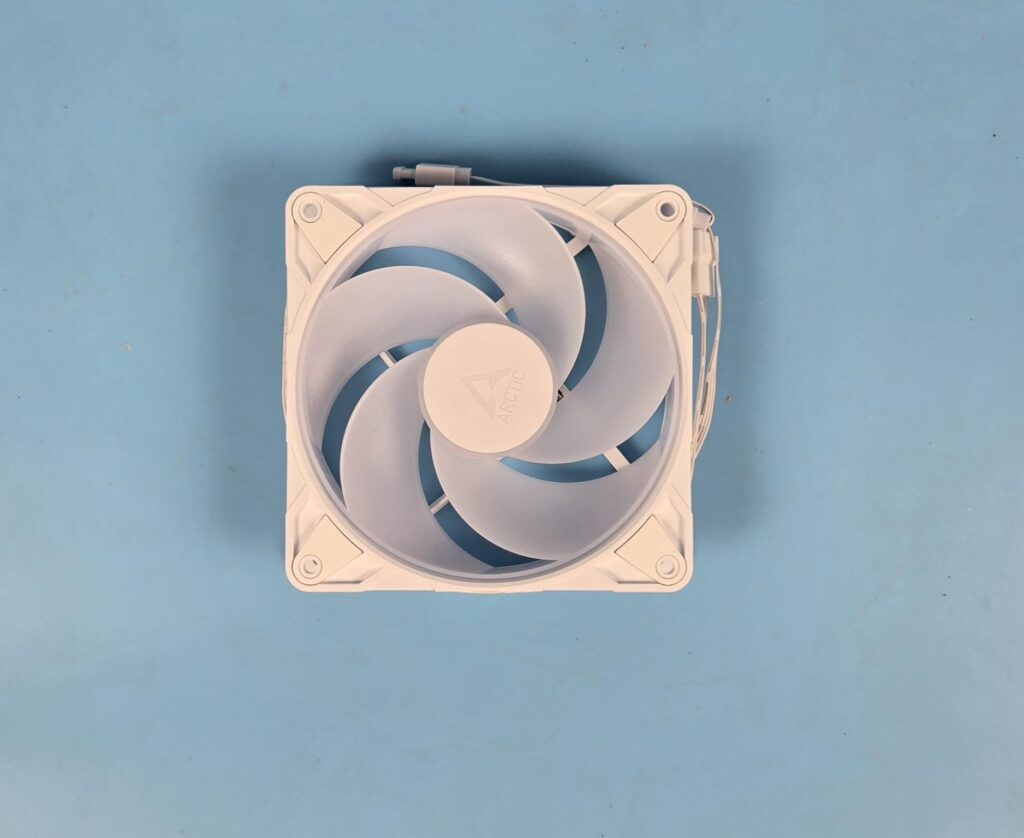
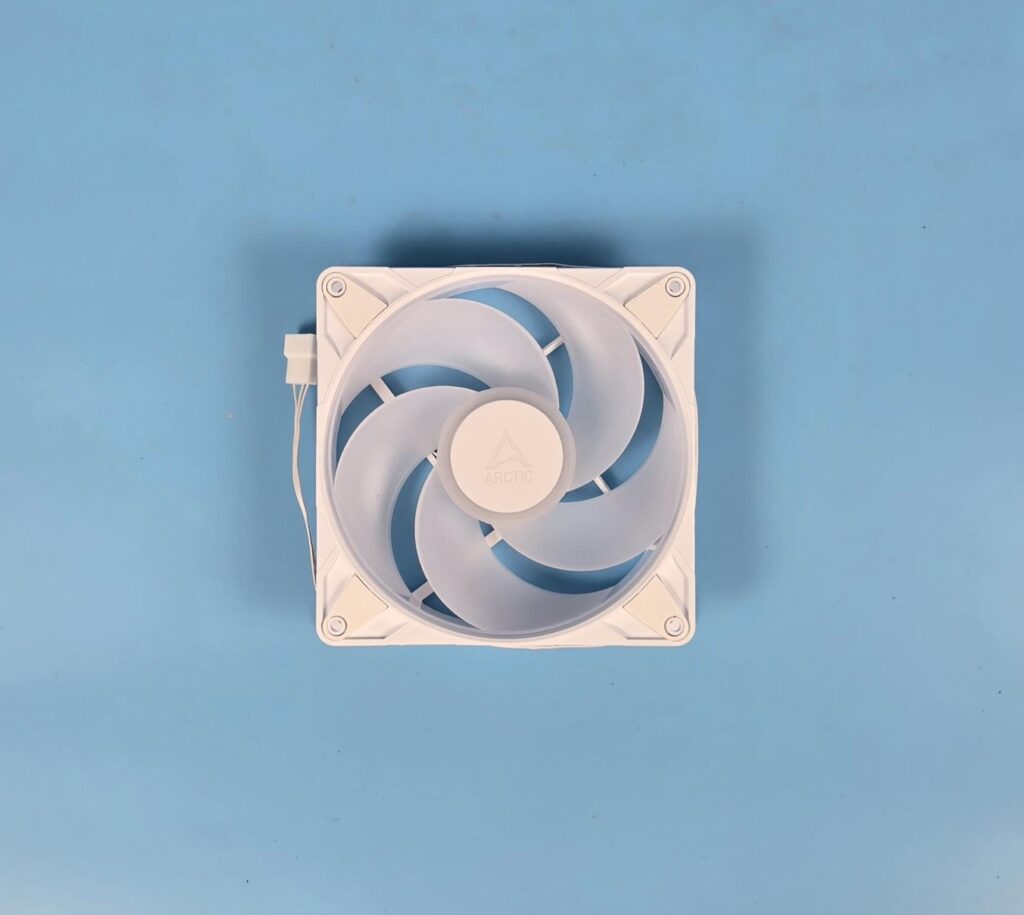
The P12 Pro Reverse ARGB White has a dimension of 120x120x27mm (LxWxH). P14 Pro Reverse ARGB has a dimension of 140x140x30mm (LxWxH). You can see that both types of fans have more height compared to the standard 25mm. P14 Pro Reverse, in particular, has 5mm more height, which enables it to maintain more air pressure. The difference between any two mounting holes is a standard 105mm.
P12 Pro Reverse ARGB White and P14 Pro Reverse ARGB White have the same design. Each feature 5x blades placed in an order that is a hallmark of P series fans. This particular arrangement generates more airflow without the high noise that comes from turbulence.
Looking closely, you will see a ring frame that is connected to the tips of the impellers. This ring frame also rotates along with the impellers. The center of the frame has a white cover with ARCTIC branding.
ARCTIC has mentioned that these fans have trumpet-shaped intakes and teardrop-shaped spokes. This design directs the airflow and helps in reducing the flow losses. This also helps in reducing air resistance, minimizing turbulence, and hence noise as well. So far, we have seen a closed design in a square shape on the back from manufacturers to avoid flow loss.
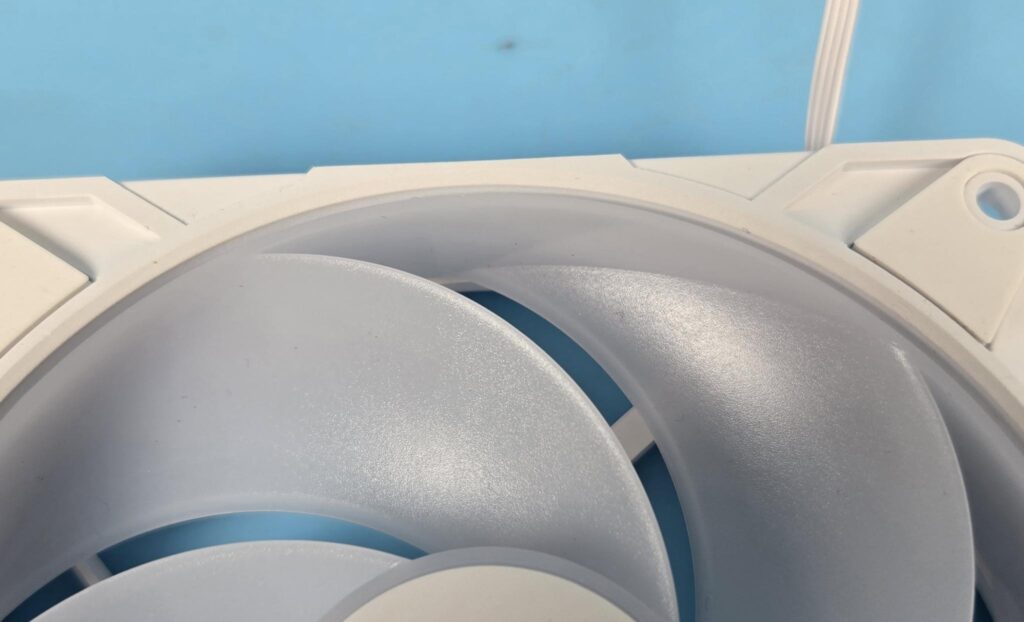
Clearance of the ring from the main housing is 1.1mm, which also helps in reducing air drag while maximizing the airflow.
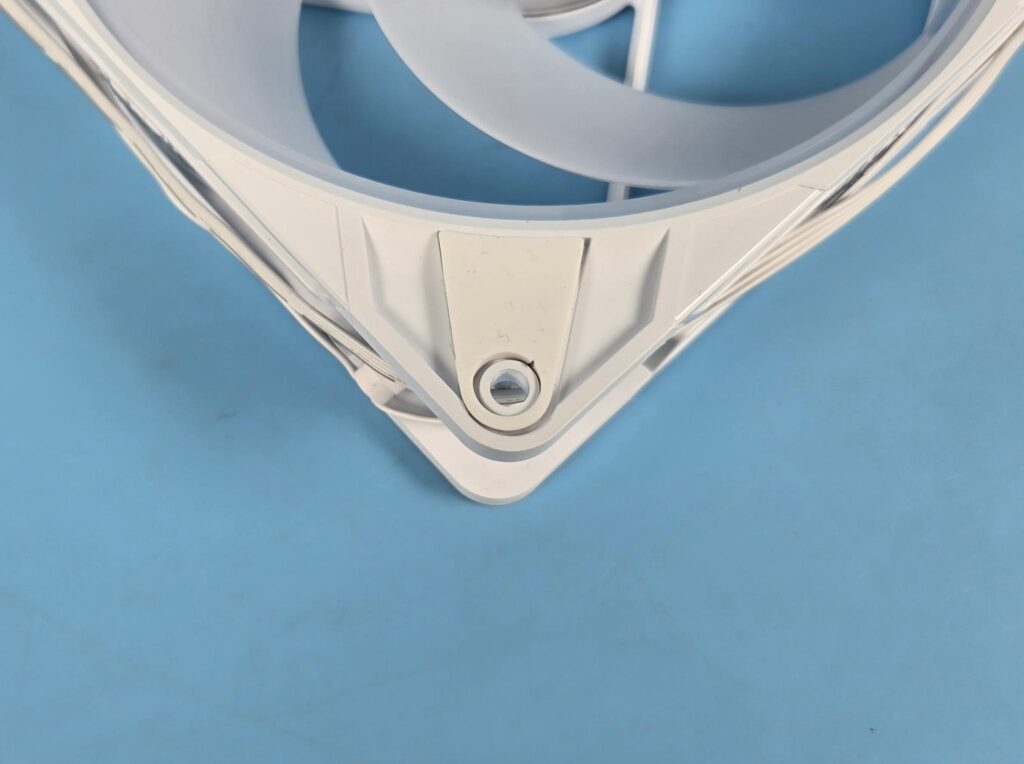
Each mounting corner has a cut-to-size anti-vibration rubber pad, which also reduces noise that could come from the vibration.
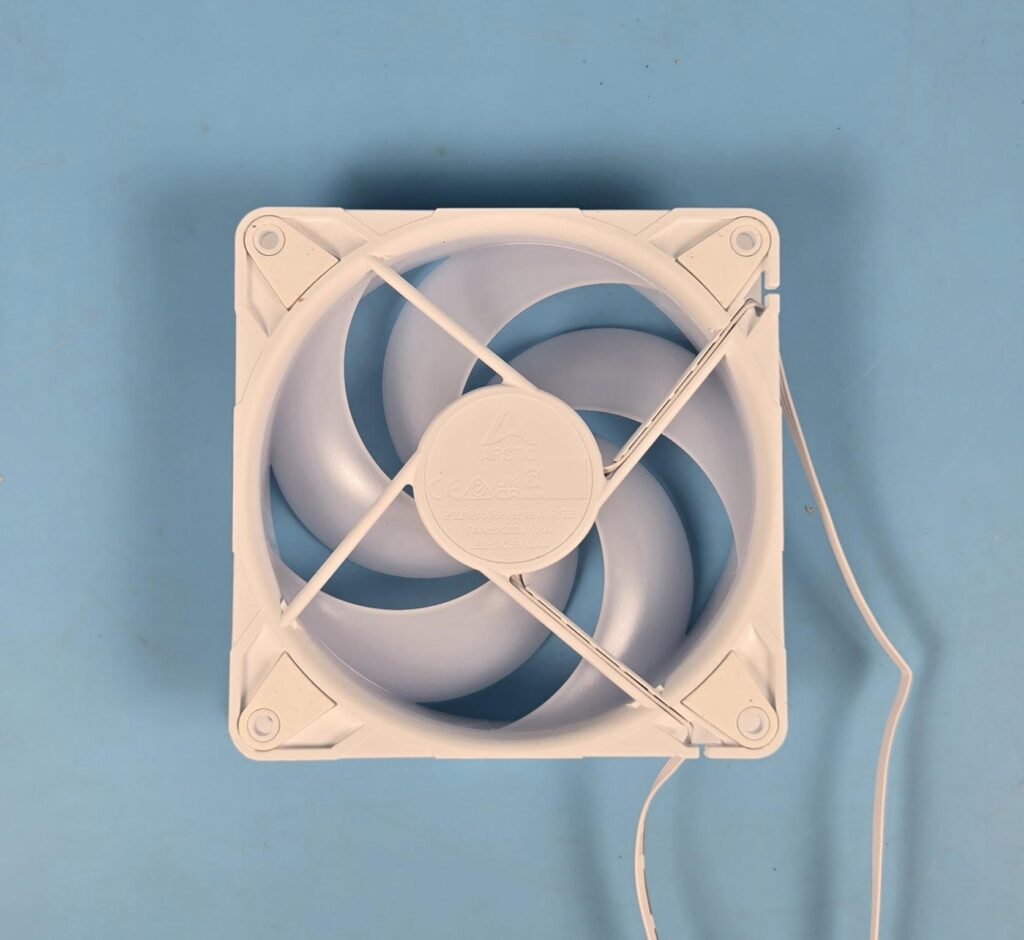
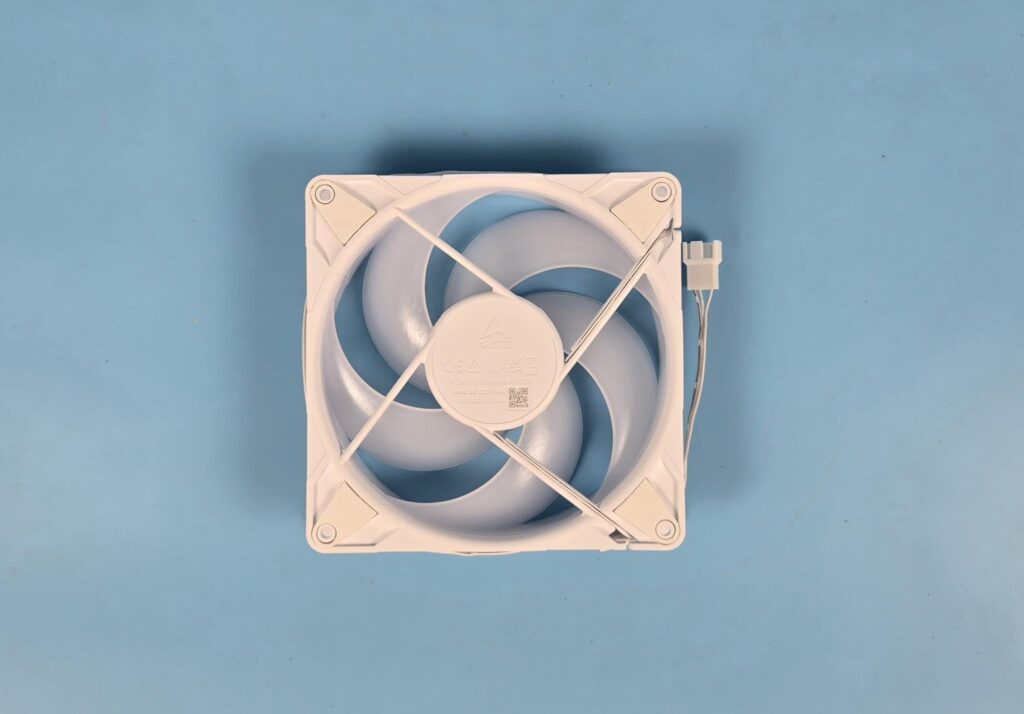
P12 and P14 Pro Reverse ARGB fans have the same design on the backside. You can see four arms assembly. Each arm is slim in size and is angular. The center has ARCTC branding along with the power rating of the fan and LEDs. Take a look at the circular frame to which the arms are connected. It is designed to provide a seal so as to avoid the flow loss.
ARCTIC has mentioned that it has used a hydrodynamic bearing combined with an extended shaft to ensure quieter operation by improving pressure distribution and minimizing vibrations.
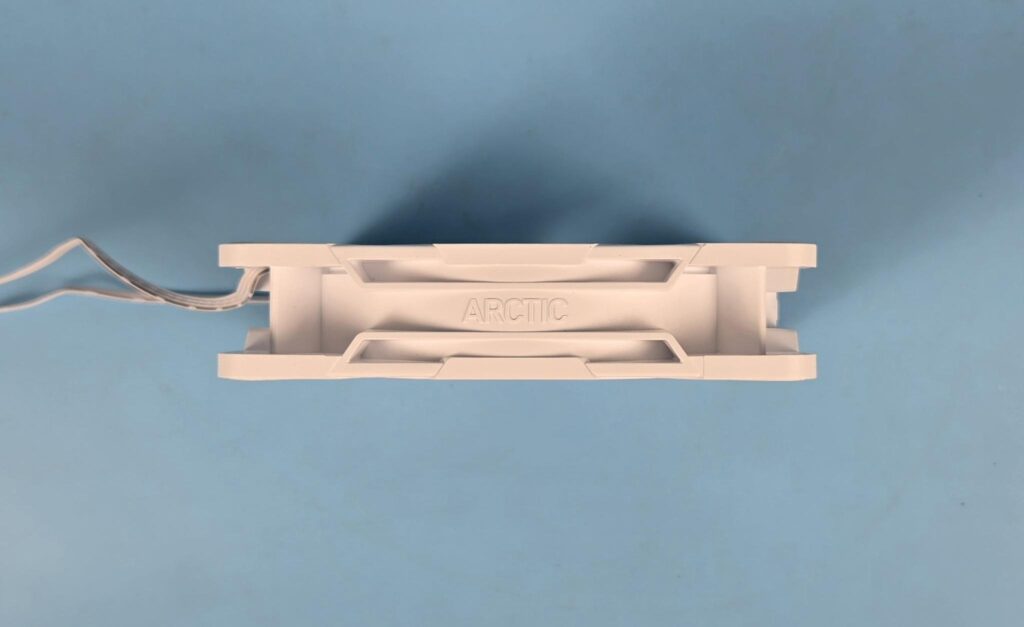
You can see ARCTIC branding on the side frame of the fans. The side frame shows the extra surface for structural integrity of the overall design.
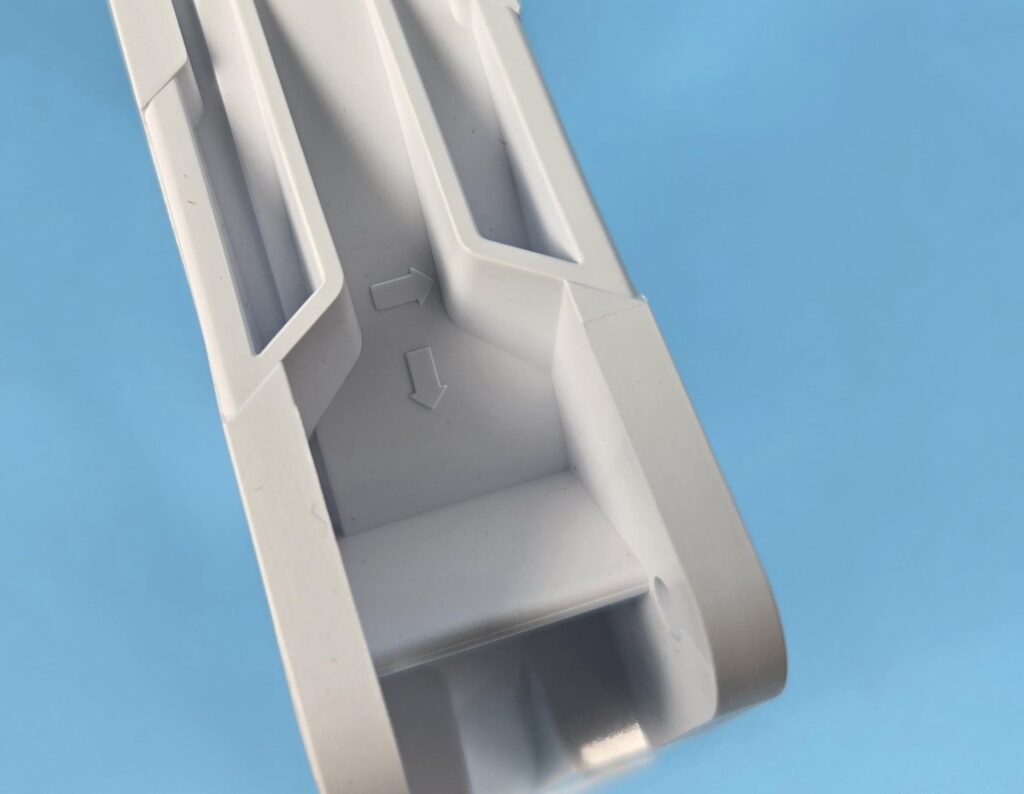
The arrow markers are provided on one corner of the side frame. These provide direction of airflow through the fan and the direction in which the blades spin.
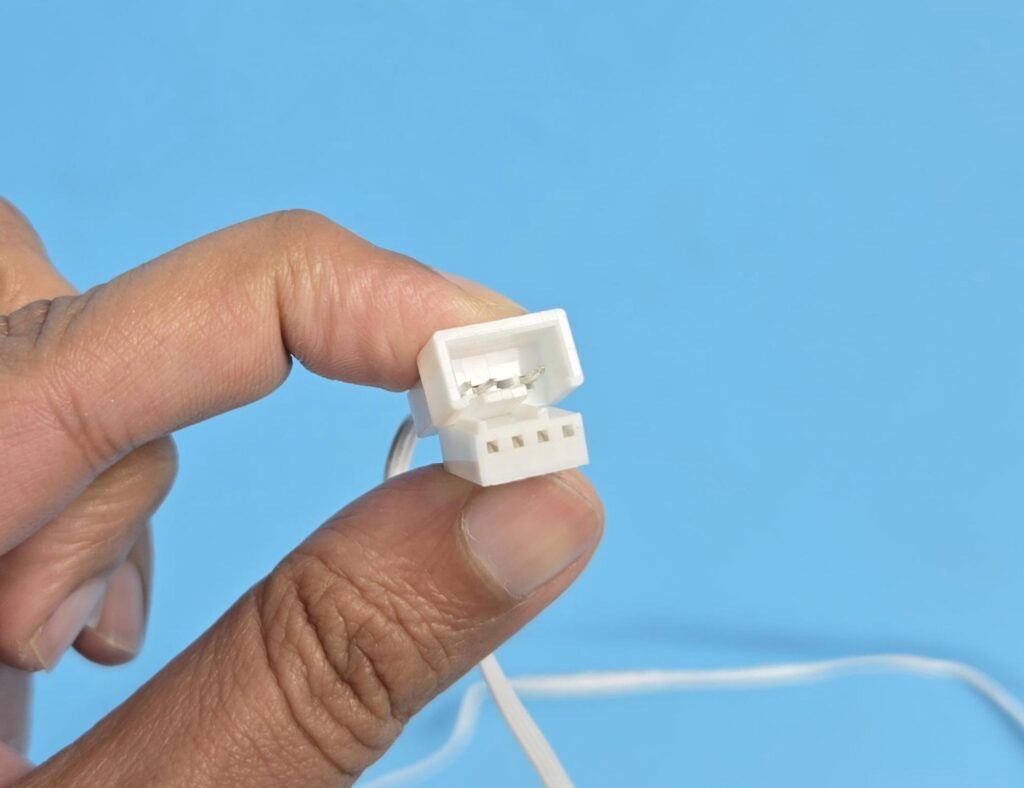
Each fan has a 4-pin PWM connector and a 4-pin socket to allow daisy-chaining.

Each fan has a standard 3-pin, 5V ARGB connectors (both male and female) to allow daisy-chaining.
A-RGB Lighting
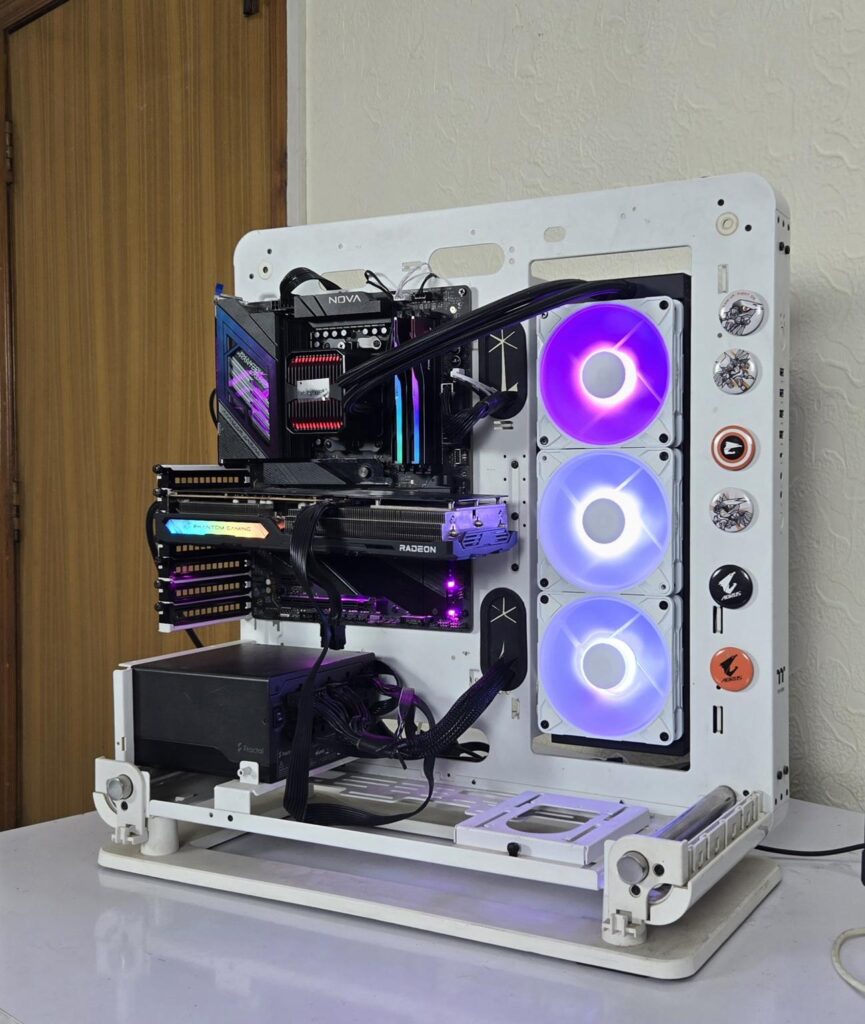
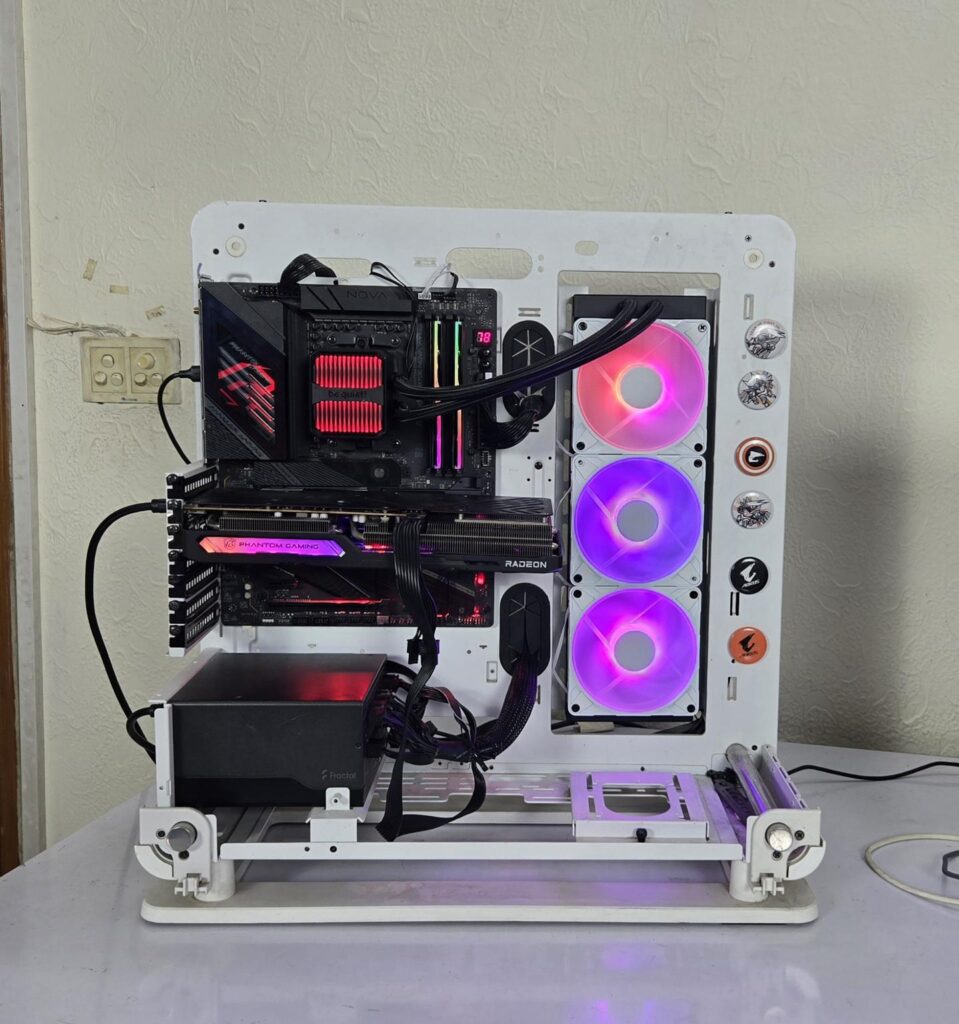
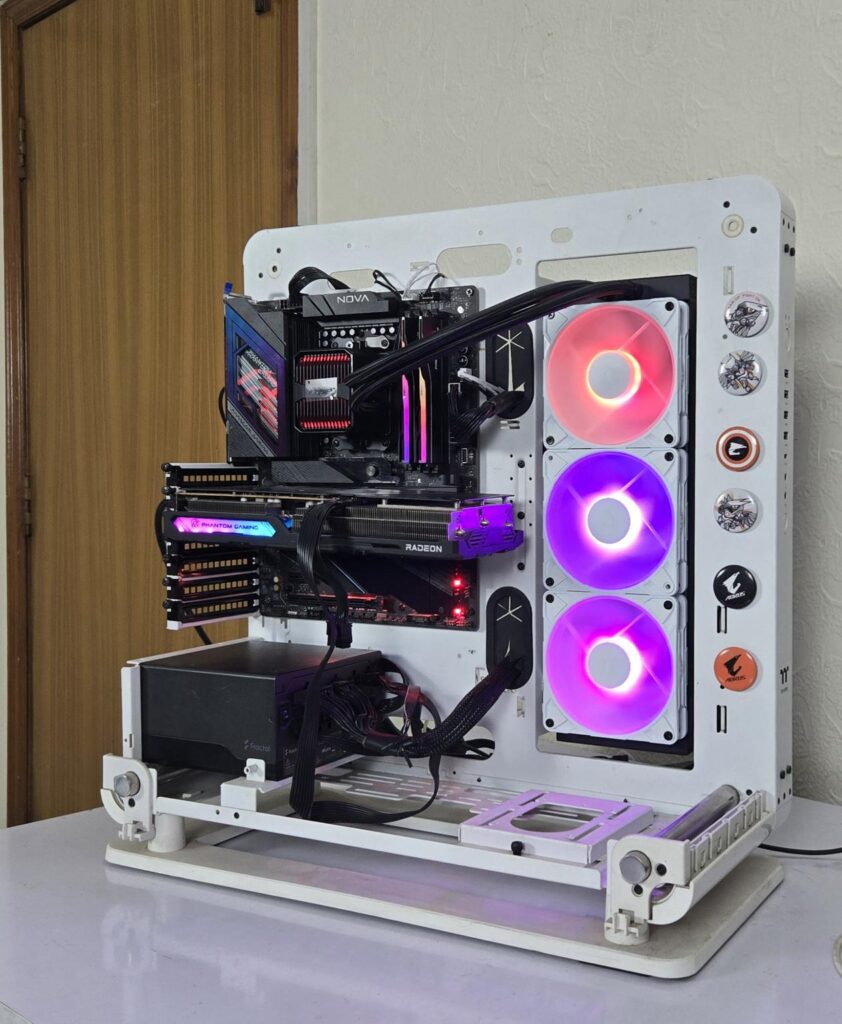
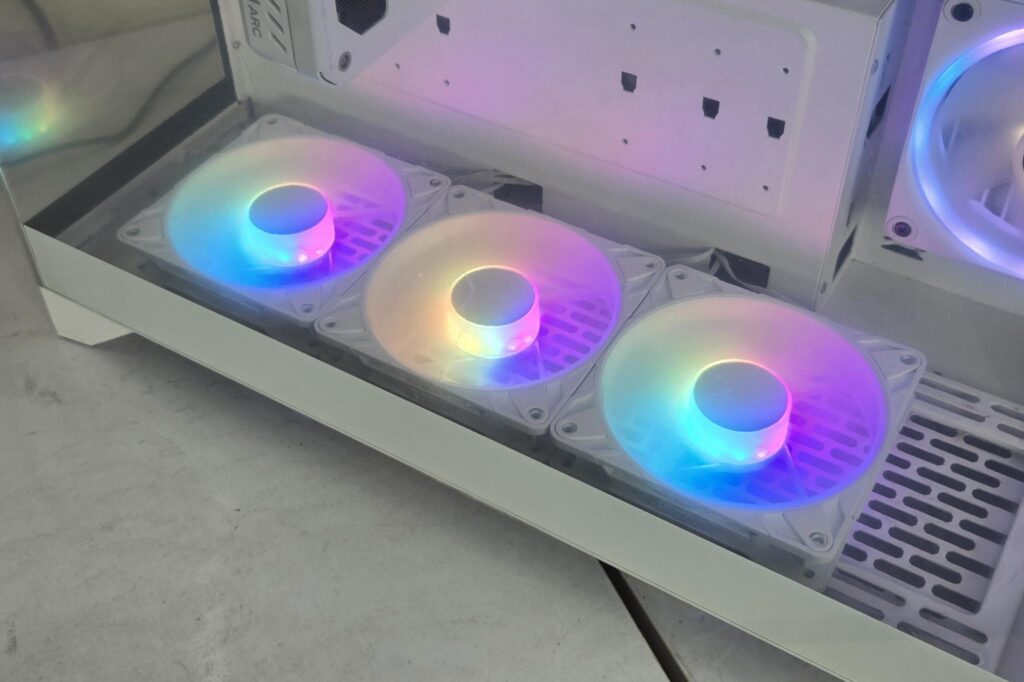
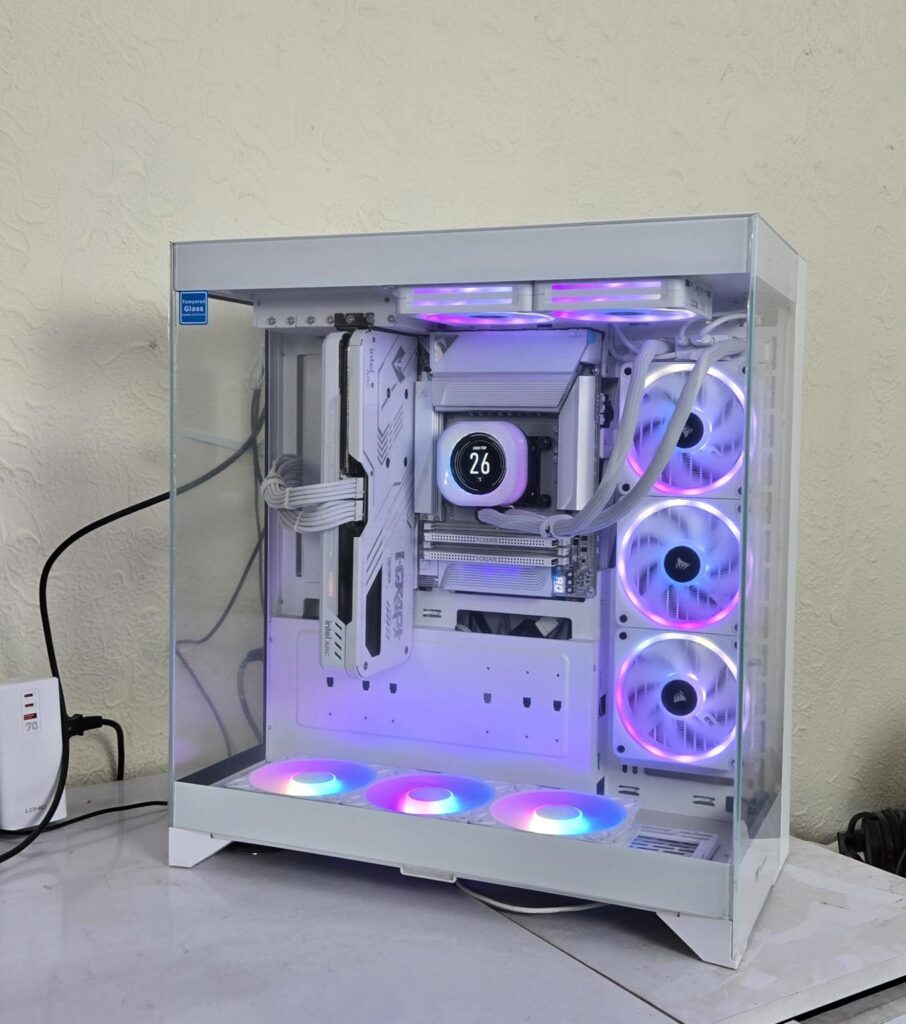
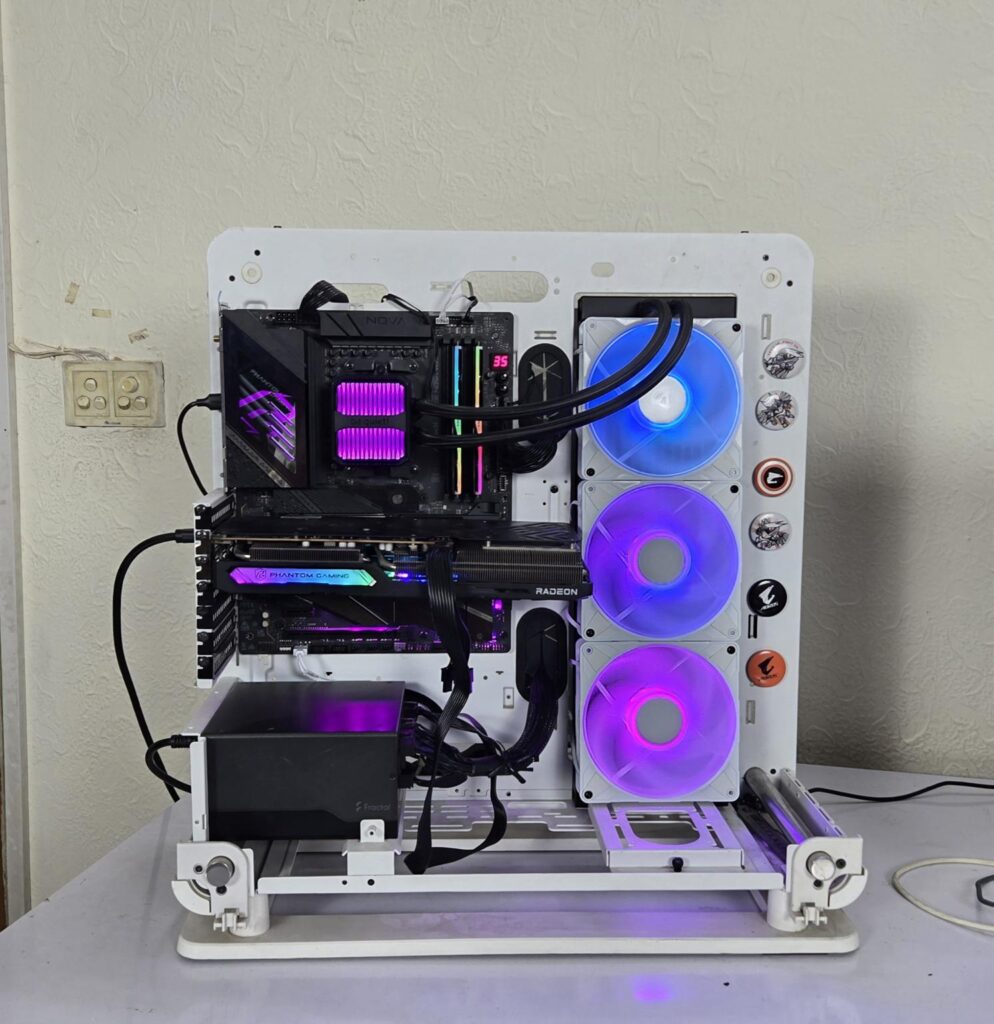
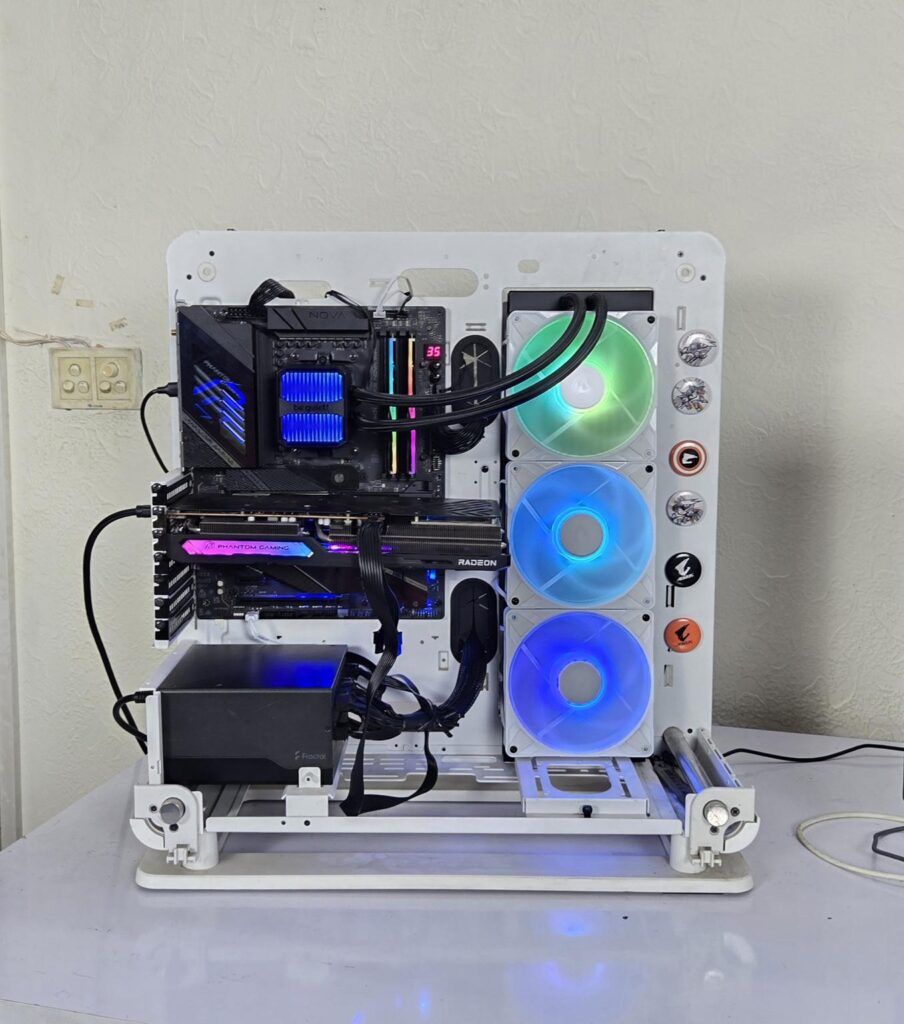
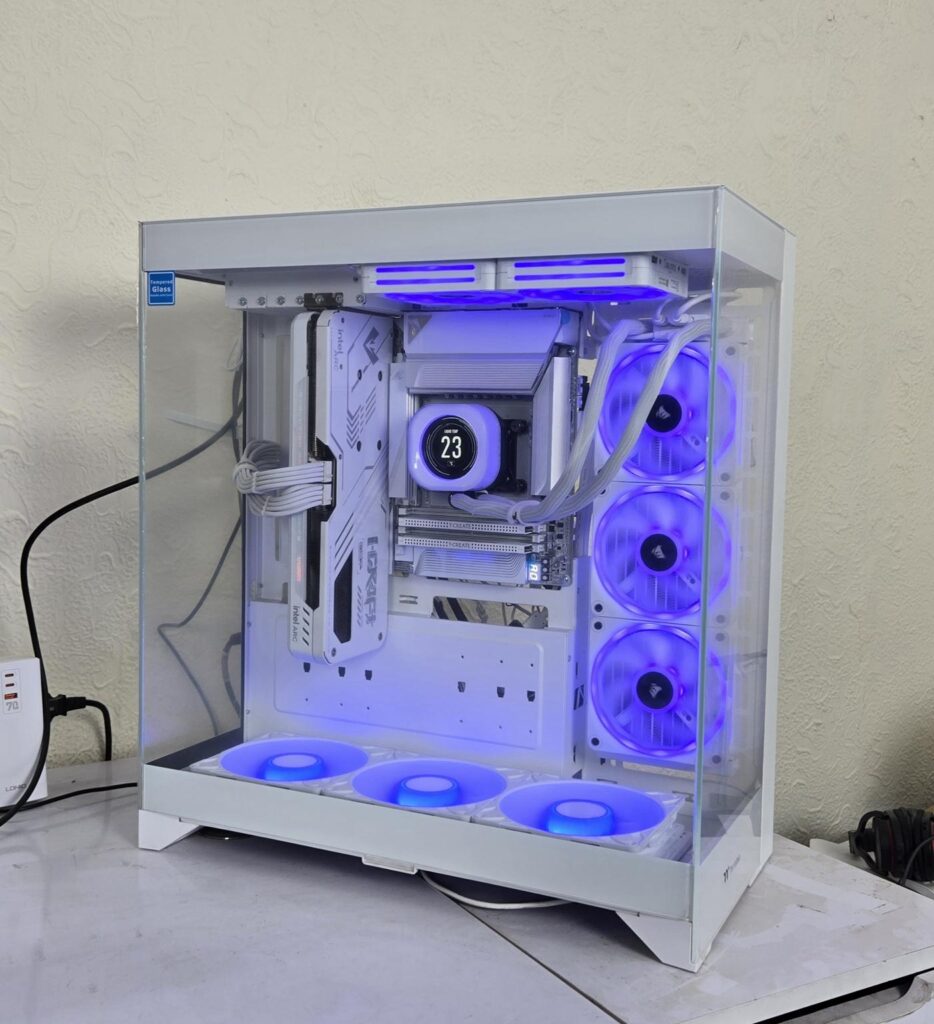
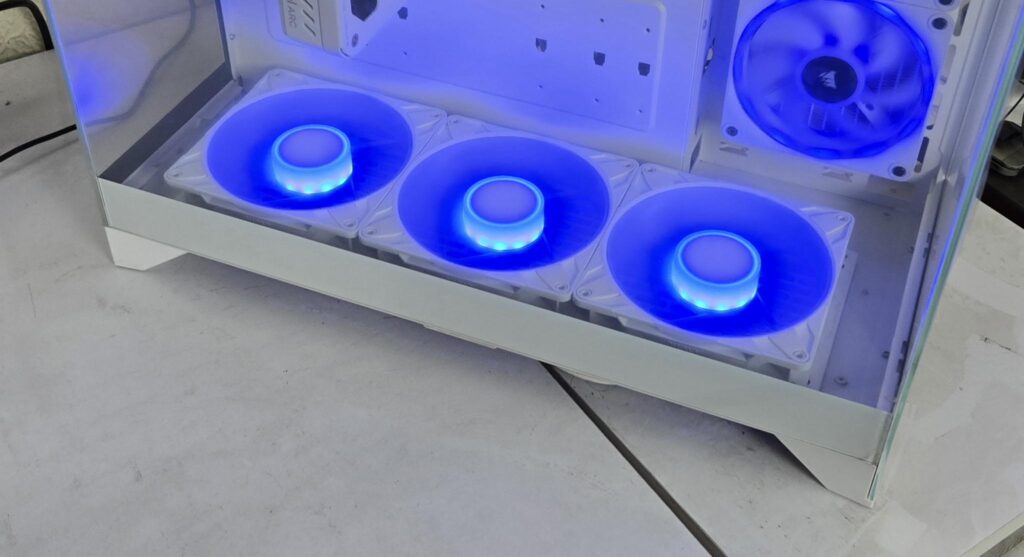
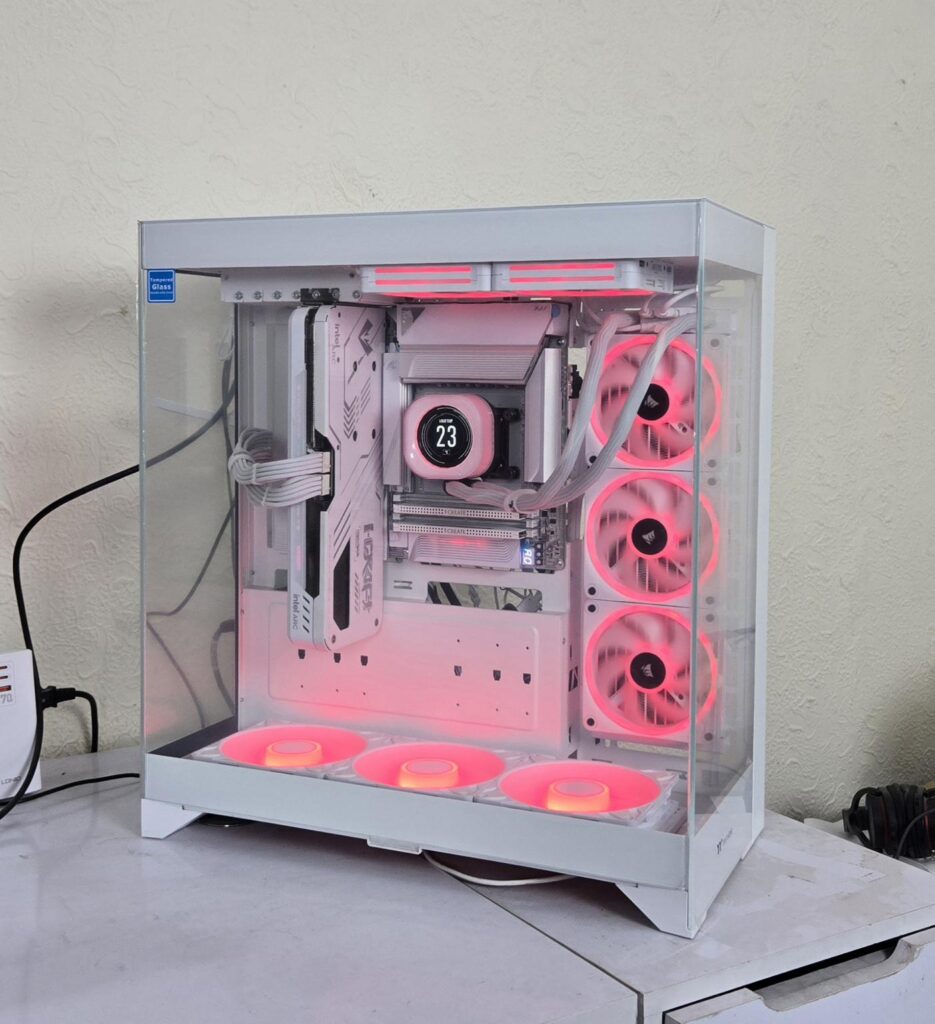
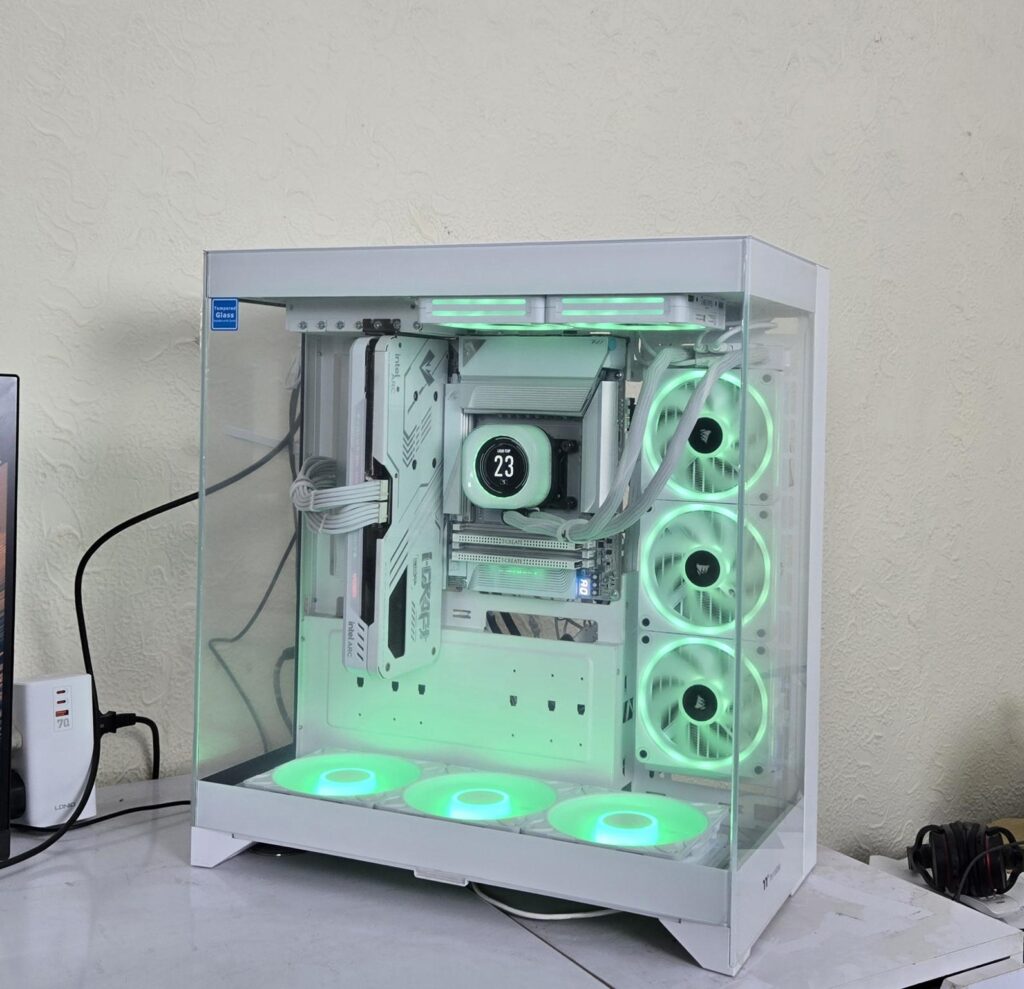
The use of standard connectors provides universal compatibility with the RGB sync technology of the various motherboard manufacturers. I have tested these fans on ASRock X870E NOVA WiFi using PolyChrome Sync and Gigabyte X870 AORUS Stealth Ice using RGB Fusion 2.0.
Performance Testing
I have used two different systems for two tests per fan set:
- Thermal Performance Evaluation on Liquid Cooler
- Thermal Performance as a Case Fan
Before proceeding to those sections, here is the speed result of these fans at the mentioned PWM range:
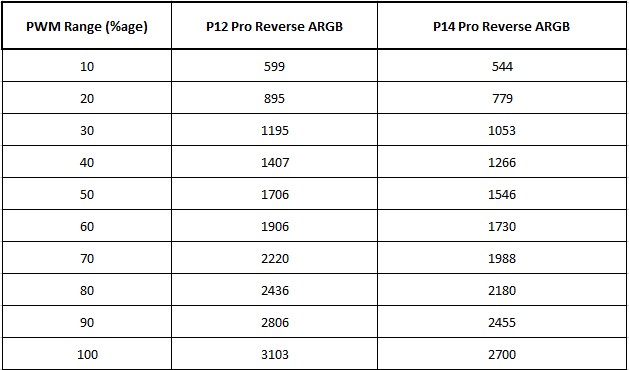
Both fans reached their rated speed, which is 3000 RPM for P12 Pro Reverse ARGB White and 2650 RPM for P14 Pro Reverse ARGB White fans.
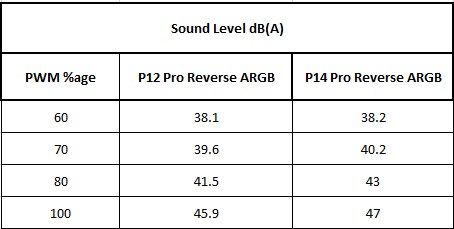
Both fans are quite loud at their full speed. I would suggest using a custom fan curve or Auto PWM function so that they only ramp up under defined load to provide better acoustic performance. P12 Pro Reverse ARGB White fans have a better sound output till 80% PWM, whereas P14 Pro Reverse ARGB White fans have a better acoustic till 70% PWM.
Testing on Liquid Cooler
The following configuration is used for CPU Cooler thermal testing:
- AMD Ryzen 9 9900X [243W]
- ASRock X870E NOVA WiFi
- be Quiet! Silent Loop 3 360 for P12 Pro Reverse ARGB White
- be Quiet! Silent Loop 3 420 for P14 Pro Reverse ARGB White
- GSkill TridentZ NEO RGB 32GB 6400MHz CL30 DDR5 kit
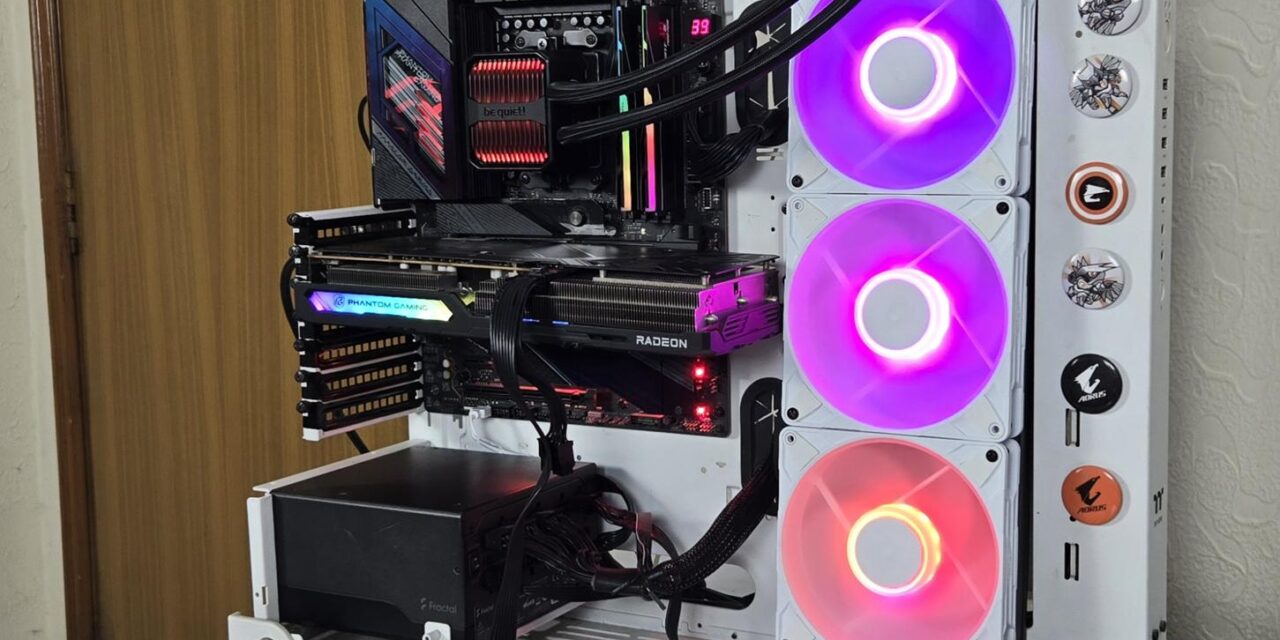
- ASRock Phantom Gaming RX 7600 Graphics Card for Display
- Biwin X570 Pro 4TB PCIe Gen5 NVMe SSD
- Fractal Design ION+2 860W Platinum PSU
- Thermaltake Core P6 TG Snow Edition in an open frame layout
Here is the settings table for testing:
| Settings | PBO Enabled [243W] |
| Clock (MHz) | Auto |
| Voltage (V) | Auto |
| Thermal Paste | Noctua NT-H2 |
| Thermal Paste Application | Dots Method |
| Test Run Time | 30 minutes |
| Idling Time | 10 minutes |
| All Fans Speed | 100% PWM Duty Cycle |
| Pump Speed | |
| Stress Software | CINEBENCH R23.2 |
| Monitoring Software | HWINFO64 |
I am reporting absolute temperature in the graph with a room temperature of 20°C. The testing is done on an open-air bench system. Once inside the chassis, the temperatures are expected to rise and would largely depend upon the optimal airflow inside the chassis.
Results
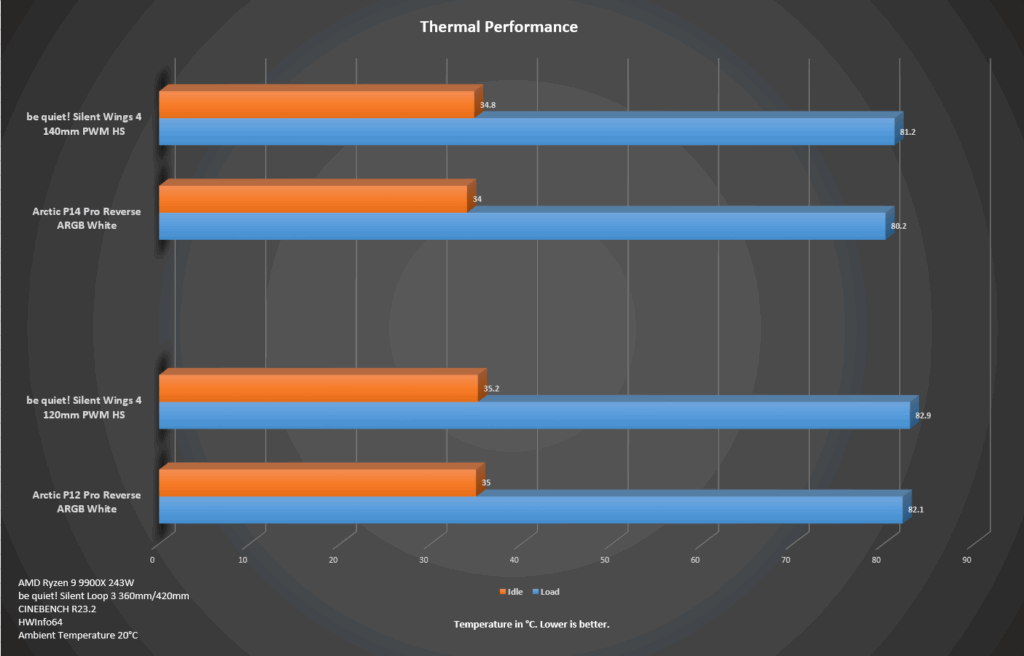
The competition of the ARCTIC fans was against be quiet! Silent Wings 4 120 and 140 PWM High-Speed fans, which are high-performance, powerful fans from be quiet! You can see that 120mm fans from both camps have a similar performance, albeit P12 Pro Reverse ARGB White fans appear with a marginal better performance. However, P14 Pro Reverse ARGB White fans have a 1°C better performance than their counterparts. However, be quiet! fans win in the sound output compared to high sound output on ARCTIC fans at full speed.
One thing that I noticed is that these fans under high pressure requirement tend to reduce air flow. Their unobstructed airflow is impressive, like I can feel the air at a distance of 5 feet or so, but as soon as these fans were installed over a radiator, this throw reduces significantly. This tells us the importance of a high air pressure rating that is needed to ensure the optimal airflow.
Case Fan Testing
I have also tested these fans as air intake using the following configuration:
- AMD Ryzen 9 7950X
- GigabyteX870 AORUS Stealth Ice
- Corsair iCUE Link H150i LCD
- Corsair iCUE Link QX120 Fans
- Temagroup T-Create Expert 2x16GB 6400MHz CL32 White
- Maxsun Arc B580 White Graphics Card
- Sabrent 1TB Rocket 4 Plus PCIe Gen4 NVMe SSD
- Be quiet! Straight Power 11 1000W Platinum PSU
- Thermaltake CTE E550 TG Snow
This case comes with no fan. My configuration is:
- CPU Liquid Cooler installed on the side with fans throwing air out
- 2x 120mm fans on top for exhaust
- No fan on the base [Stock Configuration]
I have tested the case with P12 Pro Reverse ARGB White fans installed on the base as air intake, and then repeated the tests with P14 Pro Reverse ARGB White fans installed on bthe ase as air intake.
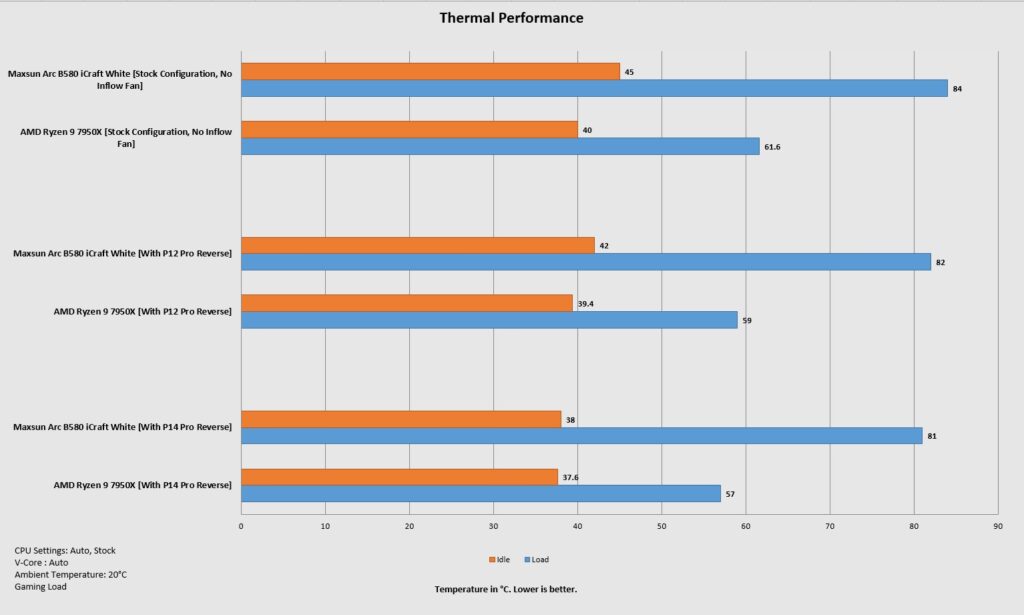
As you can see, the ARCTIC fans as air intake have provided a good temperature drop on the CPU and graphics card, particularly the P14 Pro Reverse ARGB White fans.
Conclusion
ARCTIC has finally released the much-anticipated and requested reverse blade fans, and it has done so in quite some form and factor since the released versions are Pro, not just a regular P12 or P14 fan. We have the opportunity to test P12 Pro Reverse ARGB White and P14 Pro Reverse ARGB White fans. These fans are available in non-RGB and ARGB editions. They come either in a single fan pack or a 3-fan pack.
The impeller design has the same footprint as on the P12 and P14 fans, but obviously, the main difference is the orientation of the impellers without compromising the looks. The tips of the impeller are connected to a ring frame, which has a 1.1mm gap from the fan’s frame. This will generate more airflow while reducing the air turbulence.
Each fan has the same 5 impellers. These fans have trumpet-shaped intakes and teardrop-shaped spokes. This design directs the airflow and helps in reducing the flow losses. This also helps in reducing air resistance, minimizing turbulence, and hence noise as well.
Another key factor is the height of these fans. P12 Pro Reverse ARGB White fans have a dimension of 120x120x27mm, whereas the P14 Pro Reverse ARGB White fans have a dimension of 140x140x30mm. You can’t install these fans on the radiator using standard M3x30mm screws. You would need M3x32mm minimum for the P14 Pro Reverse ARGB White fans.
These fans use a hydrodynamic bearing combined with an extended shaft to ensure quieter operation by improving pressure distribution and minimizing vibrations. These fans feature PWM Sharing Technology (PST) as well. Each fan has a 4-pin PWM connector and a 4-pin socket. Similarly, each fan comes equipped with 3-pin, 5V, ARGB connectors (both types). This provides Daisy Chain functionality on these fans.
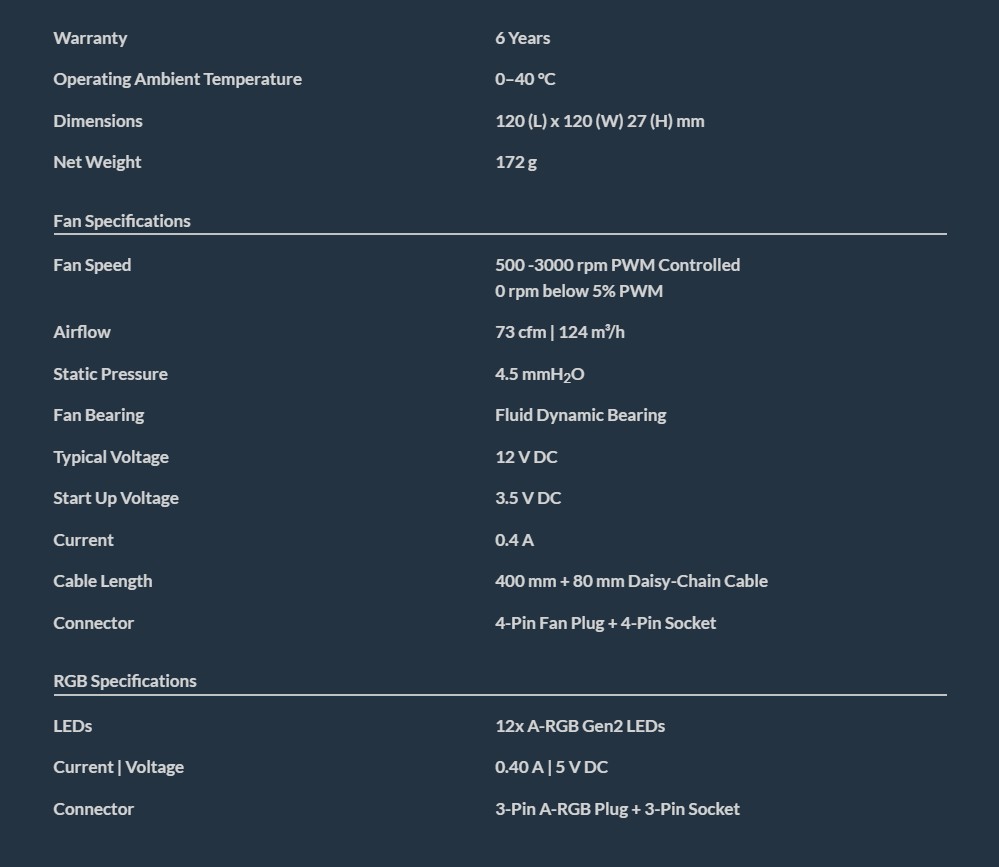
The speed rating for the P12 Pro Reverse ARGB White fan is 500-3000 RPM with 0 RPM below 5% PWM. They generate 73 CFM airflow and 4.5mmH2O air pressure. The P14 Pro Reverse ARGB White fans are rated for 400-2650 RPM. They also feature the Fan Stop function. The airflow rating is 98 CFM. The air pressure rating is 5.1mmH2O. Each fan packs 12 ARGB Gen2 LEDs.
I have tested these fans on liquid coolers (be quiet! Silent Loop 3 360 and 420) and made a direct comparison with the be quiet! Silent Wings 4 120/140mm High-Speed PWM fans. The P12 Pro Reverse ARGB White offers a similar performance as on Silent Wings 4 120mm HS PWM fans, but at the cost of high noise output. The P14 Pro Reverse ARGB White fans offer a temperature drop by 1°C compared to the be quiet! Silent Wings 4 HS PWM fans, again at the cost of high noise output.
Then these fans were tested for case ventilation inside the Thermaltake CTE E550 TG Snow chassis, where they were installed on the base of the case as air intake, and they resulted in a good temperature drop for the CPU and the graphics card, making a strong case for their utility.
The pricing of these fans is:
| P12 Pro Reverse ARGB White – Single Fan Pack | €25.49 |
| P14 Pro Reverse ARGB White – Single Fan Pack | €26.49 |
| P12 Pro Reverse ARGB White – Triple Fan Pack | €47.49 |
| P14 Pro Reverse ARGB White – Triple Fan Pack | €51.49 |
These fans come with 6 years warranty, which is an added advantage with the pocket-friendly pricing for triple fan packs. These fans deliver solid performance, be it on the CPU cooler or for case ventilation. I would suggest running these fans on a custom fan curve or Auto PWM function. Also, ARCTIC needs to address the flickering LEDs.
Pros
- Thermal Performance
- Improved Design
- Reverse Blade
- PST
- Fluid Dynamic Bearings
- 6-Year Warranty
- Price of Triple Fan Pack
Cons
- Noise