















Thermal Grizzly Kryosheet Review: Performance Unleashed
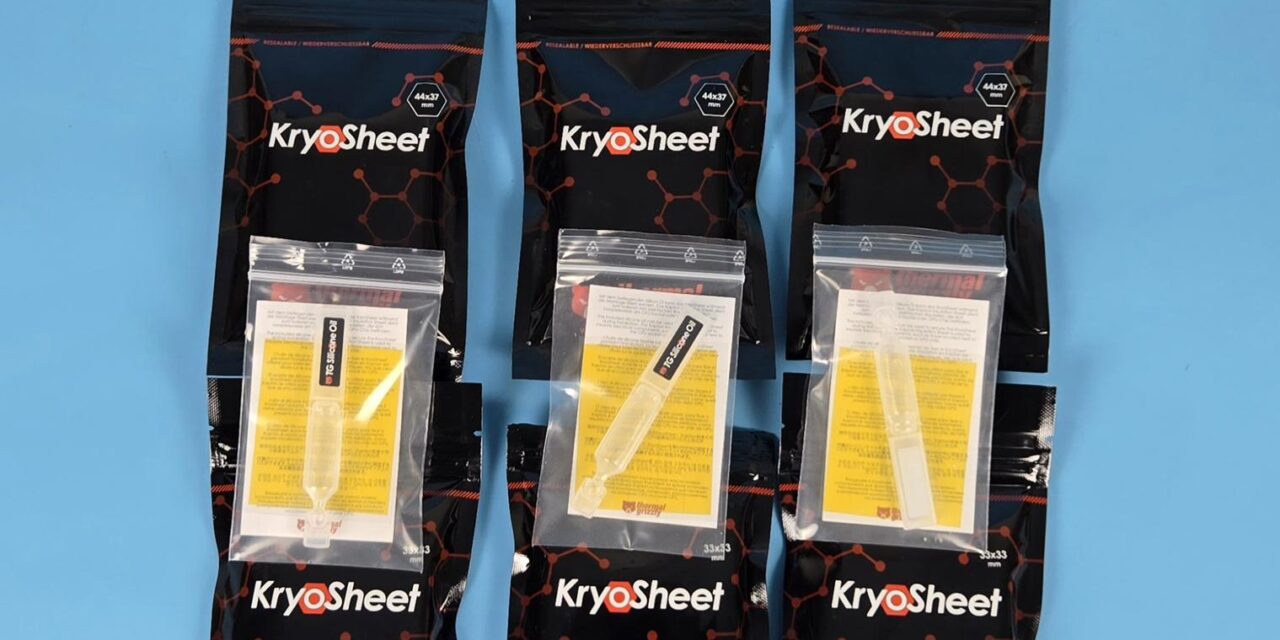
If I remember correctly, I tested the IC Graphite thermal pad from Innovation Cooling back in 2018 or so. At that time, I used the Intel X99 platform for this testing. That thermal pad, despite its high thermal conductivity rating, performed at a level of high-end thermal paste on the market. But the key factor was long life of the material, giving us a maintenance-free system with a catch that it could not be reused in case of scratches or cuts.
Thermal Grizzly launched Kryosheets some time ago. The concept is the same, though. These pads are an alternative to the regular thermal pastes, which require frequent maintenance since they can dry out over a longer run, plus different pastes have different thermal conductivity ratings coming from the choice of material in the filler.
These pads are available in different sizes. You need to work out the required size based on the CPU or GPU in question. The good part is that these pads can be easily cut to the required size using sharp scissors. I am taking a look at 33x33mm and 47x33mm size Kryosheets on AM5 and LGA1851 sockets.
The pricing data is:
- The 33x33x0.2mm sheet pack has an MSRP of $25.62 [1089 mm² ($2.35 / 100 mm²)] inclusive of VAT
- The 44x37x0.2mm sheet pack has an MSRP of $26.79 [1628 mm² ($1.65 / 100 mm²)] inclusive of VAT
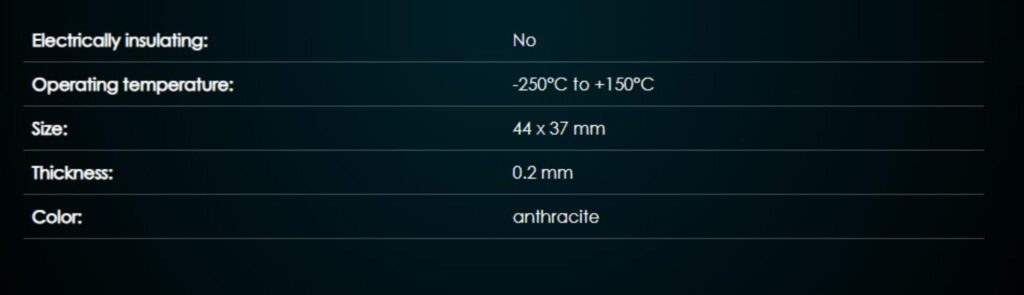
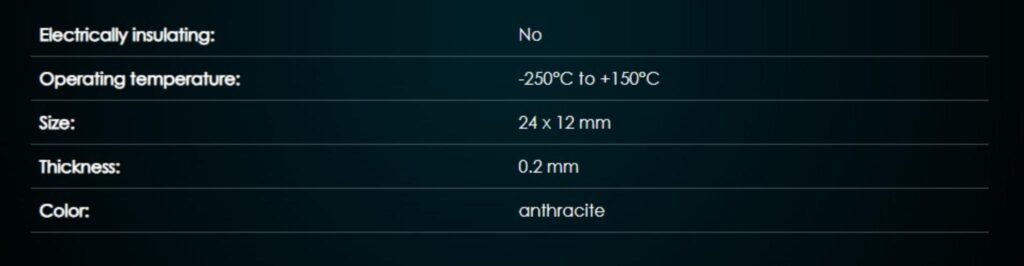
Specifications
Packing and Contents
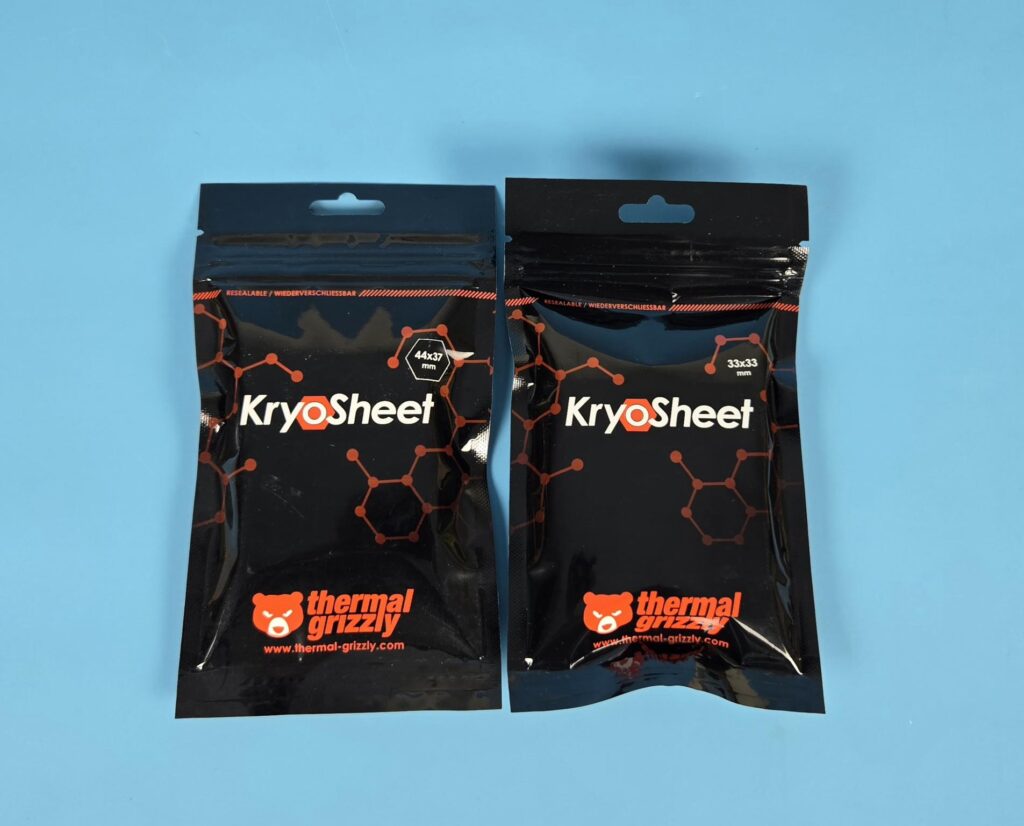
These pads are shipped in standard ThermalGrizzly-themed containers, which are black and red. The sheet itself is nicely tucked between two transparent covers, which are then placed between two black Styrofoam pads. This whole package is placed inside a separate container.
However, this was not enough for the Customs officials, as two of my sheets came broken into pieces, and one had a large crack. The main reason behind this is the lack of time that these officials might have, so they go through quickly. The box container inside the main pouch is difficult to take out. I would suggest that ThermalGrizzly increase the width of the main container/pouch so that the box can be easily taken out. Anyhow, I am not giving benefits to Customs officials as they should have been careful, particularly with the sensitive nature item.
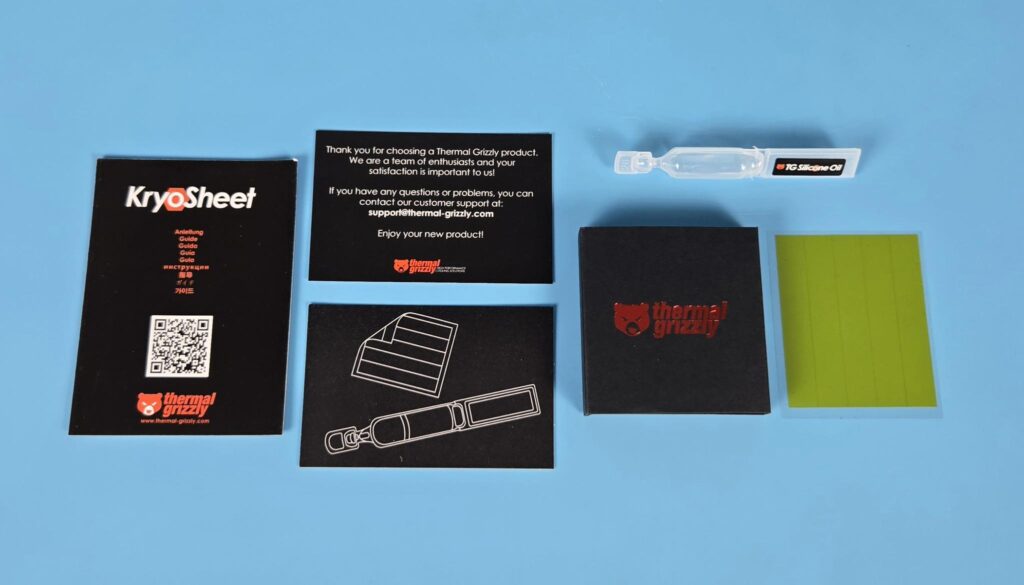
The following are provided:
- 1x User Guide
- 1x TG Silicone Oil
- 1x KryoSheet
- 1x Kapton Insulation Material
- 2x Cards
Closer Look
TIM or Thermal Interface Material is responsible for conducting the heat from the heating source, in our case, CPU/GP,U to the heat dissipater, aka cooler. Various forms of TIMs are now readily available on the market, including:
- Regular Thermal Paste
- Liquid Metal
- Sheets
While, majority of the users are well aware of the silicone-based thermal pastes with filler material and to some extent, with the liquid metal as well, a few may know about the graphite sheets that can be used as TIM. Various manufacturers are now making these sheets for the consumer side.
Thermal Grizzly has also released Kryosheet covering this category of TIM. This brand needs no introduction as they have established themselves as a leading manufacturer of high-performance TIM in all three broader categories.
What is Kryosheet?
So, what is the buzz all around with the Kryosheet? Is it any good? These are some general questions on the minds of new or less experienced users. I will not be going into details of the materials as such since I remember covering these in some extent in the Innovation Cooling IC Graphite review.
Thermal Grizzly has mentioned or listed Kryosheet as a Graphene material. What is Graphene, and why have I been using the word Graphite? Let me sum it up. Graphite is a material that has a molecular structure coming from Carbon atoms arranged in a manner (single plane). The Graphite has a rated thermal conductivity of 25-470 W-m-1.K-1 with a temperature value of 293K and electrical conductivity of 5,000,000 to 30,000,000 @ 293K [Ω-1.m-1].
In comparison, Graphene has multiple layers of Graphite stacked up in a particular manner, giving it a better structure and much higher thermal conductivity, which is 4840±40 to 5300±480 at 293K temperature and has an electrical conductivity rating of 100,000,000 @ 293K [Ω-1.m-1].
In a nutshell, Graphene has much higher thermal conductivity and electrical conductivity compared to Graphite.
While I was going through the literature of the product from the manufacturer, one line caught my attention: “According to the manufacturer, the pad is made from Graphene, which is a single layer of carbon atoms arranged in a special pattern.” This tells me that Kryosheet is actually Graphite with a small amount of Graphene, maybe. So, I would not be that much excited after all!
I am reproducing a paragraph from the manufacturer: “Graphene has a molecular structure stacked in the Z-direction. This optimized structure enables outstanding and constant thermal conductivity. This is due to a specially developed manufacturing process in which the hexagonal crystal structure of the graphite is broken up along the basal plane in order to exploit the anisotropy of the graphite’s thermal conductivity. However, as a side effect of this complex manufacturing process, the electrical conductivity is also increased.”
When we are on a graph paper, we are dealing with the X-axis and the Y-axis. But here we are focused on the Z-axis. In other words, a structure coming out of the surface along the Z-axis. This is needed to provide some flexibility so thatthe sheet can adapt to the structure on which it is used.
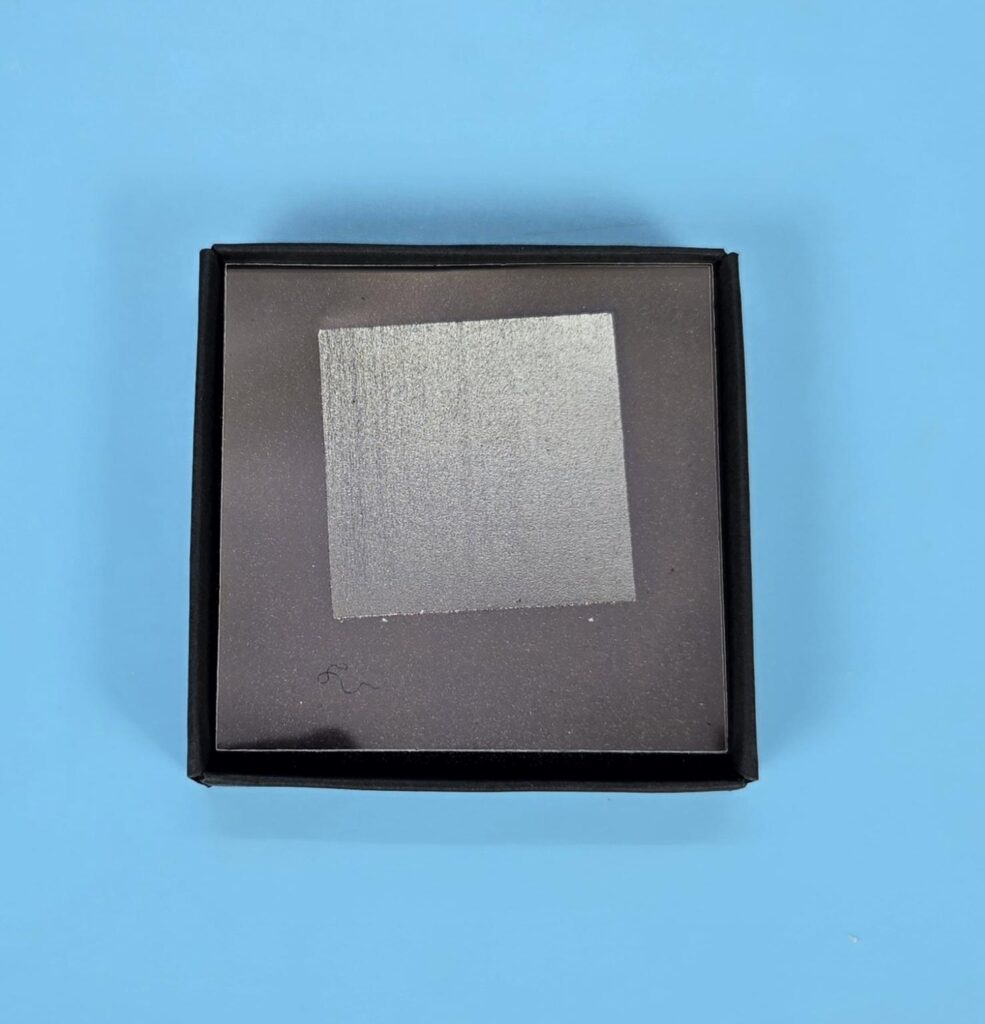
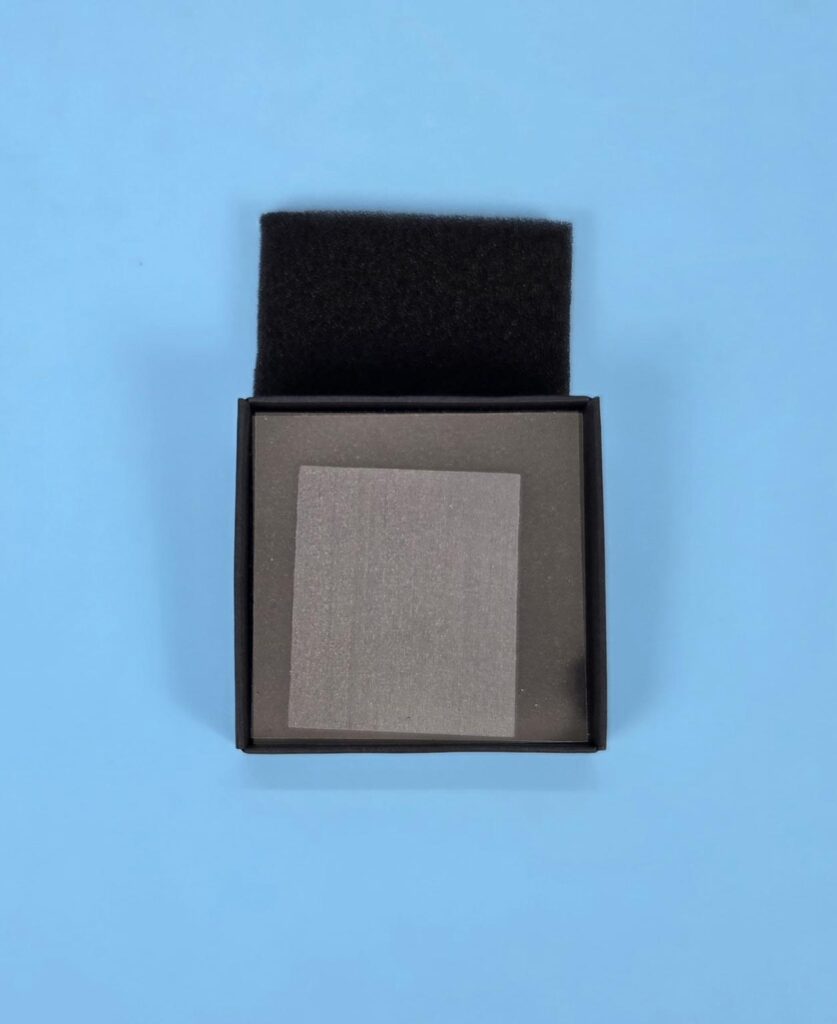
This can be seen on the surface of the Kryosheet. Pardon my poor-quality pictures. I had to extra delicate handling these sheets as I had already lost two sheets to the Customs officials, and one was simply broken as soon as I took it out of the box. No, this does not mean that sheets are fragile per se rather we need to be careful handling these.
These sheets have an anthracite color with silver shimmer and a sort of grain texture hinting at the direction. Don’t handle these sheets with sharp tools. Also, they are easy to cut to the required size, for which you need a sharp pair of scissors.
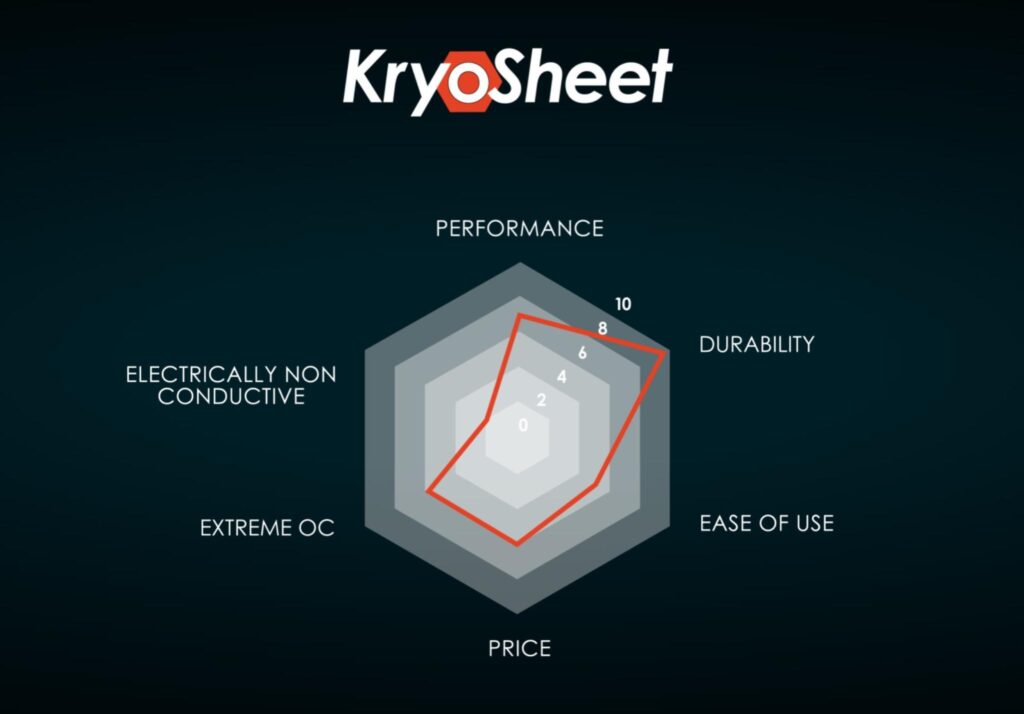
The above matrix summarizes the key benefits and targets of the sheet. They are durable in the sense that they will last you long since they don’t dry out, unlike the regular thermal pastes, hence you don’t need to service your PC in that sense. They are high-performance sheets, meaning their high thermal conductivity makes them an ideal solution. This is it. The rest of the four parameters are not on the positive side of the note, except maybe ease of use, which is made possible with the help of TG Silicone Oil. These sheets are electrically conductive, which requires you to be attentive when installing, and they carry a steep price tag.
What about Sizes?
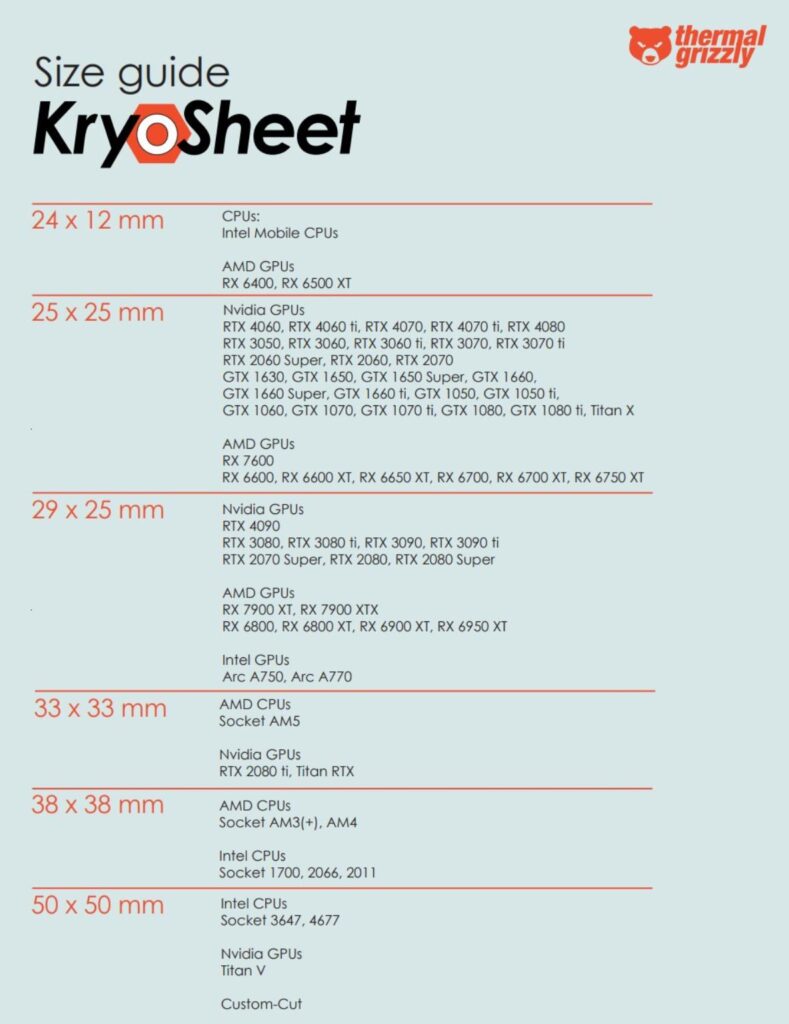
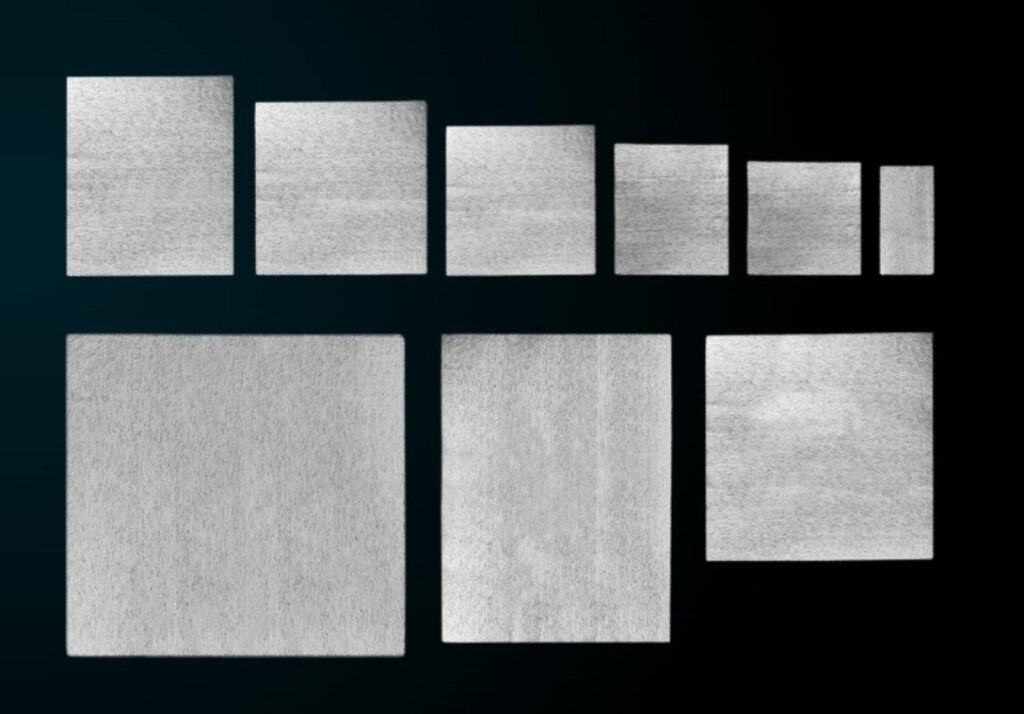
Thermal Grizzly has provided multiple-sized options for the users, and each size makes that sheet compatible with the listed CPU/GPU SKUs only. You can buy a large-sized sheet and cut it to the required size as well. But since the manufacturer has already taken care of it, why bother going that route!
Our sample has 33x33mm and 47×33, which are suitable for AMD AM5/RTX 2080Ti/Titan RTX and Intel LGA1851/RTX 5090, respectively.
The thickness of all these sheets is 0.2mm. Now you know why my focus is on handling these. They are rated for -250ᵒC to 150ᵒC. They are suitable candidates for the sub-zero cooling.
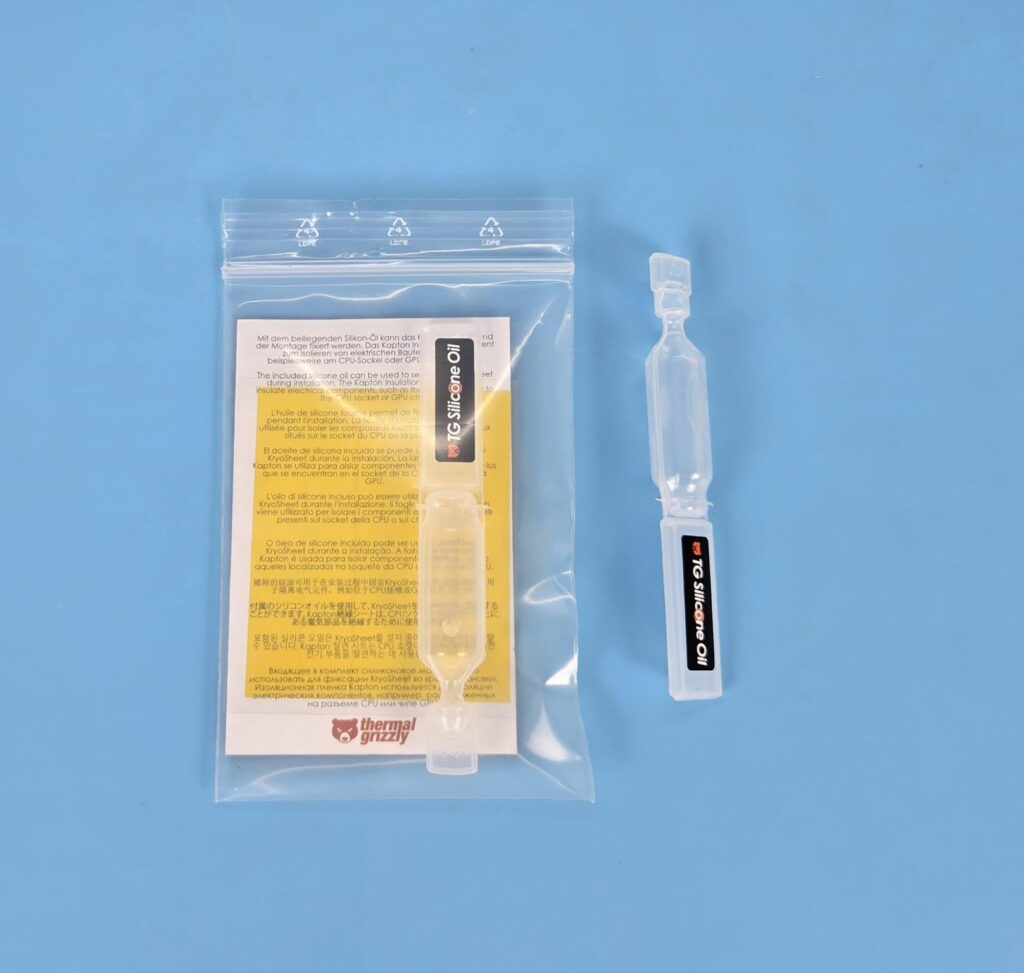
The initial batches of these sheets came without any aid to the user in a convenient installation. You are more likely to damage these sheets when installing them than anything else, since you are required to place these sheets exactly over the CPU/GPU IHS, which means you need to slide them across the plane till it fit properly. To address the issue, the manufacturer has started providing TG Silicone Oil that now comes with the product. This oil catches the sheet and makes it super convenient to install.
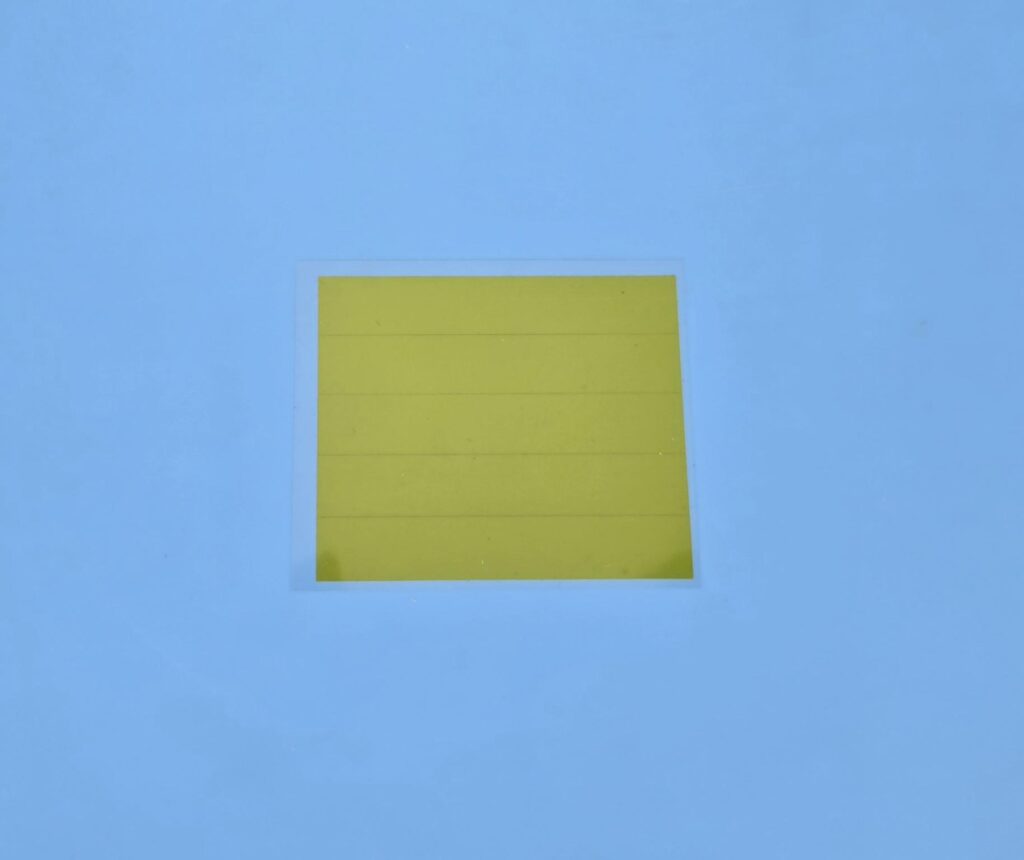
Since the Kryosheets are electrically conductive (free electrons in the outer shell allow it to conduct electricity), you might need an insulation material around the CPU or GPU covering the components like SMDs to avoid shorting and damaging the expensive hardware. Kapton sheets from Thermal Grizzly serve this purpose, and it is good to see that the manufacturer is supplying these sheets in the pack. Kapton Insulation Sheet is a polyamide film that can be used at high temperatures up to 280ᵒC. It is ideal for covering components such as SMDs on a CPU or GPU if they are to be used with Conductonaut liquid metal, Carbonaut, or KryoSheet. A single sheet has 5 pieces of tape.
Here is how the application goes:
- Turn off the PC and wait till the power is completely drained
- Clean the CPU surface off any Tim residue
- Clean the Cooler Base of any TIM residue
- Place the IC Graphite Thermal Pad over the CPU surface
- Place the cooler over the CPU surface and mount it.
- Power on the PC
It is highly imperative that you make sure to get rid of any residue on the CPU and the cooler for effective thermal conductivity.
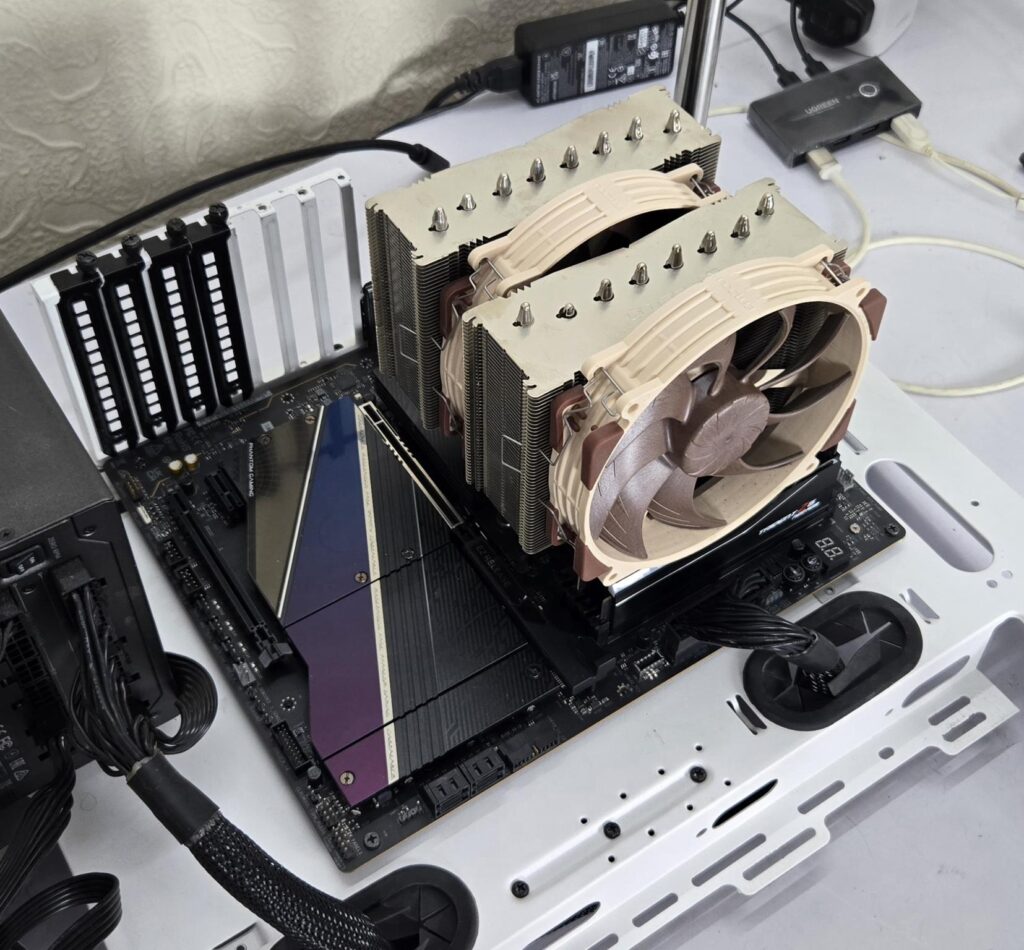
AMD Test Setup
- AMD Ryzen 9 9900X [243W]
- ASRock X870E NOVA WiFi
- Noctua NH-D15 G2 LBC
- G.Skill Trident Z RGB 32GB @ 6400MHz CL30
- Sabrent Rocket 4 Plus 1TB Gen4x4 NVMe SSD
- Fractal Design ION+2 860W Platinum PSU
- Thermaltake Core P6 TG Snow Edition in an open frame layout
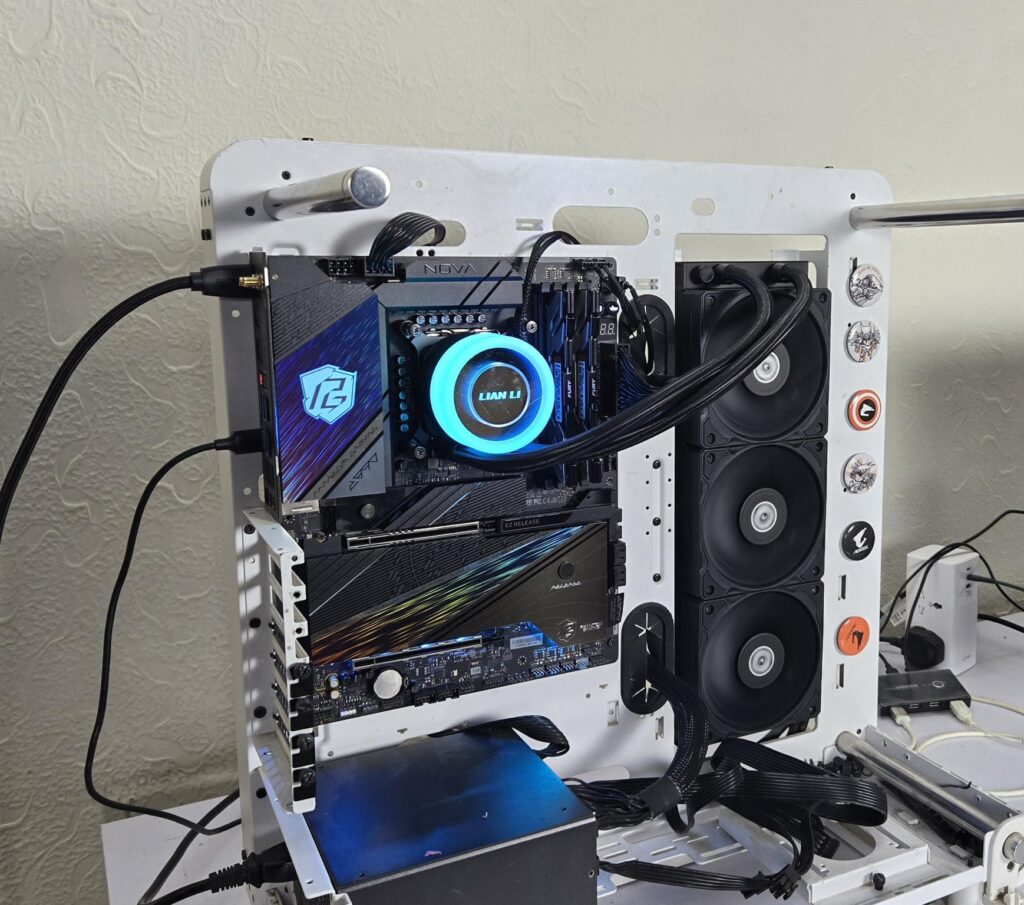
Intel Test Setup
- Intel Core Ultra 7 265k [250W]
- ASRock Z890 NOVA WiFi
- Lian Li GA-II Lite 360 Performance
- Kingston 32GB DDR5 6400MHz CL32
- Biwin X570 Pro 4TB Gen5x4 NVMe SSD
- Fractal Design ION+2 860W Platinum PSU
- Thermaltake Core P6 TG Snow Edition in an open frame layout
Installation
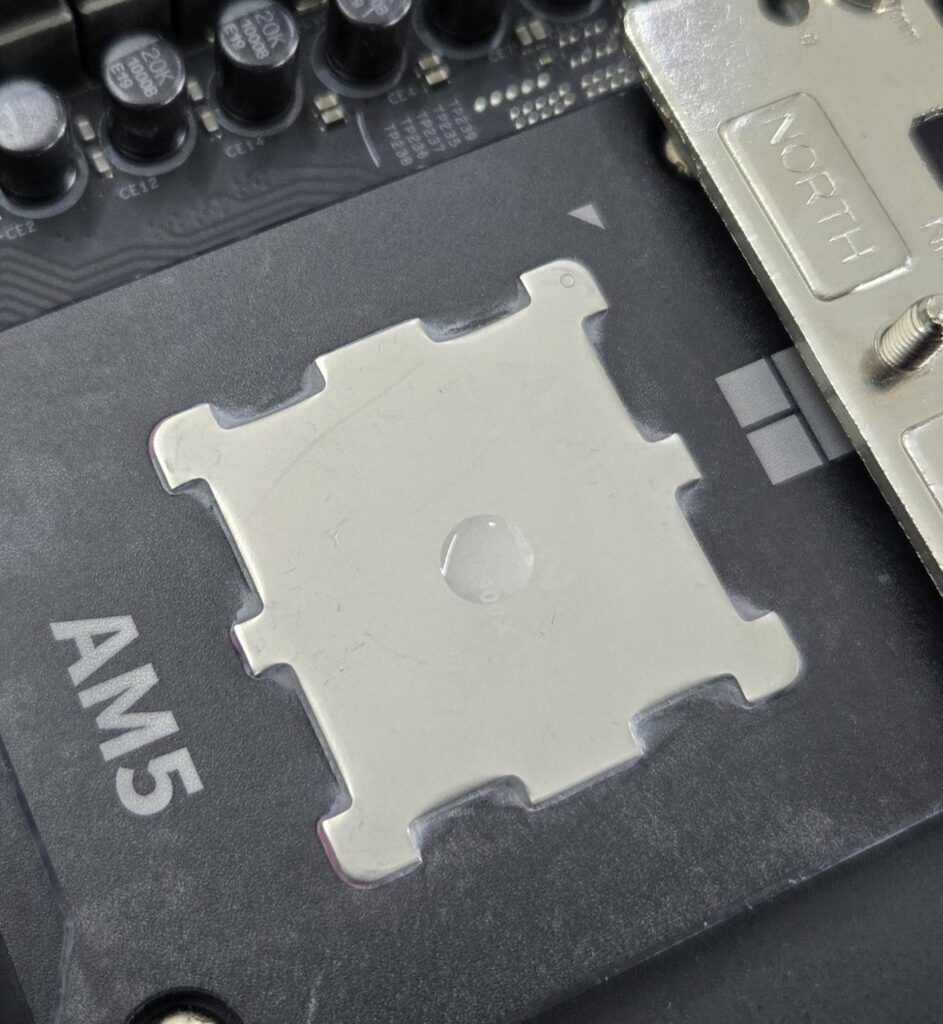
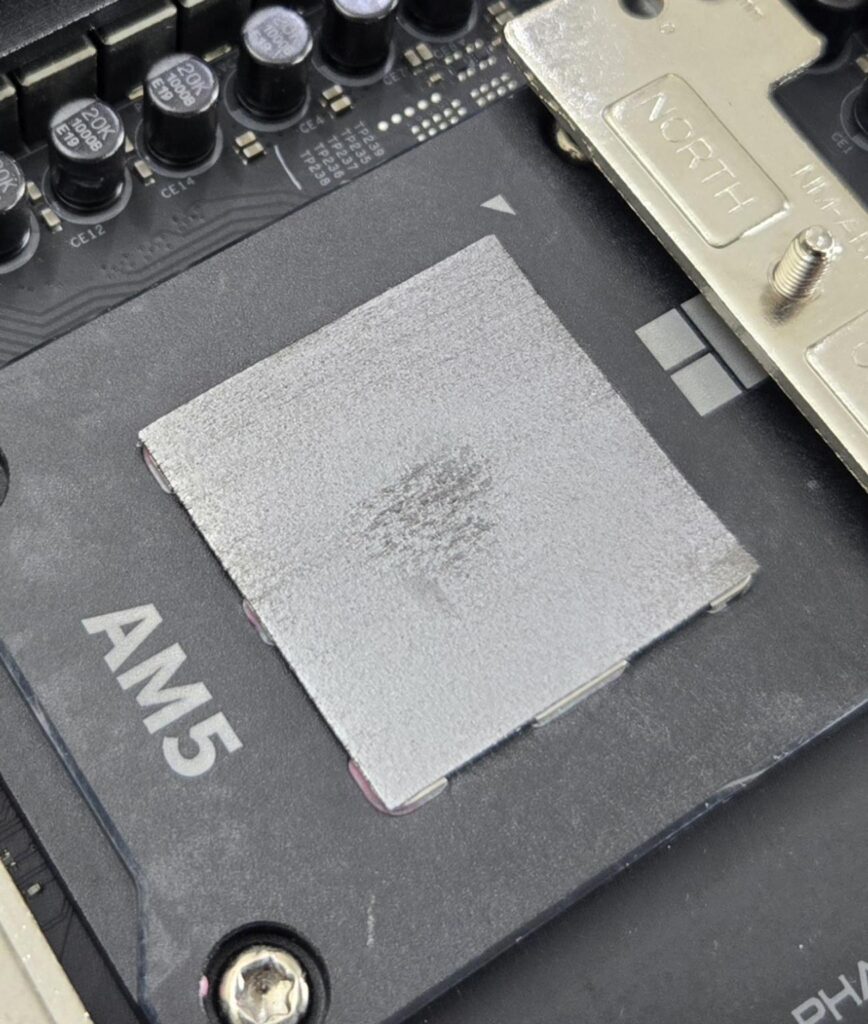
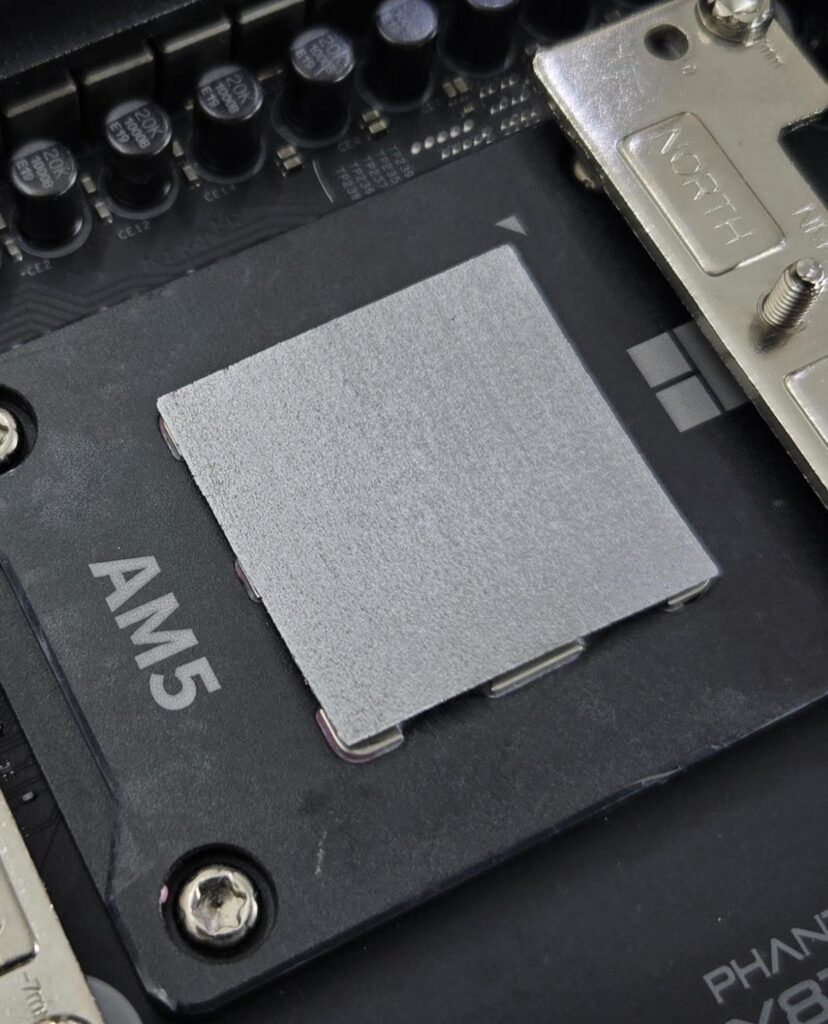
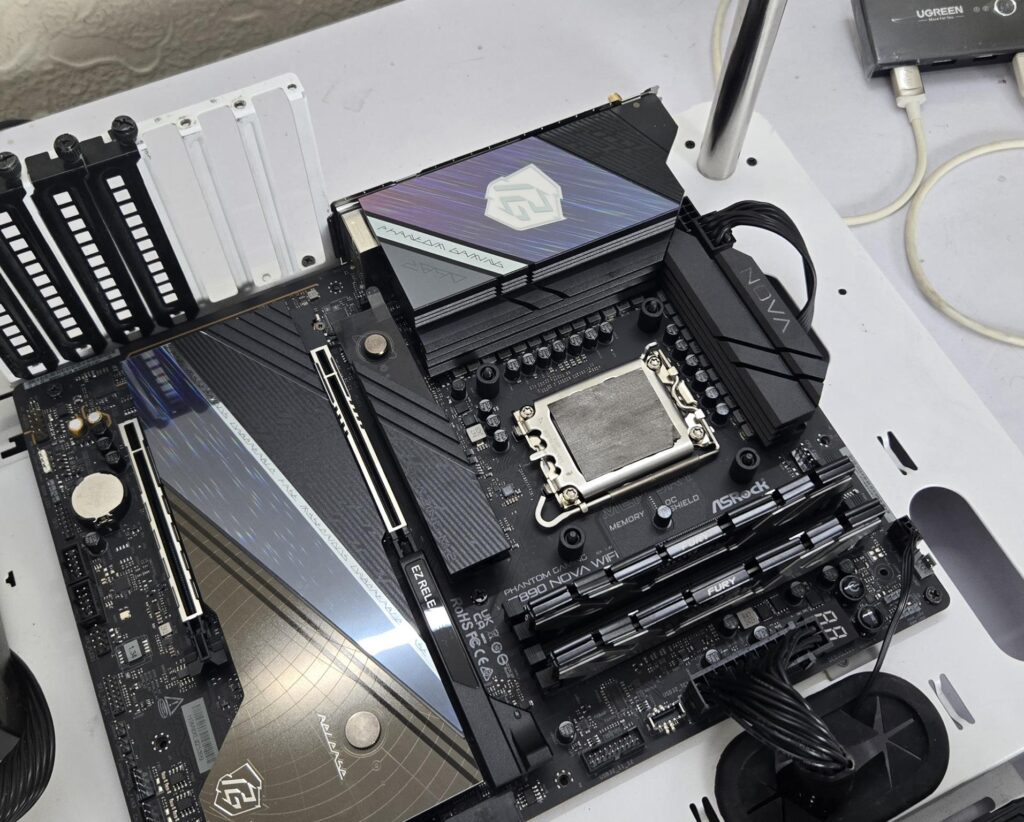
TG Silicone Oil makes it easy to place (not apply) Kryosheet over the CPU/GPU. Just place one drop of the oil in the center and carefully place the sheet over the CPU. The oil will catch the sheet and eliminate the slippery part of it. You can use tweezers with smooth ends or just use the transparent containers in which the sheet is supplied to align itself over the surface perfectly covering it.
I accidentally touched one sheet over AM5 and you can see smudges in the center. It is still do able since sheet does not break or crack as these two would impact the performance of the sheet. Thermal Grizzly has stated that these sheets should not be reused. As long as, sheet is carefully handled and it does not have any crack or breakage, it can be used.
How have I tested Kryosheet?
The Kryosheet is tested just like any other thermal paste, except that it may need some thermal cycles before giving optimal results. The following testing methodology is used for the testing:
- AMD Ryzen 9 9900X is tested on 243W Load.
- Intel Core Ultra 7 265K is tested on a 250W load with P-Cores locked at 5.5GHz and E-Cores locked at 4.8GHz.
- AVX Load enabled with 0 offset
- Power limits removed
- I have used an air cooler on an AMD platform and a liquid cooler on an Intel platform.
- For thermal pastes, one thermal cycle was completed before actual testing. This was done by powering the system and leaving it idle for a minimum of 5 minutes. Then a 10-minute run of Cinebench R23.2 was run, followed byan idle state, and then the system was powered off for 20 minutes. The actual test was done on the next power cycle.
- For Kryosheet, 5x thermal cycles were completed, each of 30 minutes run.
- For testing, the PC is left on idle for a minimum 5 minutes.
- Cinebench R23.2 run is used to stress the CPU.
- Tdie is reported on AMD, and Package Temp is reported on Intel.
- The fans and pump ran at full speed (100% PWM duty cycle).
- HWInfo64 is used to monitor the sensors.
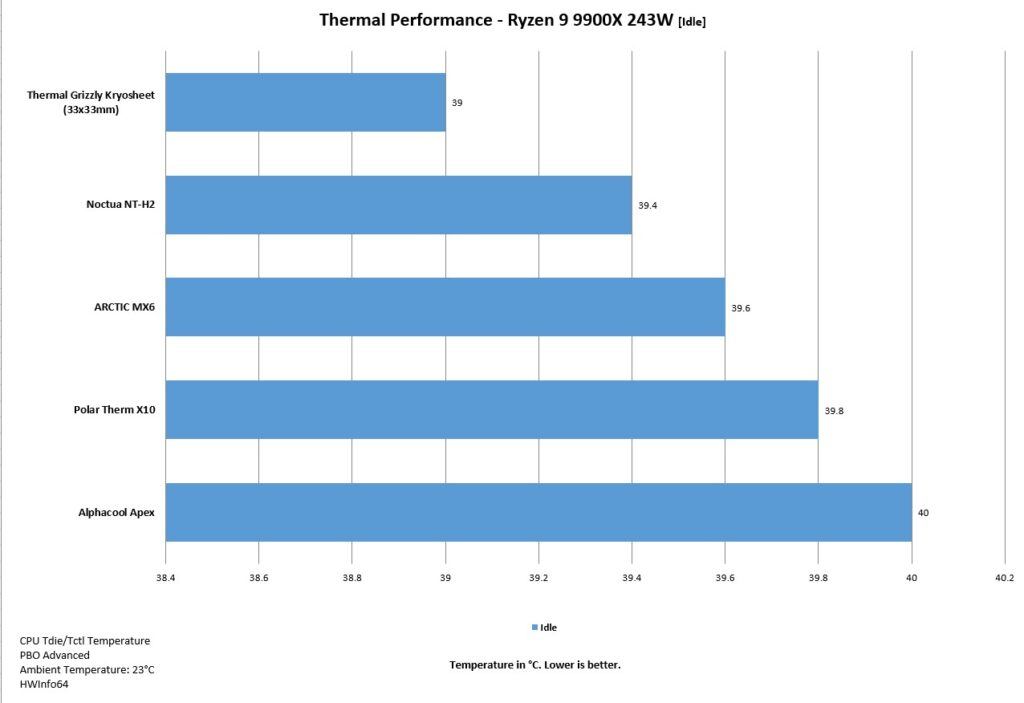
There is no difference as such under idle conditions on the AMD platform.
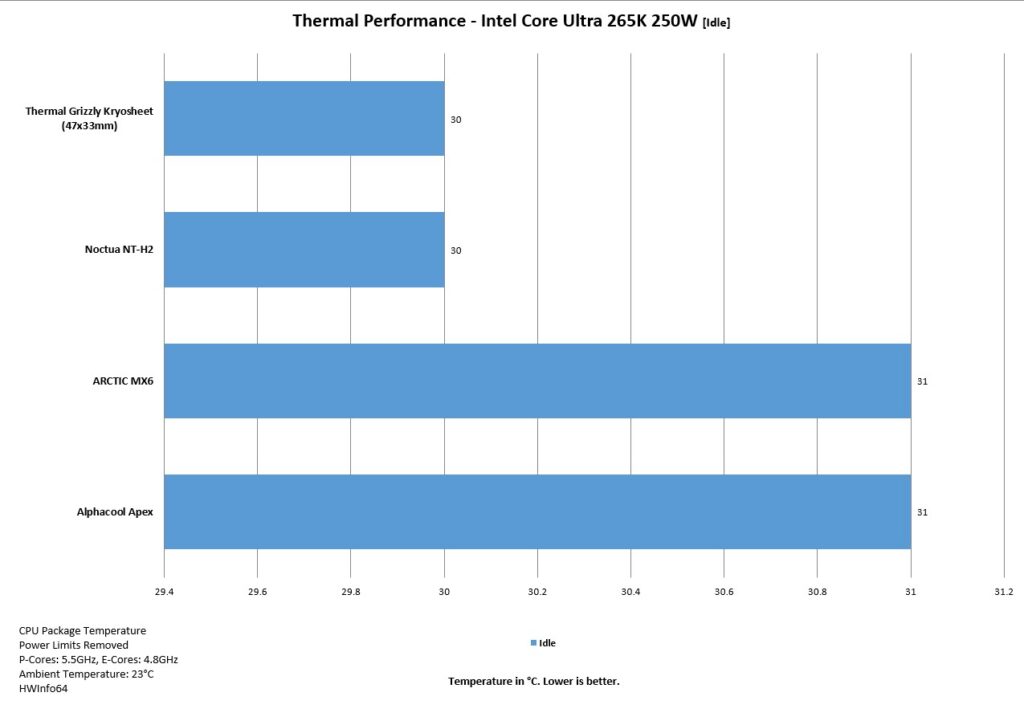
There is no difference as such under idle conditions on the Intel platform.
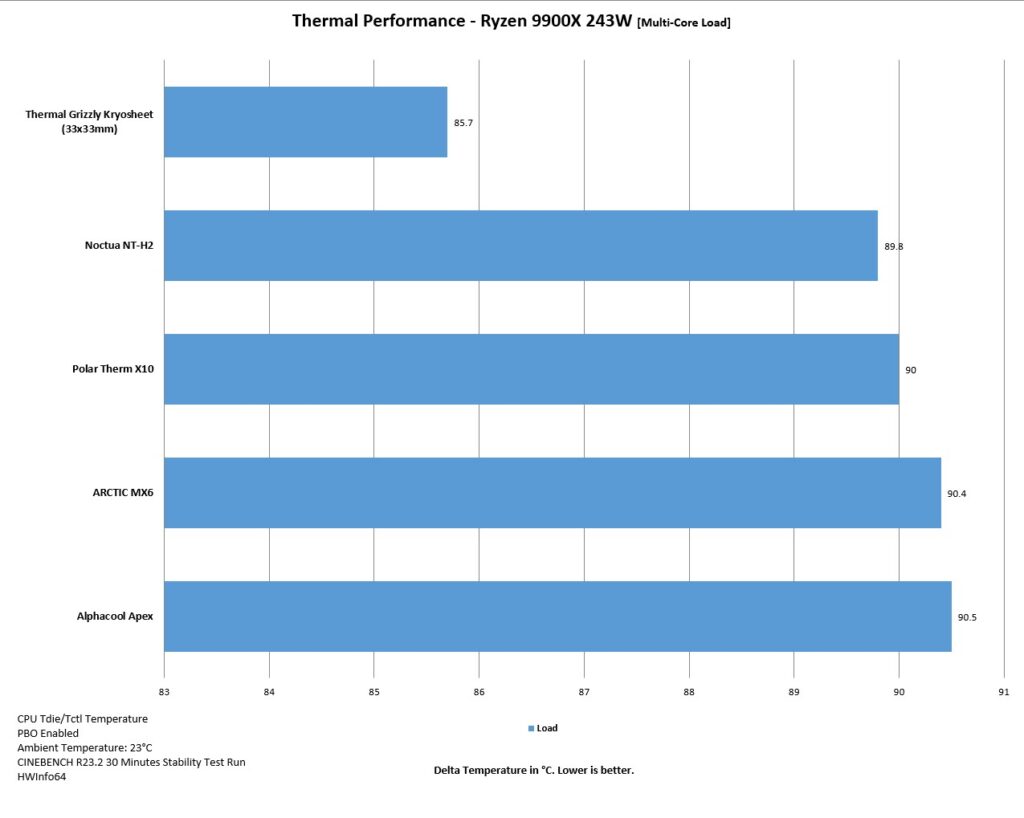
We can see a huge gap of up to 4.1ᵒC between the Kryosheet and other thermal pastes in the graph. This indicates the high-performance potential of the sheet.
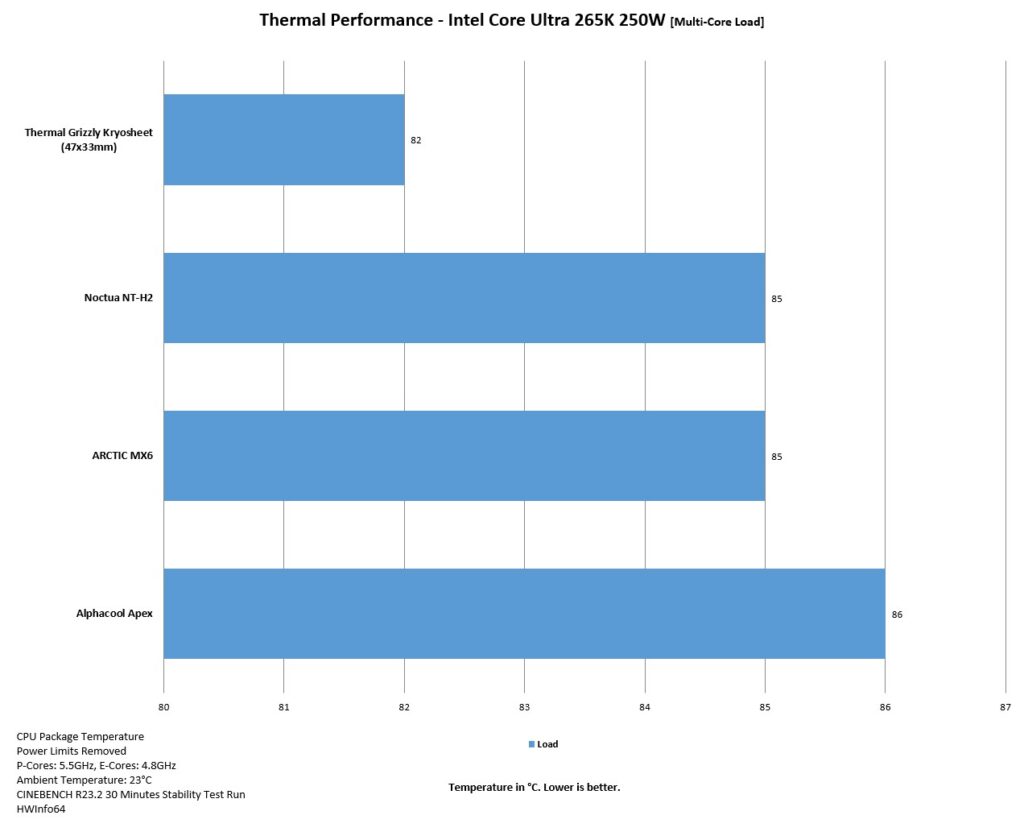
On Intel, there is a gap of 3ᵒC between the Kryosheet and other thermal pastes in the graph. Clearly, Thermal Grizzly is making a strong point with these high-performance sheets.
Conclusion
Thermal Grizzly Kryosheet is a thermal interface material for CPU and GPU, and comes in various sizes with applications for specific SKUs in CPU and GPU. This is an alternative to the regular thermal paste that has benefits as well as considerations. I tested IC Graphite back in 2018. This time, I have tested a similar product from Thermal Grizzly.
Although Thermal Grizzly has not listed the thermal conductivity of these sheets, unlike 35W/mK on IC Graphite, these sheets, from their performance are clearly have high thermal conductivity. These sheets have a thickness of 0.2mm, which makes their handling sensitive. They are made of Graphene and are of a black/gray color combination.
Graphene consists of multiple layers of Graphite arranged in a particular manner. Thermal Grizzly has stated that this sheet has a single layer of carbon atoms arranged in a particular manner. This gives me an understanding that these sheets are basically Graphite. Graphene has much higher thermal conductivity and higher electrical conductivity (a by-product) compared to Graphite (Natural).
I have tested 33x33mm and 47x33mm size Kryosheets on AMD AM5 and Intel LGA1851 platforms, respectively. One thing that you should be aware of is the electrical conductance of these sheets. If you are using these sheets on a GPU in particular, use insulation material over the nearby components like SMDs to safeguard electrical short that could damage the expensive hardware. The good thing is that the manufacturer has supplied Kapton insulation tape with these sheets, so you are covered.
As long as these sheets don’t break or have cracks, you can reuse them. For that, you need to be extra cautious in handling. Thermal Grizzly has provided TG Silicone Oil as well. A single drop is enough to catch these sheets without slipping over the CPU/GPU. This was not done in the initial release of the sheets. The oil may give a better performance in the first run, but repeated thermal cycles would dry it out, hence it would not impact the performance.
These sheets don’t dry, hence they are suitable for long-term use without the need for service. This part alone makes up for the high price tag on these sheets. These sheets have an arranged pattern on the Z-axis, making them flexible to adapt to the given surfaces, which would come in handy on the GPUs in particular. Don’t handle these with sharp-end tweezers, and you are good to go.
Now, speaking of the thermal performance, these sheets have over 4.1ᵒC better thermals on AMD 9900X at 243W all-core load and 3ᵒC better thermals on Intel 265k at 250W all-core load. This is an impressive performance, though you may need to go through multiple thermal cycles before getting the optimal performance.
Pros:
- High Thermal Performance
- Long Term Use – Durability
- No Servicing required with their use
- Comes with Oil for easy application
- Availability in multiple sizes
- Reusable, subject to handling and condition
- Comes with Kapton Insulation Tape
Cons:
- High Price
- Electrically Conductive
- Sensitive material requiring utmost care and handling